
 info@8ration.com
 (646) 494-3157


100+
Global Clients Served
97%+
Model Accuracy Achieved
95%
Client Retention Rate
62%
Support Cost Reduction
Turn Textile Manufacturing Challenges Into AI Opportunities
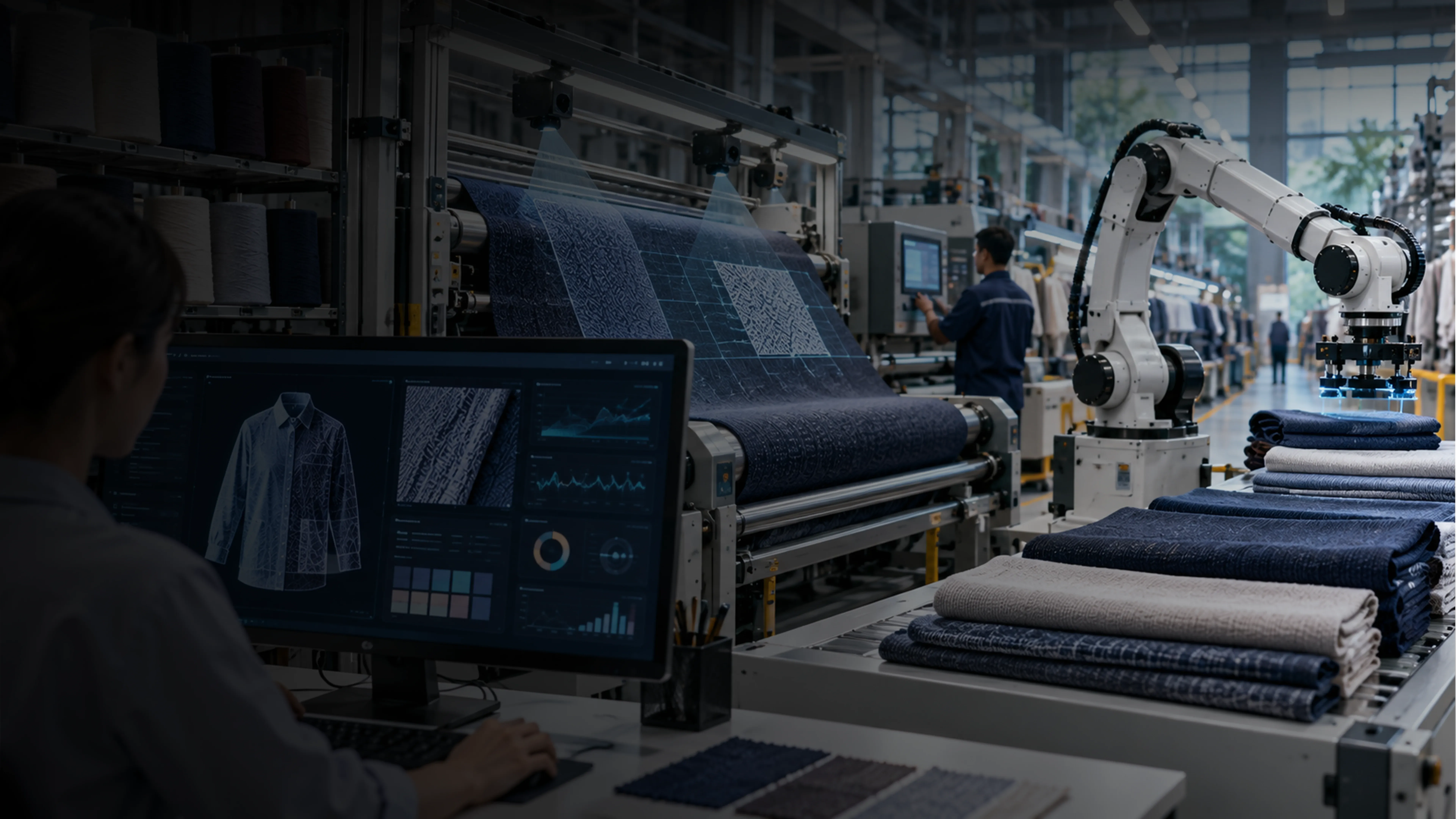
Textile manufacturing challenges do not announce themselves. They accumulate quietly in defect rates, maintenance logs and production reports until they show up where it hurts most: in cost, in waste and in missed delivery windows.
Quality Control
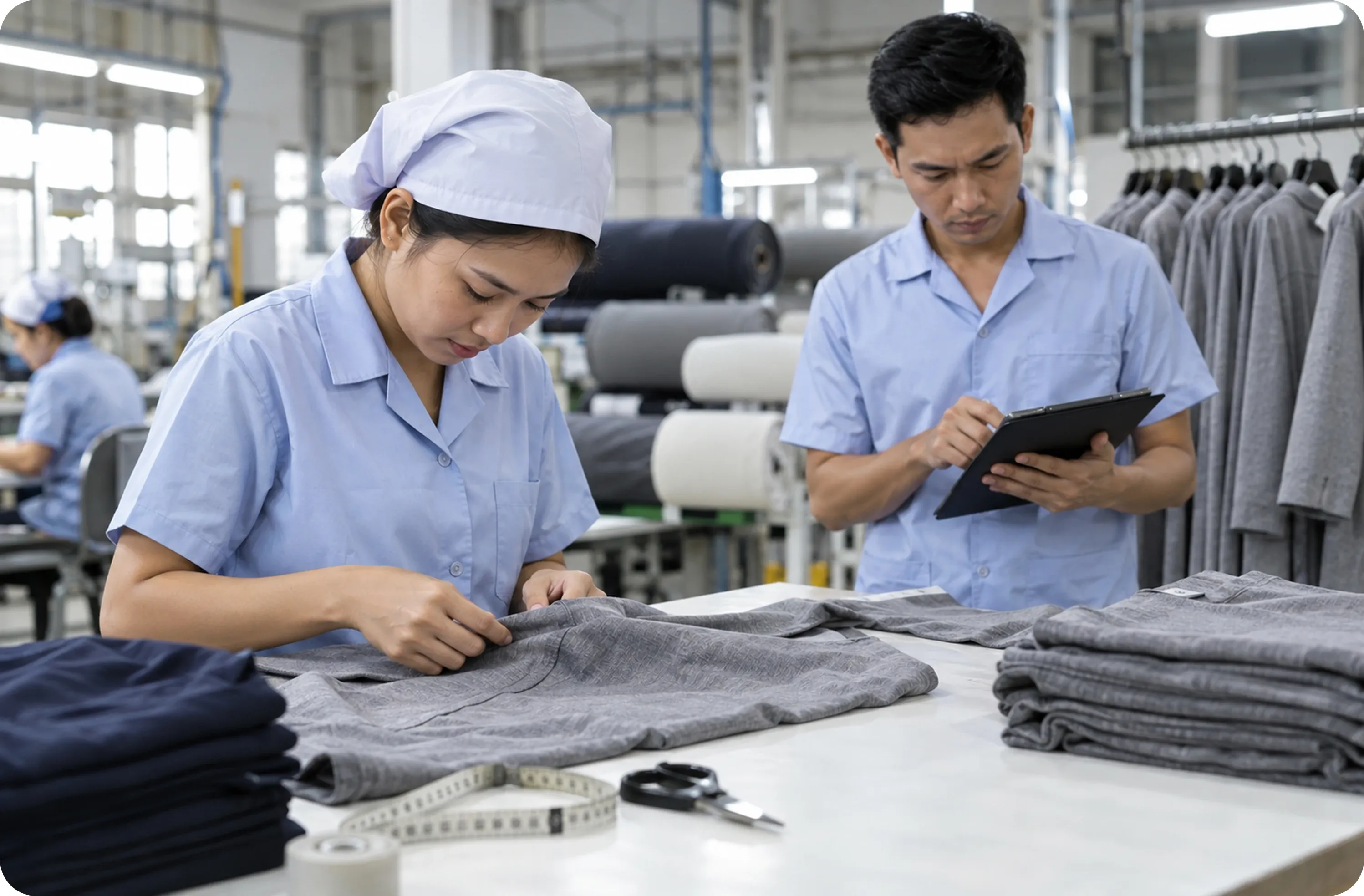
A single defect pattern that clears manual inspection can compromise an entire production run. By the time it surfaces at the finishing stage, the cost of rework, rejection and customer returns has already compounded.
Our AI Applications for Textile Manufacturing
Every application 8ration builds starts with a specific manufacturing problem, not a technology. These AI applications for textile manufacturers are engineered around real production data, real equipment, and the operational outcomes your factory is measured against.
AI-Powered Quality Inspection
Predictive Maintenance
AI Production Optimization
Demand Forecasting
AI-Powered Textile Design
AI for Dyeing & Color Optimization
AI Energy Optimization
AI Inventory Optimization
AI-Powered Manufacturing Analytics

AI-Powered Quality Inspection
Computer vision models trained on your fabric types inspect every meter of production in real time. Defects, color deviations, and weave irregularities that manual inspection misses are flagged before they move further down the line.
Why Clients and Industry Bodies Trust 8ration
Every recognition on this page traces back to a factory floor, a production problem, or a client outcome. 8ration does not collect awards. We collect the kind of results that tend to produce them.


Custom AI Development for Textile Manufacturers
Off-the-shelf tools are built for average factories. Custom AI solutions for textile industry operations are built for yours, around your machinery, your data and the production problems your team deals with every day.

Computer Vision Systems
Inspection systems trained on your fabric types, defect categories, and quality standards. Deployed on your production line to catch what manual inspection misses, at the speed your output demands.
Predictive Maintenance Platforms
A maintenance platform built on your equipment's sensor history. It learns the failure patterns specific to your machinery and surfaces alerts early enough for your team to act before production stops.
AI Quality Control Systems
Quality systems that integrate with your existing production line, flag deviations in real time, and generate the audit trail your quality team needs to trace, correct, and prevent recurring defects.
Production Intelligence Platforms
A single operational view across machines, shifts, and production stages. Built on your factory data, it gives your operations team the visibility to make scheduling and resource decisions with confidence.
Demand Forecasting Systems
Forecasting models trained on your order history, seasonal patterns, and supplier lead times. They give your planning team a production outlook accurate enough to reduce both overstock and material shortfalls.
AI + IoT Solutions
Sensor networks connected to machine learning models that monitor equipment health, track energy consumption, and feed real-time production data into the systems your operations team already uses to run the floor.
What AI Can Deliver for Textile Manufacturers
Your factory is already producing the data that could improve it. The benefits of AI in textile manufacturing come from turning that data into something your operations, quality, and planning teams can actually use.
Improve Quality
Reduce Downtime
Increase Production Efficiency
Reduce Waste
Improve Forecasting
Lower Operating Costs
From Manufacturing Challenge to AI Solution
Every textile factory presents a different starting point. Our AI development process for textile manufacturing is structured to find where intelligent systems create the most operational value before any model gets built or any data gets touched.
Manufacturing Assessment
We start on the factory floor, not in a requirements document. Your production workflows, machinery, quality processes, existing systems, and operational pain points are mapped before any technical decisions get made.
AI Opportunity Mapping
Not every manufacturing problem needs AI, and not every AI application delivers equal return. We identify the specific points in your production environment where intelligent systems will generate measurable operational and financial impact first.
Data Assessment & Preparation
Machine logs, sensor outputs, quality records, and ERP data are evaluated for completeness, consistency, and model readiness. Gaps are identified and addressed before development begins, so the models train on data that reflects your actual production reality.
AI Model Development
Models are built and trained on your factory's own data, whether that means a computer vision system for fabric inspection, a failure prediction model for your loom fleet, or a forecasting engine for production planning.
System Integration
The AI solution is connected to your existing ERP, MES, IoT infrastructure, and production databases. Integration is built to work within your current environment so adoption does not require replacing the systems your team already depends on.
Testing & Validation
Every model is tested against real manufacturing scenarios before deployment. Accuracy, reliability, edge cases, and performance under production load are all validated so the system behaves predictably when it goes live on your factory floor.
Deployment
Solutions are deployed to cloud, on-premise, or edge environments based on your factory's infrastructure and latency requirements. The deployment process is managed end to end so production operations are not disrupted during the transition.
Monitoring & Optimization
Model performance is tracked continuously after deployment. As your production data evolves, equipment changes, or quality standards shift, the system is retrained and refined so accuracy holds across the full lifecycle of the solution.
Tech Stack Behind Our Textile AI Solutions
The tools matter less than how they are applied. Every technology in our AI textile manufacturing solutions stack was selected because it solves a specific problem on a real production floor, not because it is current.

Next.js

TypeScript

Redux Toolkit

Zustand

React Query (TanStack Query)

React Router

Tailwind CSS

Bootstrap

Material UI (MUI)

Ant Design

Shadcn UI

Framer Motion

GSAP

Axios

Firebase

Three.js

Recharts

Chart.js

Socket.IO
Why Choose 8ration for Textile AI Development?
Agencies that build AI for every industry build it well for none. To deliver the real benefits of AI in textile manufacturing, the engineering has to start inside the factory, not outside it.
Industry-Focused AI Engineering
−Custom-Built Solutions
+End-to-End Development
+Integration-First Approach
+Scalable Architecture
+Continuous Optimization
+

FAQs About AI Applications in Textile Manufacturing
What are the most common ai applications in textile manufacturing?
How can ai improve textile quality inspection?
How does ai detect fabric defects?
Can ai predict textile machinery failures?
How can ai optimize textile production?
Can ai integrate with existing textile manufacturing systems?
How much does it cost to develop an ai solution for textile manufacturing?
How long does it take to implement ai in a textile factory?
How can 8ration help implement ai in textile manufacturing?
Delivering Software That Performs Without Limits
We craft high-performance applications designed for speed, security, and seamless integration. Join us to build dependable systems, improve productivity, and stay competitive in evolving markets.