


AI, embedded finance, digital banking, and blockchain will serve as the primary catalysts for financial evolution in 2026 and beyond.
The financial technology ecosystem too is experiencing a spectacular development rate. The new technologies, the changing consumer demand, and the new global regulatory reforms are now driving innovation in the banking sector, payments, lending, insurance, and investments. It is now essential to monitor the tendencies of the Fintech market and maintain the company’s competitive and able to develop the financial products that will be future-proofed.
Fintech apps are no longer transaction-based. They provide digital experiences of intelligence, customization, safety, and smoothness. The opportunities to match product strategy with the trends in the recently established fintech industry allow startups and enterprises to develop scalable platforms that gain the trust of users and become adopted in the long term.
The global fintech market is projected to grow from about $9.9 billion in 2024 to USD 11.3 billion in 2025 and further to $31.9 billion by 2033 at a 13.9% CAGR.
This guideline discusses the 15 most recent fintech trends and how companies can establish innovative fintech applications on them.
Why Trends in the Fintech Industry Matter
The paradigm of fintech has moved to infrastructure. The digital wallets, neobanks, robo-advisors, and blockchain-based platforms have their impact on the daily consumer-money interactions. By keeping track of recent developments in the field of fintech, companies get a distinct benefit by:
- Developing products in line with how users act
- Enhancing security and complying
- Eliminating operations inefficiencies
- Empowering accelerated innovation
- New financial verticalization
Failure to pay attention to trends in Fintech industry usually results in obsolete platforms, loss of users, and legal issues.
1. Machine Learning and Artificial Intelligence

One of the most robust trends in the fintech industry is artificial intelligence. The systems are AI-driven and used to detect fraud, credit scores, customer support, and predictive analytics. Fintech applications are built with machine learning models, which are capable of analyzing large volumes of data in real time, enhancing the quality of drive and decision-making as well as minimizing human error.
How to build innovative apps
- Embark on AI-powered fraud detection
- Predictive models on loan approvals
- Individualize user dashboards and insights
- Intelligent assistants to automate customer service
This tendency also goes hand-in-hand with the high-tech development of AI, which allows the scale of fintech platforms to grow safely and smartly.
2. Embedded Finance

Embedded finance is one of the recent tendencies within the field of fintech. Through it, non-financial platforms can provide financial services, including payments, lending, and insurance, as part of the existing ecosystems.
SaaS applications, marketplaces, and retail apps are no longer relocating users to third-party services to include financial functionality.
How to build innovative apps
- Use modular APIs for embedded payments
- Get in-app payment and subscriptions enabled
- Create frictionless experiences during checkout
Embedded finance enhances customer interaction and new revenue patterns
3. Open API Ecosystems and Banking
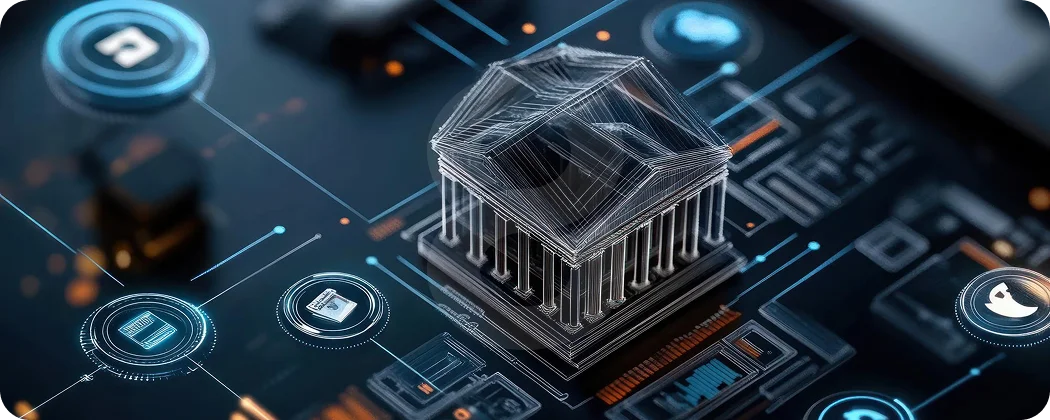
The current trend of open banking is still transforming the trends in the fintech industry, as it allows secure sharing of data between banks, fintech firms, and third-party providers.
Vendors wish to have more control over their financial data, whereas fintech apps are able to do this due to faster innovation via open APIs.
How to build innovative apps
- Construct API-first frameworks
- Secure the aggregation of data
- Make sure that there is regulatory compliance with open banking standards
The trend facilitates transparency and cooperation within the financial ecosystem.
4. Digital Banking and Neobanking Systems

The neobanks have altered the way users receive financial services. These mobile-first institutions are a significant change in direction within the fintech industry, with simplified onboarding, reduced charges, and real-time insights.
How to build innovative apps
- Emphasize mobile-first UX design
- Provide immediate account opening and KYC
- Offer real-time transaction analytics
Neobanks will show how usability and speed are making modern fintech success.
5. Blockchain and Distributed Ledger Technology

The continued use of blockchain in the emerging trends in fintech has seen the creation of secure, transparent, and decentralized financial frameworks. In addition to cryptocurrencies, blockchain currently supports payments, remittances, and smart contracts.
How to build innovative apps
- Use blockchain for cross-border transactions
- Automate using smart contracts
- Enhance openness and accountability
This tendency serves the purpose of further digital asset development and the development of new financial instruments and models of ownership.
Read More: 30 Best Cryptocurrency Wallet Apps to Inspire Your Next App
6. Emerging Digital Payments and Contactless Payments

The trends within the fintech industry still rely on digital payments that were facilitated by mobile wallets, QR codes, and contactless technologies.
Consumers expect to complete transactions and payments across devices at a fast, secure, and frictionless manner.
How to build innovative apps
- Allow multi-currency real-time payments
- Transactions using NFC and QR
- Maximize payment security through tokenization
There is still a strong base of payment innovation in fintech development.
The fintech payment app market alone is expected to rise from around $1.8 trillion in 2025 to about $4.5 trillion by 2032 at a 16.5% CAGR.
7. Buy Now, Pay Later (BNPL) Solutions

BNPL is one of the most powerful new trends in fintech, particularly in the retail and eCommerce industries. It enables users to divide payments into installments without using conventional credit cards.
How to build innovative apps
- Combine adjustable repayment models
- Apply AI to assess credit in real time
- Have openness in charges and conditions
BNPL makes it more affordable and boosts the conversion rates.
8. Wealth Tech and Robo Advisory System

WealthTech solutions enable commoners to invest easily. The use of automated advisory tools has now become significant in fintech industry trends, making financial planning more democratic.
How to build innovative apps
- Provide automatic management of portfolios
- Follow AI-based investment suggestions
- Give live performance monitoring
Younger investors who want to find a simple and transparent environment are attracted to these platforms.
9. Compliance Automation and RegTech

RegTech solutions have become critical industry trends in the Fintech industry as regulations continue to become increasingly sophisticated. Automation saves on compliance purchases and enhances accuracy.
How to build innovative apps
- Fully Automate KYC and AML
- Watch transactions due to regulatory risks
- Produce live reports on compliance
- RegTech enhances trust and minimizes overheads
10. Biometric and Cybersecurity Authentication

The current trends in fintech are still dominated by security issues as cyber threats continue to rise. Users want solid protection and not convenience.
How to build innovative apps
- Deploy biometric authentication
- Use end-to-end encryption
- Use fraud detection models
Effective security systems have a direct effect on customer trust.
11. Super Apps and Financial Ecosystems

A super app is the integration of banking, payment, investments, and lifestyle services into one platform. The trend of this approach displays the changing trends in the fintech industry, thinking about convenience and ecosystem.
How to build innovative apps
- Employ microservices architecture
- Combine various financial departments
- Allow personalization of cross-service
- Super apps enhance interaction by minimizing the switching of apps
12. Green Fintech and Sustainability

The trends in the fintech industry have been affected by sustainability, which is now preferred by consumers in financial services that are eco-friendly. Green fintech enhances ethical investments and tracking of carbon.
How to build innovative apps
- Offer ESG-based investment tools
- Track carbon footprints of transactions
- Promote sustainable financial behaviors
Green fintech aligns financial growth with social responsibility.
13. Cross-Border Payments and Global Fintech
International payments require efficiency, which is as a result of globalization. Cross-border solutions are also the latest trends in fintech that are of critical importance.
How to build innovative apps
- Lower transaction costs and delays
- Multicurrency wallets to support
- Make sure that international regulations are followed
- Ready-made global platforms open new markets
Read More: List of Best Mobile Banking Apps to Inspire Your Fintech Solution
14. Mobile-First App Development

Mobile trends are predominantly used in the mobile-first strategies regarding new developments in the Fintech industry.
How to build innovative apps
- Maximize small screen UX
- Guarantee inter-crossover of performance
- Create indigenous experiences with iOS app development strategies
Mobile excellence has a direct influence on adoption and retention.
15. Individualized Financial Experiences

The trends of the modern Fintech industry are characterized by personalization. Users would like to see insights in accordance to their spending patterns, objectives, and desires.
How to build innovative apps
- Use data analytics to do behavior insights
- Provide contextual notifications
- Individualize finance suggestions
- Individualized experiences boost loyalty and lifetime value
How to Develop Innovative Fintech Apps Aligned with These Trends
To successfully introduce the recent tendencies in the field of fintech, companies are recommended to navigate the process of development in the following manner:
- Begin with effective product discovery and research
- Select a scalable and cloud-native architecture
- Security and compliance are a priority even at the inception stage
- Create user-friendly designs
- Invest in the long-term finance app development strategies
Technology, compliance, and user needs should all work together towards innovation.
Read More: 30 Top Apps Like MoneyLion to Inspire Your Next Fintech Startup
Final Thoughts: Build Future-Ready Fintech Apps with 8ration

The tendencies in the fintech business do not decelerate; they increase. Intelligence based on AI, embedded finance, and mobile-first platforms are only some of the current trends of the industry and require more than technical performance. They need vision, policy sensitivity, and scalable engineering at the beginning.
This is where 8ration stands apart.
At 8ration, we do not simply create fintech apps we are developing secure, high-performing digital financial ecosystems in line with the latest trends in fintech. Our team knows how to make complex financial concepts compliant and user-friendly, as well as revenue-ready products. You can create a fintech startup or modernize an enterprise platform, and we can get you through the process at a faster pace without losing quality or security.
We bring together intense fintech experience, innovative technology, and time-tested delivery models, enabling companies to lead rather than follow the rising fintech environment. In case you wish to make innovation has a real market impact, it is time to collaborate with 8ration and create fintech solutions that would be scaled, trusted, and grow over time.
The future of fintech is in the hands of those who are putting it into action today build it with 8ration.