Text Us

Retail ERP Software Solutions

Retailers lose margin in the gaps between systems. We design and deploy retail erp software that helps your business manage inventory, orders, suppliers, customers, and financials on one data model. Ten years of enterprise delivery behind every rollout. Your management team works from one screen.

Retail ERP software connecting stores, ecommerce and inventory
  • 25+Industries Covered
  • 95%Projects Delivered On Time
  • 40+Technologies and Frameworks
  • 5 StarRating on Clutch
Retail team checking stock and sales in a retail ERP system

What Is Retail ERP Software and What It Does for a Retail Business

A retail erp system is the record of truth for everything your business buys, sells, moves, and banks. One database holds inventory across every store, warehouse, and sales channel. The same database holds purchase orders, supplier terms, customer profiles, and the general ledger. When a sale closes at the till, the inventory count moves and the revenue posts in the same moment.

Most retailers arrive with a point of sale in one place, accounting in another, and an ecommerce website on a third platform. Back office staff reconcile all three by hand. Retail erp solutions simplify that work by making data shared rather than copied. Buyers, finance, and store management read one version. Nobody reorders against a number from last week. Finance can close the month without chasing spreadsheets.

Retail ERP Software Development and Implementation Services

8ration takes retailers from scattered tools to one working solution. Our retail erp software services include new builds, platform implementations, integrations, cloud migrations, and the support that helps ERP solutions stay useful long after go live.

  • 01

    Custom Retail ERP Software Development

    Some retail businesses do not fit licensed software. We build retail erp software from the data model up when your buying, pricing, or fulfilment logic is the business logic that earns margin. Your business owns the code, the schema, and the roadmap. Nothing is locked.

  • 02

    Retail ERP Implementation and Rollout

    We implement platform-based retail erp systems, including Oracle and Odoo software. Work starts with a fit and gap study against your current management processes. Configuration, data migration, store by store rollout, and shop floor training follow until the system is used daily by everyone.

  • 03

    Retail ERP Integration Services

    Your ERP has to talk to the till, the ecommerce website, the 3PL, and the payment processor across every channel. We build and document the integration layer, so order status, inventory counts, and customer records stay consistent across every channel your business sells through.

  • 04

    Legacy Migration and Cloud Deployment

    Ageing on premise systems cost more each year to keep alive. We move retailers onto cloud deployment with historical data intact, including closed financial years. Inventory ledgers, supplier records, and retail financials all land in the new system ready for audit and reporting.

  • 05

    Retail ERP Customization and Module Development

    Standard retail erp modules rarely cover everything a business does. We extend what you own with customized functionality for promotions, franchise accounting, consignment inventory, and shipping management. Each new module ships without closing your upgrade path.

  • 06

    ERP Support, Managed Services, and Optimization

    Support is where most retail erp vendors go quiet. Our team monitors performance, tunes slow reports, helps manage upgrades, and trains new staff. Managed services also include month end close support. You get named engineers who know your configuration rather than a shared support office.

Work We Have Delivered

Grocery chains, fashion retailers, wholesale distributors, and franchise companies have all put daily operations on systems 8ration built. Each business started from a different problem: inventory accuracy, supplier chaos, a painful financial close. What repeats is the result your business can measure after.

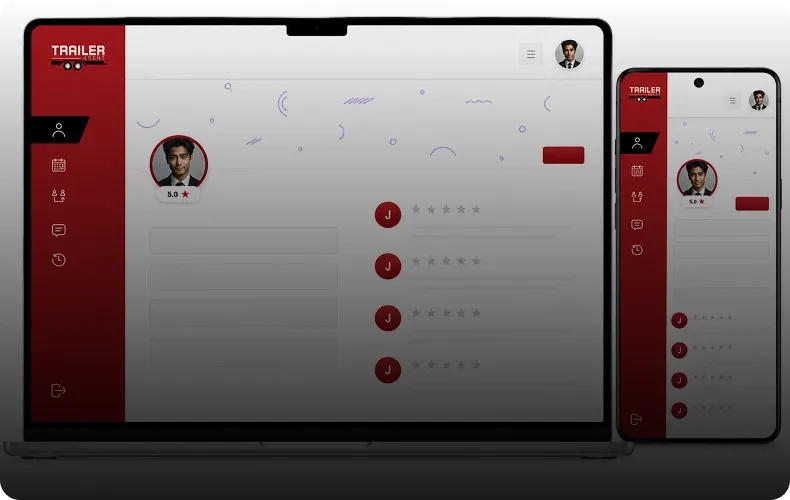
Trailer4Rent

Discover how we built Trailer4Rent, Canada's peer-to-peer trailer rental platform that smoothly connects owners and renters.

Read More about Trailer4Rent
Trailer4Rent

Business Benefits of Retail ERP Software

Retailers do not buy software. They buy fewer stockouts, a faster financial close, and a margin they can explain. Here is what retail management erp solutions change in the numbers your business already watches each month.

  • Inventory You Can Trust Across Every Location

    Shared inventory data closes the gap between what the system claims and what sits on the shelf. Buyers manage reorders against real counts. One inventory count helps every team agree. Fewer stockouts on fast movers, and less cash buried in slow inventory.

  • A Financial Close That Takes Days, Not Weeks

    Sales post to the ledger as they happen, so finance stops rebuilding the month from exports. Retail financials stay current. Revenue recognition runs on rules your finance team sets once. Period close gets shorter each cycle as manual journals disappear from the close.

  • Lower Cost to Run Daily Operations

    One cloud solution costs less to operate than five that also need integrating. Licence fees shrink, integration patches disappear, and the hours your back office spent on reconciliation go back into the business. Most retailers watch management overhead improve inside two quarters.

  • Customer Experience That Holds Across Channels

    Order history, loyalty balances, and returns live in one customer record used by every sales channel. A customer who buys on your website and returns in store meets staff who can view the whole transaction.

  • Room to Add Stores, Channels, and Markets

    Cloud deployment turns a new store or a new sales channel into a configuration job rather than a management decision. The data model already handles multiple locations, currencies, and tax rules, so growth will not force another replacement two years out.

  • Decisions Made on Current Numbers

    Real-time dashboards replace the Monday report. Managers learn what happened yesterday before lunch. Category performance, supplier lead times, shrink rates, and margin by product all sit in one place. Merchandising and finance work from the same data.

Core Retail ERP Features and Modules We Build

Every retail business weights these differently. 8ration scopes which retail erp features earn a place in release one and which retail erp modules can wait. The ranking follows what each module helps your business recover first.

  • 01

    Inventory and Stock Management

    Inventory moves in real-time across stores, warehouses, and transit. Cycle counts, serial and batch tracking, reorder points, and automatic replenishment run from one inventory management ledger. Store teams manage inventory transfers without a phone call. You see the count, the location, and the inventory value together on one screen.

  • 02

    Point of Sale and Omnichannel Order Management

    One omnichannel order management engine handles the till, the website, the marketplace, and the app. Buy online, collect in store, ship from store, and cross channel returns all resolve against one inventory pool and one customer record.

  • 03

    Procurement and Supplier Management

    Purchase order management starts with live demand rather than last season's numbers. Track supplier pricing, lead times, and supplier performance over time. Buyers manage terms from one screen. Three way matching on receipt and invoice catches overcharges before anyone pays them.

  • 04

    Warehouse Management, Shipping, and Supply Chain Planning

    Picking paths, packing confirmation, carrier selection, and shipping labels run inside the system. Shipping rules and shipping rates sit in the warehouse management module. Supply chain demand planning uses your own sales history, so purchase orders reflect what stores will sell next month. Shipping costs land in the margin.

  • 05

    Financial Management and Revenue Recognition

    The financial management module carries the general ledger, payables, receivables, fixed assets, and tax management. Retail financials post automatically from sales and receipts. Revenue recognition handles gift cards, deposits, layaway, and subscription lines without a manual journal at close. Those recognition rules are audited later.

  • 06

    Customer Data, Loyalty, and Sales Analytics

    Customer data management works from one record holding purchase history, loyalty points, store credit, and consent preferences. Sales analytics break performance down by store, channel, category, and hour, so promotions get judged on what they returned.

  • 07

    Merchandising, Pricing, and Promotions

    Price management covers store, zone, channels, and customer segment. Markdown schedules, bundles, coupons, and seasonal promotion management all run from one place, including store level overrides. Product margin impact shows before a promotion goes live rather than after the quarter closes.

  • 08

    Reporting and Real-Time Dashboards

    Operational dashboards for store management, category reports for merchandising, and statutory financials for head office read the same data. Export to the formats auditors ask for, including the spreadsheets your accountants still use. Your analysts make new reports without a developer in the loop.

  • 09

    Role Based Access and Audit Control

    Permissions follow the job rather than the person. Access management stays with your administrators. A store supervisor approves a discount band, a regional manager approves an inventory transfer, and only finance touches the ledger. Every change carries a user stamp and a time stamp for audit.

Why Retailers Choose 8ration for Retail ERP Software

Plenty of retail ERP vendors will sell a licence and leave. Fewer will stand in your stockroom and watch the work before configuring anything. That difference shows at go live, and again at your first month end close.

Retail Industry Knowledge First

Our consultants have configured retail management erp systems used by grocery, fashion, wholesale, and franchise companies. They know what a shrink report means to store management and why an inventory transfer stalls. Retail industry habits are not learned from a manual. They decide what the configuration has to allow.

  • Platform Agnostic Advice

    8ration implements Oracle and Odoo software, and also builds fully custom retail erp solutions. Because we deliver all three, we have no reason to push one. The fit and gap study decides, and you get the reasoning in writing.

  • Integration Work That Holds

    Most ERP projects fail at the seams. We document every interface, version it, and load test it. Your tills, your ecommerce website, and your logistics partners keep talking long after our consultants have left the building.

  • Disciplined Data Migration

    Bad data management sinks good systems. 8ration profiles, cleans, and reconciles inventory, supplier, and customer records before anything moves. Your finance team signs off opening balances and retail financials before the first live transaction posts.

  • One Team From Scope to Support

    The engineers who build your retail erp solution are the engineers who support it. No handover to a desk that has never seen your configuration. Response times stay short because nobody rebuilds context first. The same team also handles your close.

  • Transparent Delivery and Costs

    Your business gets a scoped backlog, a fixed sprint cadence, and a demo every two weeks. Change requests carry a price and a schedule impact before approval. No budget surprise arrives at the end of a phase.

Our Industry Recognition

Awards are pleasant. A finance lead who signs for phase two after surviving phase one matters more. Our five star client rating comes from retail teams who did that, across 25 industries and ten years of delivery.

Clutch
Techreviewer
active

How 8ration Delivers Retail ERP Software

The retail erp process flow below runs on every engagement and on every platform. Six phases. Each one closes with something your business can review and sign rather than a status update. Nothing moves forward on a verbal agreement.

01

Discover and Audit

We walk your stores and your back office floor. Current systems, data quality, reporting gaps, and the workarounds your staff invented all get written down. The output is a findings document plus a list of what the solution must simplify first.

02

Fit Gap and Solution Blueprint

We map your business processes against platform functionality and mark every gap. Each gap gets a decision: configure, customize, or change the business process. The blueprint carries scope, sequence, integration points, and a cost range your business can take to the board.

03

Data Model and Experience Design

Before code, 8ration settles the data model: product hierarchy, location structure, chart of accounts, and customer records. Then we design the screens your staff will live in. Till operators and buyers test the flows while changes are cheap. They learn the system before it arrives.

04

Build, Configure, and Integrate

Development runs in two week sprints with a working demo of the software at the end of each. Modules get configured, integrations get built, and your team reviews real screens holding real data.

05

Test, Train, and Migrate

Functional testing, load testing, and user acceptance all run in parallel with training. We migrate historical data into a staging system first and reconcile it there. Finance signs the opening balances before a single live order is taken.

06

Go Live and Continuous Improvement

We launch one site or one channel first, then roll out across the estate. Early stores help the later ones go faster. Our engineers sit with your team through the first financial close. After stabilization, the work moves into a planned improvement cycle.

Still Running Retail Operations on Spreadsheets and Guesswork?

Tell us how your retail business operates today. We will map it against retail erp solutions that fit, and send a scoped plan with a cost range. No licence pitch.

Technology Stack Behind Our Retail ERP Systems

Our technology choices follow your operations rather than our habits. Transaction volume, store count, integration load, and the skills already on your team shape what gets used in a retail erp solution. We favour proven platforms with long support horizons, so what you deploy this year is still supportable in seven.

  • ERP PlatformsOracle NetSuite · Oracle Fusion Cloud · Odoo
  • EcommerceShopify · Magento · WooCommerce
  • Backend.NET · Java · Node.js · Python
  • FrontendReact · Angular · Next.js
  • DatabasesPostgreSQL · SQL Server · Oracle Database
  • CloudAWS · Microsoft Azure · Google Cloud
  • Reporting And BIPower BI · Tableau
  • IntegrationsREST APIs · Webhooks · Apache Kafka

Retail ERP Platforms and Deployment Options We Support

Three routes exist, and 8ration works across all of them. Each changes what the solution costs to own. Oracle suits enterprise retail operations with heavy financial and supply chain demands. Enterprise reporting is where Oracle earns its licence. Odoo fits mid market retailers who want broad functionality at a lower licence cost. Both platforms are widely used across the retail industry. Custom software covers the business processes neither platform can reach without heavy workarounds.

  • Oracle Retail ERP Implementation

    Oracle NetSuite and Oracle Fusion Cloud carry deep retail financials, revenue recognition, multi currency, and warehouse management. Our Oracle consultants configure the modules your business needs and leave the rest dormant. Oracle cloud deployment keeps hardware off your books entirely. Oracle licence tiers scale with user count, so we size the software against your store estate.

  • Odoo Retail ERP Implementation

    Odoo gives smaller companies an inventory, point of sale, purchasing, and accounting suite that grows module by module. We customize Odoo where retail workflows diverge from the default, and we build the Odoo integrations your ecommerce website and logistics partners require.

  • Custom and Hybrid Builds

    Many retailers keep Oracle or Odoo as the financial core and run customized modules around that software. The hybrid model protects standard functionality you will never rewrite. It leaves room to encode whatever makes your operations different.

Engagement Models We Offer for Retail ERP Projects

Retailers reach us at different points. Some arrive with a signed budget and a fixed deadline. Others have a problem and no idea what the fix costs. These three retail erp solution models cover both ends and the middle. Pick the one that matches what your business needs.

  • Fixed Scope, Fixed Price

    Best when the blueprint is done and requirements are stable. Your business gets locked scope, a firm price, and a delivery date. Change requests are priced separately, so the baseline stays honest for everyone.

  • Dedicated Retail ERP Team

    8ration assembles consultants, developers, and a QA lead who work only on your retail erp software. Monthly cost. Scope flexes sprint to sprint. Suited to long rollouts across many stores where management priorities shift with the trading calendar.

  • Staff Augmentation

    Your managers run the project, and we help fill the gaps. ERP consultants, integration developers, data migration specialists, or testers join your existing team under your management for as long as the phase needs them.

Retail ERP Software Cost and What Drives It

Cost tracks complexity, not page count. Store count, integration volume, data migration load, and the customized functionality your operations need all move the figure. Oracle and Odoo licensing also differ. A single site wholesaler and a 200 store chain are different projects. The bands below are honest. A scoped estimate after discovery replaces them.

Project ComplexityIndicative CostTimeline
Starter retail ERP$30,000 to $60,0002 to 4 months
Growing multi store ERP$60,000 to $120,0004 to 7 months
Omnichannel retail ERP$120,000 to $250,0007 to 12 months
Enterprise retail ERP$250,000 and above12 months and beyond

Reviews From Our Clients

  • Our inventory accuracy went from a guess to a number we trust. The rollout across eleven stores finished on the date 8ration committed to in the blueprint.

    Dermot HargreavesOperations Director
  • Finance used to spend three weeks on the close. It takes four days now. The revenue recognition rules alone paid for this project inside a year.

    Marguerite VasseurGroup Financial Controller
  • They spent two days in our warehouse before writing a line of code. That is why the picking and shipping screens suit the people using them.

    Travis BlackwoodVP Supply Chain

FAQs About Retail ERP Software

What Is Retail ERP Software?

+

Retail erp software is one system that handles inventory, sales, purchasing, customers, and financials for a retail business. Instead of a till system, an accounting package, and a stock sheet that disagree, you get one database every department reads from. The system becomes the referee. A sale updates inventory and posts to retail financials in the same transaction. Retailers use it to simplify reconciliation work and view accurate numbers across all stores at once.

How Is Retail Industry ERP Software Different From Generic ERP?

+

Retail industry erp software carries functionality that generic systems skip. Point of sale integration, store transfers, markdown and promotion engines, size and colour matrices, loyalty programmes, and omnichannel order management are all standard here. A manufacturing ERP is built around production orders and a bill of materials. Retail management erp is built around inventory moving to customers through many sales channels at once.

Which Retail ERP Modules Should We Implement First?

+

Start with the retail erp modules that help stop money leaking. For most retail businesses, that means inventory management, point of sale integration, and core retail financials. Purchase order management usually follows. Warehouse management, supply chain planning, loyalty, and merchandising management belong in phase two, including advanced allocation. Our discovery ranks the retail erp modules by return, so release one stays affordable.

Should We Buy a Platform or Build Custom Retail ERP Software?

+

Buy when your processes look like everyone else's and speed matters. Oracle and Odoo cover standard retail processes well and cost less upfront. Oracle carries the deeper financials, and Odoo the lighter licence. Build when your pricing, buying, or fulfilment logic gives your business an edge and no licensed product supports it. Many companies end up with a platform core plus customized modules around the edges.

How Long Does a Retail ERP Implementation Take?

+

A single location cloud deployment runs two to four months. A multi store business with ecommerce website integration and data migration takes four to seven months. Enterprise rollouts across countries run a year or more, and go live site by site. Data quality causes most delays, which is why 8ration profiles your records in week one. Clean data helps every later phase.

How Much Does Retail ERP Software Cost?

+

Platform based projects for small retailers start around $30,000. Multi store deployments with integrations land between $60,000 and $120,000. Omnichannel systems using full retail erp features run $120,000 to $250,000. Enterprise programmes go above that. Licence fees, cloud hosting, and support sit on top of build cost. Oracle licensing costs more than Odoo software at the same user count. We quote a scoped figure after discovery rather than a number before we understand your business.

Can Retail ERP Software Integrate With Our Existing POS and Ecommerce Website?

+

Yes, and it is usually mandatory. We build documented integrations to tills, ecommerce platforms, marketplaces, payment processors, logistics partners, and any accounting tool you keep. Order status, inventory counts, pricing, and customer records sync both ways in real-time or on a schedule your team sets. Where an older system has no usable API, we build middleware rather than force a replacement nobody budgeted for.

Is Cloud Deployment Better Than On Premise for Retail?

+

Cloud deployment suits most companies because stores need access from everywhere, and growth means adding locations without buying servers. Cloud updates, security patching, and backups come with the service, including real-time monitoring. On premise still makes sense where regulation demands local data residency, or where store connectivity is unreliable. Cloud wins on cost everywhere else. 8ration delivers both, and some companies run a hybrid through the transition.

What Happens to Our Historical Data?

+

It moves with your business. We profile your inventory, supplier, customer, and financial records, clean the duplicates, and map every field to the new data model. Product hierarchies need the most work. Migration runs into a staging system first, where your finance team reconciles opening balances against the old reports. Only after sign off does anything go live. That order of work protects your close. Archived history stays queryable for audit and for year on year sales analysis.

How Does 8ration Support the System After Go Live?

+

The same engineers who built your retail erp solution stay with it. We monitor performance, tune slow reports, apply cloud platform upgrades, fix issues inside an agreed response time, and help train new staff. Quarterly reviews look at what your operations need next and what we can simplify next. Support runs as a managed service with a named contact in our office rather than a shared inbox.

Delivering Software That Performs Without Limits

We craft high-performance applications designed for speed, security, and seamless integration. Join us to build dependable systems, improve productivity, and stay competitive in evolving markets.

Phone

Related ERP Pages

Explore more of our ERP software development services.