


The healthcare industry is an absolute mess at this time. In a hospital, if patient numbers are growing faster than the ability to count them, the medical staff have already started their next round of emergencies by doing check-ups, surgeries, etc., plus a thousand other small tasks in between. Overworked staff, chaotic systems, and patients wanting results yesterday all characterize the situation. Some clinics continue to handle their appointment scheduling through paper charts or Excel spreadsheets, and it is somewhat surprising that we get by sometimes.
We will be talking about hallways, full ERs, tired night shifts, scared nurses, and extremely busy doctors. Others stumble over their own wires. Ignore AI, and your hospital will fall behind. This rapid shift is also pushing innovation in areas like AI development, which supports hospitals in deploying smarter, faster, and more accessible AI tools.
AI is now capturing fields like software development and etc, expanding far beyond hospitals and research labs.
Why AI in Medicine Matters
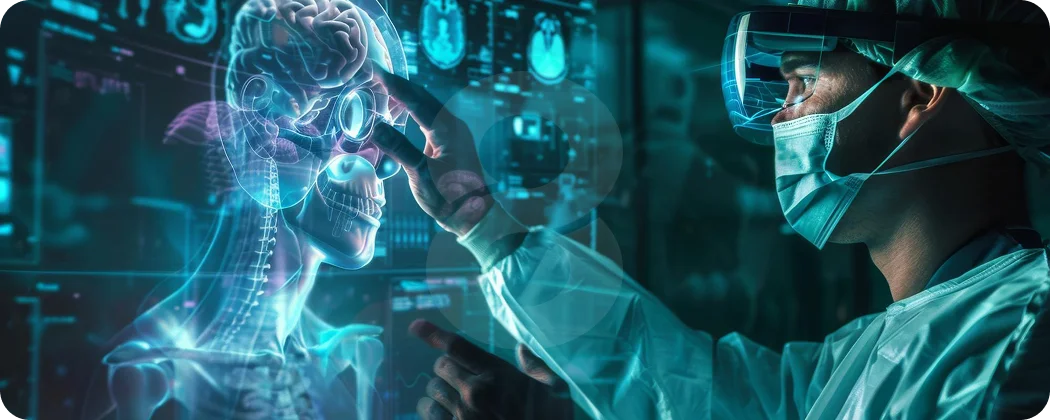
Every day hospitals drown in piles of patient vitals, lab results, scans, prescriptions, appointment notes, sticky notes, scribbles, random comments, and stuff you didn’t even know existed. Most of it gets barely looked at or shuffled around manually which eats up hours and still misses the tiny patterns that actually matter. AI in medicine doesn’t blink. It sees everything.
And this is exactly where AI sneaks in, not the clean conference slides kind. I mean the real, messy version that shows up in crowded hallways, overflowing ERs, night shifts with drained nurses, and doctors who can’t even steal a sip of water. AI is already entering this messy space quietly, and the numbers from actual research make it hard to ignore. A meta-analysis from Dergipark Research reported that hospitals using AI saw a 22% drop in medical errors and an eighteen percent reduction in patient wait times.
AI can notice problems before they escalate. They can help prioritize interventions, detect risk early, and suggest treatment adjustments.
It is not magic. It is number crunching, pattern recognition, prediction, and a lot of smart engineering. And sometimes it feels straight-up like magic. A system notices a patient slipping before anyone else even blinks. Hospitals using AI catch mistakes, save lives, and suddenly everything runs a little smoother.
Mini example: An ICU used AI to detect sepsis early. Within hours, it flagged patients at risk. Staff intervened before things got bad. ICU stays dropped, mortality dropped, and trust in AI went way up.
Side note: AI is only as good as the data it receives. Dirty, incomplete, or delayed data will reduce accuracy. But even partial insights are usually better than missing a critical signal completely.
Read More: 25 Best AI Language Models For Your Next Project
Core Use Cases of AI in Medicine
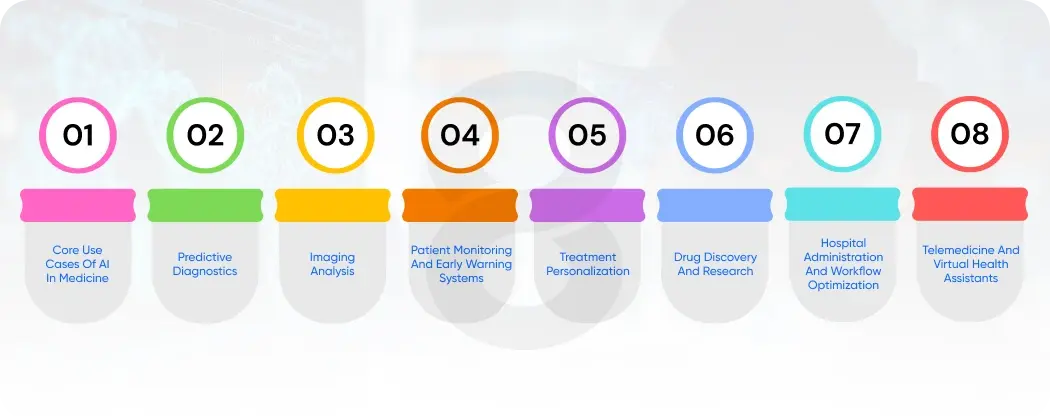
Predictive Diagnostics
Picture this: a patient walks into the ER with vague fatigue, a bit of chest discomfort, maybe mild shortness of breath. Doctors have seconds to make decisions. AI predictive analytics can scan electronic health records, lab results, imaging, patient history, and even population-level data to calculate probabilities for various conditions. It ranks them, highlights red flags, and sometimes surprises staff by catching rare conditions they weren’t expecting.
Result: Faster and more accurate diagnoses, fewer mistakes, better outcomes, less stress on overworked staff.
Mini anecdote: An ER triage AI flagged a high-risk chest pain patient. Within minutes, the team identified an impending heart attack. The patient survived. The staff were shocked, impressed, and a little scared of how “smart” the AI was.
Another story: A rural clinic with only a couple of nurses used AI to scan blood tests for infections, anemia, and thyroid issues. It flagged urgent cases. Nurses could prioritize care and prevent patients from going home untreated.
Side note: AI is not replacing doctors. It is a super assistant, helping people make better decisions faster. The final call is always our judgment.
Imaging Analysis
Hospitals’ X-rays, CT scans, MRIs, and ultrasounds together generate thousands of images every day; radiologists are swamped with a huge amount of work. It is a frequent situation that mistakes happen in the procedure of going through hundreds of images under the immense pressure of time. Conversely, AI has a much faster capability than human eyes when it comes to the detection of such abnormalities as tumors, fractures, infections, and nodules in the images.
Example: AI was put to work analyzing chest CT scans in a hospital. Reporting times got reduced by 30 percent. The subtle nodules that had been missed before got flagged. Detection at an early stage was the reason for the saving of lives.
Mini story: A cancer clinic used AI on mammograms. Tumors were caught earlier than before. Staff could focus on planning treatments instead of hours of repetitive scanning.
Side note: False positives happen. AI flags harmless anomalies sometimes. Staff need to learn interpretation. Over time, false alarms drop and accuracy improves.
Patient Monitoring and Early Warning Systems
Hospitals never stop monitoring patients’ vital signs: heart rate, oxygen saturation, blood pressure, temperature, respiration rate, etc. It is an impossible task to carry out monitoring manually. AI takes over the whole process, thus being able to continuously observe all the patients, and if there is any change in patient condition that could signal worsening, the staff is notified.
Mini anecdote: There was an AI system in the general ward that detected a patient’s very slight decline in oxygen levels. The nurses were so quick in their response that they managed to prevent any complications.
Another example: A hospital delivered a baby girl with the help of AI. Continuous monitoring of the baby and mother had been performed through fetomaternal vitals as well as early alerts.
Side note: AI is not perfect. False alarms occur. Staff learn to interpret patterns over time.
Treatment Personalization
Patients are unique. Age, genetics, lifestyle, medical history, and existing conditions all affect treatment. AI can analyze these factors to recommend personalized care plans.
Mini story: A diabetes treatment center invested in AI to manage its patients’ insulin timing. Blood sugar levels were kept at a good range. Less time was needed for the staff to do manual recalculation of doses, thus more time was available for patient education.
Another Example from the oncology floor: AI peeked into patients’ tumor genetics and predicted how they’d respond to chemo. Doctors used that to craft personalized plans, cutting side effects, improving outcomes, and keeping patients a little more comfortable in the chaos.
Side note: AI provides suggestions, not orders. Doctors always review recommendations.
Drug Discovery and Research
AI accelerates drug discovery. It can process massive datasets, predict molecular interactions, and identify promising compounds for testing. Traditional drug discovery takes years and billions. AI can cut this dramatically.
Example: AI identified antiviral compounds within months. Labs confirmed results.
Mini anecdote: AI predicted a molecule for a rare disease. Lab tests confirmed effectiveness. Human trials started faster.
Another story: During a viral outbreak, AI analyzed existing drugs for repurposing. Clinical trials started earlier than usual, saving critical time.
Hospital Administration and Workflow Optimization
Hospitals are a whirlwind. AI jumps in to sort staff schedules, juggle operating rooms, track supplies, manage pharmacy stocks, and keep equipment from vanishing. More places are leaning on AI workflow automation to handle the endless routine stuff and take the weight off overwhelmed admin teams.
Mini story: A large hospital used AI to schedule surgeries. Conflicts dropped. Wait times dropped. Staff stress decreased.
Another example: AI predicted pharmacy shortages. Early alerts prevented medication stockouts.
Side note: Streamlined workflows save time, reduce stress, save money, and indirectly improve patient care.
Telemedicine and Virtual Health Assistants
Telemedicine is exploding. AI-powered virtual assistants help patients triage symptoms, book appointments, guide treatment, and monitor home vitals.
Mini story: A virtual assistant tracked patients’ blood pressure at home. Alerts went to the clinic for abnormal readings.
Another example: Remote AI monitoring lets cardiology teams manage high-risk patients without frequent hospital visits. Readmissions dropped.
Side note: AI improves access, but data privacy and security are essential.
Benefits of AI in Medicine
- Faster, more accurate diagnoses
- Fewer errors and misdiagnoses
- Early detection of critical conditions
- Personalized treatments
- Optimized workflows
- Shorter patient wait times
- Cost savings
- Accelerated drug discovery
- Improved staff satisfaction
- Enhanced patient monitoring
Mini note: Even small clinics benefit from partial adoption. Gains accumulate over time.
Challenges and Considerations
AI is not flawless. Data is messy. Algorithms fail. Staff need training. Ethical issues, consent, privacy, and accountability are critical. Hospitals must balance trust in AI under human supervision.
Mini anecdote: A hospital initially ignored AI alerts, thinking they were glitches. Later review revealed a patient at risk of stroke had been correctly flagged. Trust and training improved after that.
Another example: Misinterpreting AI recommendations caused unnecessary tests once. Staff quickly adjusted protocols.
Future Trends in AI Medicine
- Wearables and IoT integration for continuous monitoring
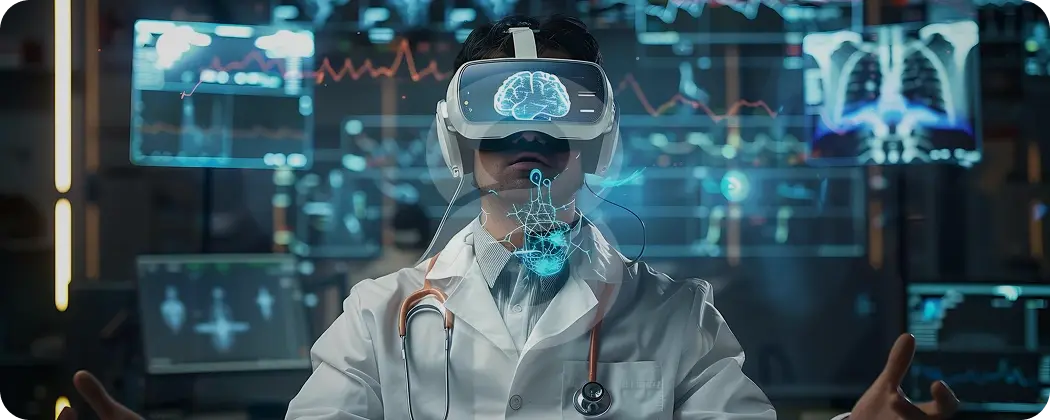
- AI-assisted robotic surgery for precision procedures
- Predictive genomics to anticipate disease risk
- Virtual clinical trials for faster drug development
- AI-driven virtual health assistants for triage and care
- AI simulations to predict treatment outcomes before application
Mini story: Some clinics simulate patient responses using AI before therapy. Mistakes are reduced, costs drop, a patients benefit.
Another example: AI predicts disease outbreaks in real time using patient data, weather, and social media. Hospitals can prepare resources ahead of time.
Another study from PubMed Clinical Review on AI Accuracy showed diagnostic accuracy jumping to 95% when AI-assisted doctors, along with fewer medication mistakes. There is also research from the PubMed Nursing Workflow Study showing that AI helped nurses cut down administrative work and speed up patient management in real hospital settings, not simulated labs. These findings feel borderline sci-fi fi but they are happening right now in places where staff still lose pens every hour.
Read More: 10 Benefits of Artificial Intelligence in Healthcare
Conclusion
AI in medicine is here, and it’s everywhere. Diagnostics, imaging, patient monitoring, treatments, research, hospital admin, telemedicine, you name it. Errors drop, patients do better, hospitals run smoother, costs shrink, and staff actually get to care instead of drowning in repetitive tasks. Tiny improvements stack into big wins.
Mini anecdote: A small clinic used AI for triage and monitoring in two wards. Wait times dropped by 25 percent. Staff felt relieved. Processes improved. Tiny tweaks added up. AI adoption is scattered, imperfect, and it works.