



The property market is more than ever becoming digital. Buyers swipe listings on their commute, agents are managing their portfolios on their phones, and investors are predicting the growth of their neighborhoods by using AI.
But what is the cost of real estate app development? In 2026, the average prices will be between $25,000 and $300,000 and above, depending on the type of product being sold, such as MVP and enterprise platforms that have AI and other advanced features.
The world real estate market will be US$727.8 trillion in 2029 with a CAGR of 2.69. To plan confidently, this guide includes features, platforms, teams, and AI integrations for startups, PropTech entrepreneurs, and brokerages.
Why Investing in Real Estate App Development Makes Business Sense in 2026
It is best to get familiar with the opportunity before considering costs. In 2023, the global real estate software market is estimated to be USD 10.29 billion and is expected to increase to USD 21.77 billion by 2030, with a growth of 11.3% CAGR. In the meantime, AI in real estate will reach USD 1.8 trillion in 2030 with 35% CAGR.
Furthermore, virtual tour properties receive 130% more inquiries than those that have no photos, indicating that users consider immersive, personal experiences. Designing real estate apps is not a luxury anymore, but a competitive need for the companies that want to dominate the market.
Read More: Top 10 Real Estate App Development Companies in the USA
How Much Does It Cost to Develop a Real Estate App?
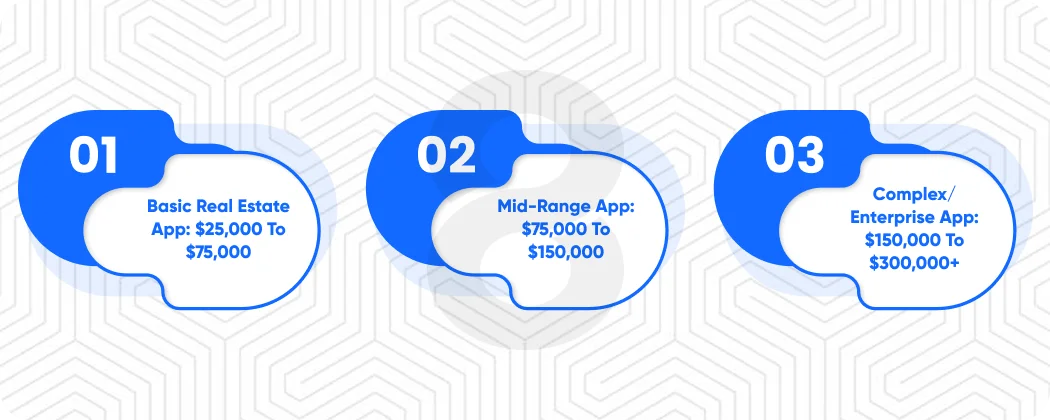
The real answer is it depends. The approximate cost of the real estate app development in 2026 varies between 25,000 and 300,000 or more, depending on the complexity of the product, features that will be added, the technology stack, and the level of expertise of the development team.
# |
Tier |
Cost Range (USD) |
Development Timeline |
| 1 | Basic/MVP App | $25,000 – $75,000 | 8 – 14 weeks |
| 2 | Mid-Range App | $75,000 – $150,000 | 12 – 20 weeks |
| 3 | Complex/Enterprise App | $150,000 – $300,000+ | 8 – 14 months |
To provide a better perspective, below is a breakdown by project tier:
Tier 1: Basic Real Estate App: $25,000 to $75,000
This level suits start-ups that have proven the idea of PropTech, small brokerages with a branded listing tool, or founders with market fit who are waiting to scale. MVP usually consists of:
- Search and filter property listings
- Simple map overlay (Google Maps or Mapbox)
- Registration and management of user profiles
- Contact or inquiry form
- An interactive, mobile-friendly interface
This level of development takes about 8 to 14 weeks. Remember that an MVP is not a skimmed-down version of a larger application. It is a narrow product that aims at providing an answer to a single question: Is the market in need of this?
Tier 2: Mid-Range App: $75,000 to $150,000
It is the most frequented entry of established brokerages and emerging proptech startups. Besides all MVP features, a mid-range real estate application will typically have:
- Advanced search filters (price range, property type, square footage, amenities)
- Chat and real-time messaging between the agents and the buyers in-app
- Push and saved searches
- Home affordability and mortgage calculators
- Virtual tour (Matterport or Cupix)
- MLS (Multiple Listing Service) API integration
- CRM-lite and agent dashboards.
- Reviews and rating systems
Most real estate app development service providers tend to target this range, which is the sweet spot between functionality and budget.
Tier 3: Complex/Enterprise App: $150,000 to $300,000+
This tier is generally made up of large brokerages, real estate investment platforms, and marketplace businesses developing Zillow-scale products. Enterprise features include:
- Artificial intelligence-based property pricing and valuation
- Automated comparative market analysis (CMA)
- Franchise operations: multi-tenant architecture
- On-the-fly data synchronization of two or more MLS feeds
- Innovative analytics and reporting dashboards
- Unique API connections to external platforms (CRMs, ERPs, accounting systems)
- Regional real estate regulations compliance features
- Smart contracts for transactions using blockchain.
The timeframes of development here can be between 8 and 14 months, and the costs of AI and machine learning alone can take up to $40,000-80,000 of the total budget.
Key Factors That Influence Real Estate Application Development Cost
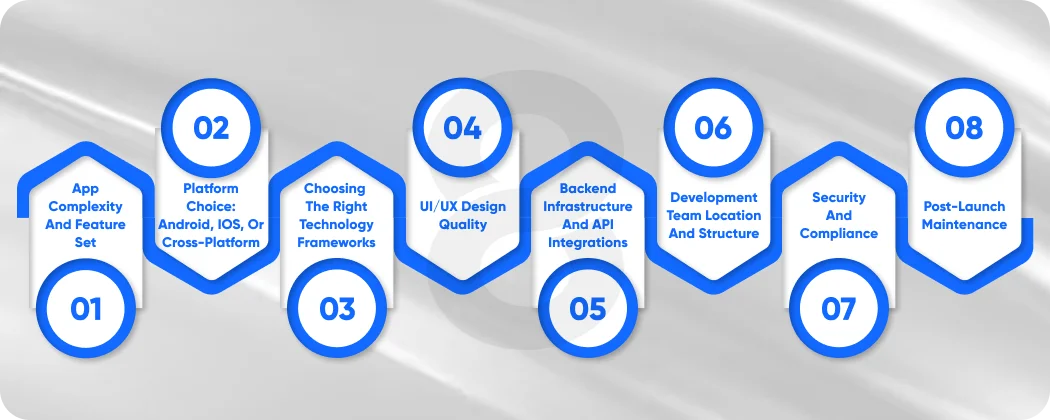
It is as essential to know the price ranges as it is to understand what drives pricing. The following are the main cost considerations that all stakeholders ought to consider prior to hiring an app development firm in real estate.
1. App Complexity and Feature Set
This is the only major cost driver. The more features you create, the more time it will take and the greater the bill. Functionalities such as virtual tours, AI-based suggestions, biometrics access, and blockchain interfaces require many hours of development. The general rule of thumb is to begin lean and then add features as you get actual user feedback.
2. Platform Choice: Android, iOS, or Cross-Platform
The choice of the platform contributes significantly to the total real estate application development price. The comparison of each of the options is as follows:
- Android applications need a lot of device fragmentation testing over hundreds of screen sizes and OS versions, which will be an added cost and time to QA.
- iOS applications are more strictly designed using Apple guidelines, requiring more polish and optimization of the UI, potentially raising the price of design and implementation.
- Cross-platform apps written using frameworks such as React Native or Flutter enable you to support both platforms with the same codebase, saving you 30–40% the time and cost of developing individual native apps.
Cross-platform development is the most cost-effective and high-performance solution for most real estate startups and expanding brokerages.
3. Choosing the Right Technology Frameworks
Cross-platform frameworks include Flutter and React Native, which allow a single Android and iOS codebase to be created in 2026 and save on expenses. Using Node.js or Django as a backend and cloud providers, such as AWS or Azure, can guarantee scalability, real-time updates, and smooth performance of the modern real estate applications.
4. UI/UX Design Quality
Design is not merely about beauty; it inspires conversion. An intuitive real estate application minimizes friction, fosters trust, and maintains user interest. Usually consuming 15 to 25 percent of the development budget, reducing UX design in most cases can result in increased churn and decreased conversion rates.
5. Backend Infrastructure and API Integrations
A strong backend will be needed to handle the listing of the property, user records, real-time search, and payments at scale. Integrations via third-party APIs, such as MLS feeds, Google Maps, payment gateways, mortgage calculators, and CRMs, are also licensed and costly to integrate, often in the hundreds or thousands of dollars per month.
6. Development Team Location and Structure
The location of your development team has a great influence on your hourly rate and, thus, the overall project cost:
Region |
Hourly Rate |
| North America | $100 — $200/hr |
| Western Europe | $80 — $150/hr |
| Eastern Europe | $40 — $80/hr |
| South Asia (India, Pakistan) | $20 — $50/hr |
| Latin America | $40 — $90/hr |
Of course, collaborating with a reputable mobile app development agency that will integrate experience on a senior level with reasonable prices can provide you with the best result without the trade-offs of making a choice based solely on price.
7. Security and Compliance
Real estate apps deal with sensitive personal financial data, addresses of homes, identity papers, and payment information. Even simple encryption is not sufficient in 2026. You will have to expect spending at least $10,000 to $20,000 on security hardening specifically, which will include multi-factor authentication, biometric logins, end-to-end encryption, and GDPR or regional compliance guidelines.
8. Post-Launch Maintenance
The app cannot pay itself at the time of launch. App maintenance and support costs usually account for 15%-20% of the original development cost per year. This includes bug fixes, OS updates, API version updates, performance optimization, and rollout of new features.
Read More: How Much Does it Cost to Develop an App
Detailed Real Estate App Development Breakdown by Key Factors
All these are what make up your real estate app budget. Understanding the approximate costs will allow you to plan well, spend less, and have a secure, scalable, and high-performing app.
Factor |
Impact on Cost |
Estimated Cost (USD) |
| App Complexity & Features | High | $25,000 – $300,000+ depending on tier |
| Platform Choice | Medium to High | $5,000 – $50,000 depending on platforms and QA needs |
| Technology Stack | Medium | $10,000 – $50,000 for backend, cloud, and integrations |
| UI/UX Design | Medium | $5,000 – $50,000 depending on app complexity |
| Backend & API Integrations | Medium | $10,000 – $50,000 for core integrations |
| Team Location & Structure | Medium | $20,000 – $150,000 depending on team size & region |
| Security & Compliance | Medium | $10,000 – $20,000 |
| Post-Launch Maintenance | Medium | $5,000 – $50,000/year depending on app size |
Must-Have Features for a Competitive Real Estate Mobile App Development Project
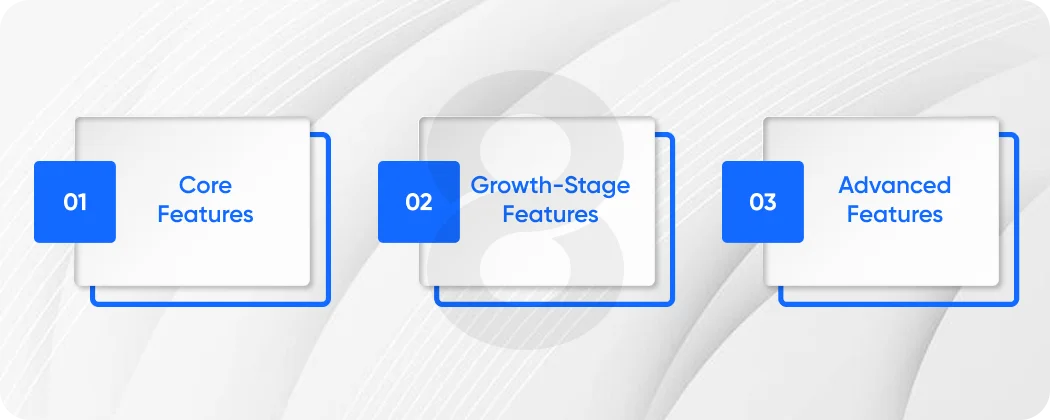
Your vision comes to life on your feature roadmap. The next characteristics are the current minimum requirements of a competitive real estate mobile application:
Core Features:
- More developed search of real estate with intelligent filters (location, price, type, size, amenities)
- On top of neighborhood data overlays, an interactive map
- Detailed property pictures and 360 virtual tours
- Buyer, seller, and agent authentication and customized dashboards
- Real-time push notifications and in-app messaging
- Saved searches and customized property alerts
- Mortgage and affordability calculators
- Protected payment gateway
Growth-Stage Features:
- Profiles of agents and brokers with ratings and reviews
- Lead management agent CRM
- Integration of document management and e-signatures
- Scheduling of property viewings
- Social sharing and referral options
Advanced Features:
- User-based AI-based property recommendations
- Market trend analytics and predictive pricing
- AR visualization of properties
- Smart contracts and records of transactions based on blockchain
- Voice search integration
The Role of AI in Real Estate App Development in 2026
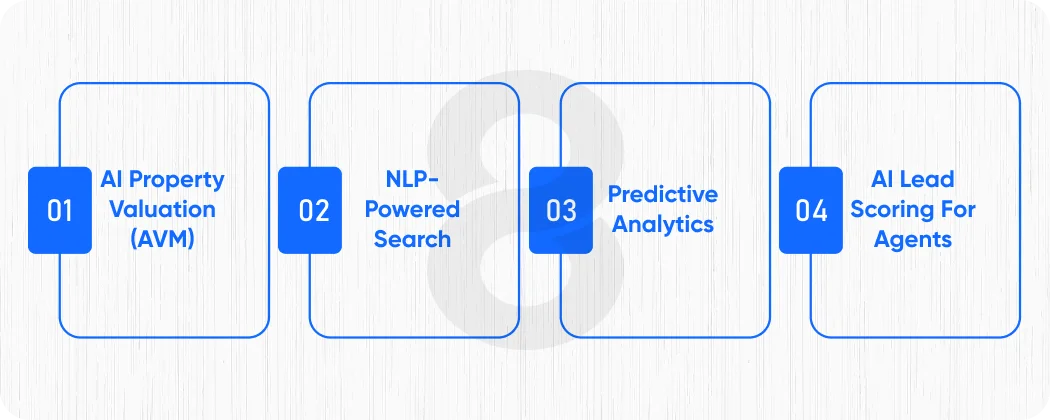
Any book regarding the cost of real estate app development in 2026 could not be complete without covering AI. AI is never a buzzword in this area; it is an operational differentiator that has a direct effect on user retention and revenue.
AI-powered real estate apps are transforming the way in which purchasers find houses, the way agents filter leads, and the manner in which investors assess risk. The following is the way AI will contribute to real value:
AI Property Valuation (AVM)
Applications such as CoreLogic and HouseCanary APIs provide real-time automated values using similar sales, market trends, and neighborhood information. All this will cost you an additional $15,000 to 30,000, but it is table stakes with any serious platform.
NLP-Powered Search
Natural language search enables users to enter queries such as “3-bedroom home with a garden near a top school under 500k” and receive relevant, ranked search results. Powered by OpenAI Embeddings or similar tools, NLP search integration typically costs $10,000 to $25,000.
Predictive Analytics
Neighborhood appreciation, rental yield, and time-on-market prediction models will enable investors to make better decisions using machine learning. These models generally translate into an additional budget of between $20,000 and 50,000 in the development budget.
AI Lead Scoring for Agents
Buyer intent-based lead qualification and follow-up are highly productive to automate and boost agency output and conversion.
It should be mentioned that industry research conducted by 58 percent of real estate firms indicates that they already use AI in decision-support use cases. You are already behind the curve if you are developing a platform in 2026 without any AI layer.
Choosing the Right Real Estate App Developers
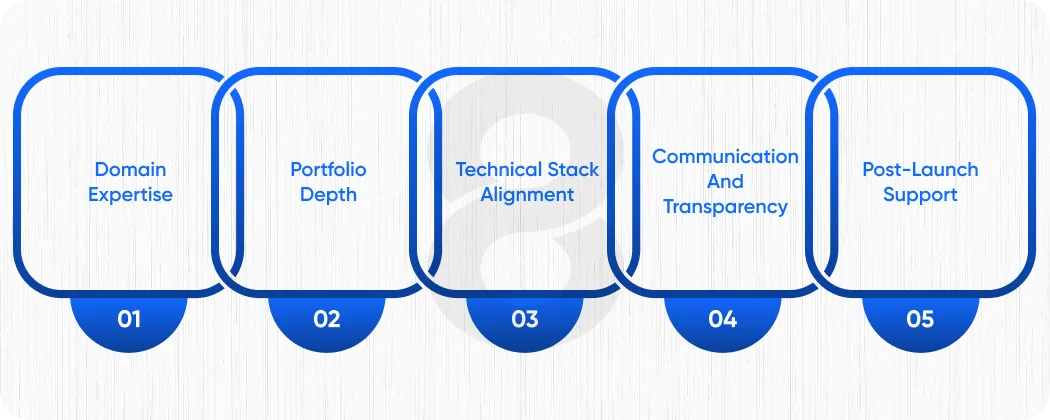
It is almost as important as the product itself to choose your development partner. The wrong team will not only waste your budget but also miss deadlines and produce a product that will not be popular with users. The following are the points to consider in assessing real estate app developers:
Domain Expertise
Make sure that the development team has previous experience in creating property apps and is knowledgeable about PropTech business models, MLS integration, and regional real estate compliance requirements, which will be essential to the implementation process.
Portfolio Depth
Ask them to provide detailed case studies and references of past real estate clients to confirm their experience. Do not use generic app portfolios or irrelevant projects only.
Technical Stack Alignment
Ensure that the team possesses practical experience with your stack of choice, including Flutter, React Native, Node.js, and AWS, to develop high-performing, scalable, and maintainable apps.
Communication and Transparency
It is a requirement to have clear sprint documentation, regular progress reports, and frequent demos, especially when the project is more than 50,000, to avoid misalignment and guarantee predictable delivery results.
Post-Launch Support
An experienced app development firm offers stable after-launch maintenance, such as bug fixes, updates, and feature improvements, rather than vanishing once deployed, preserving long-term performance and stability of the app.
Another aspect to consider is whether to go with an in-house team, a freelance team, or a dedicated agency. In the majority of companies, a full-service agency with knowledge in the field of real estate is the most appropriate combination of responsibility, expediency, and quality.
Read More: Android App Development Cost in 2026 – A Detailed Guide
Hidden Real Estate App Development Costs Most Guides Do Not Mention
Even well-considered cost estimates frequently overlook the following items that might increase your overall expenditures by 20-30%:
- App Store fees: Apple costs are 99/year; Google Play costs are a 25 registration fee.
- Third-party API subscriptions: MLS access, map API, payment processing, and SMS/notification services are recurring costs.
- Data storage and cloud hosting: AWS, Google Cloud, or Azure charges are based on the number of users and data.
- QA testing across devices: Particularly for Android, comprehensive device testing adds meaningful QA hours to the project.
- Legal and compliance review: In the case of apps that involve financial transactions or user identity information, the terms, privacy policy, and compliance documentation should be reviewed by a lawyer.
- Marketing and ASO (App Store Optimization): The most optimal app requires exposure. Allocate launch marketing and content strategy expenses, continuing ASO expenses, and development expenses.
Read More: iOS App Development Cost in 2026 – A Detailed Guide
A Practical Approach to Budgeting Your Real Estate App
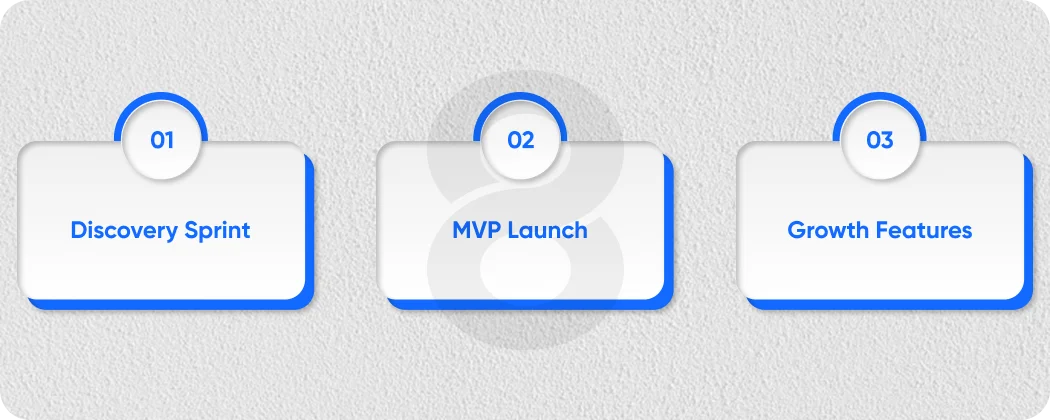
Considering all that, the following is a clever, stage-based management of your real estate app development budget:
Phase |
Duration |
Estimated Cost (USD) |
| Discovery Sprint | 2 – 4 weeks | $5,000 – $15,000 |
| MVP Launch | 8 – 14 weeks | $30,000 – $75,000 |
| Growth Features | Ongoing | $20,000 – $50,000 per cycle |
Phase 1: Discovery Sprint
The teams establish user personas, complete the feature roadmap, plan technical architecture, and scope out the MVP in the discovery sprint (usually 2-4 weeks, costing 5,000-15,000 dollars) to minimize risks and avoid costly scope additions in the future.
Phase 2: MVP Launch
The MVP launch stage typically lasts 8-14 weeks and costs between 30,000 and 75,000. Companies develop their main capabilities, like property listings, search, and inquiry software, and gather actual user feedback to confirm product-market fit.
Phase 3: Growth Features
Growth phases are continuous cycles, typically costing $20,000 to $50,000 each cycle. The teams use data on users collected after launch to set a priority and develop more advanced features such as AI suggestions, virtual tours, and predictive analytics that facilitate scalable product growth.
This staged approach resembles the successful scaling of major real estate applications such as Zillow or Realtor.com, which started small, proved immediately, and were enhanced with learning through experience and cash flow management, as well as reducing the total risk of the business.
Final Thoughts!
The cost of app development in real estate in 2026 will vary depending on your objectives, users, and the complexity of the product. Regardless of an MVP or an AI-powered marketplace, success lies in a clear strategy, realistic timelines, and the appropriate development partner.
With the real estate sector becoming highly digitized, companies that invest in real estate mobile application development based on user-oriented or scalable features are today placed in a strategic position to grow their businesses in the long term and gain a competitive advantage in a market becoming highly technological.