


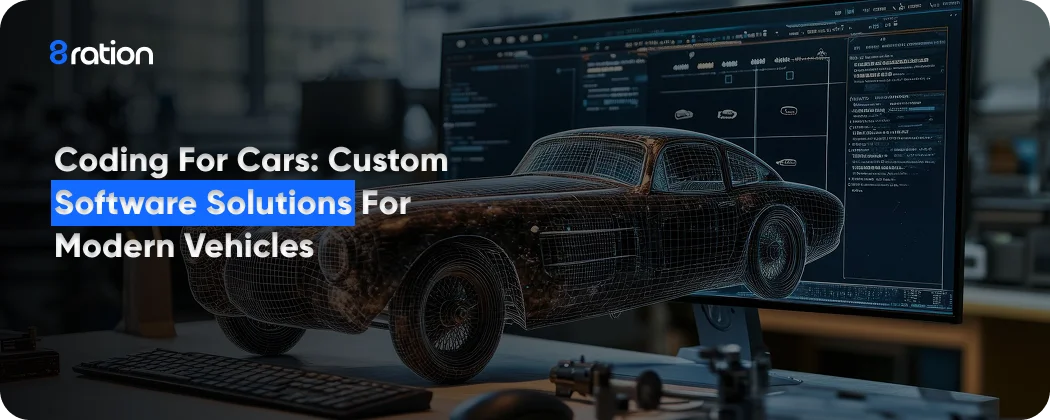
Coding for cars allows you to adjust settings or enable hidden features, while programming involves updating the software that controls systems like the ECU or ADAS.
The modern car has long since ceased to be a mechanical wonder; it is a computer on wheels. Under the hood of a modern car, there is a complex system of electronic control units, sensors, and software systems that control every aspect of the car, including fuel injection to adaptive cruise control. With the increased intelligence of cars, the need to have specialized coding for cars has also risen, and a new frontier has emerged where software engineers reside alongside automotive engineers. If you are a shop owner, a car enthusiast, or a fleet manager and you need to save time, cost, and frustration, you need to know about custom automotive software solutions, as they can give your vehicle performance and abilities you never knew your vehicle could have.
The Rise of the Software-Defined Vehicle
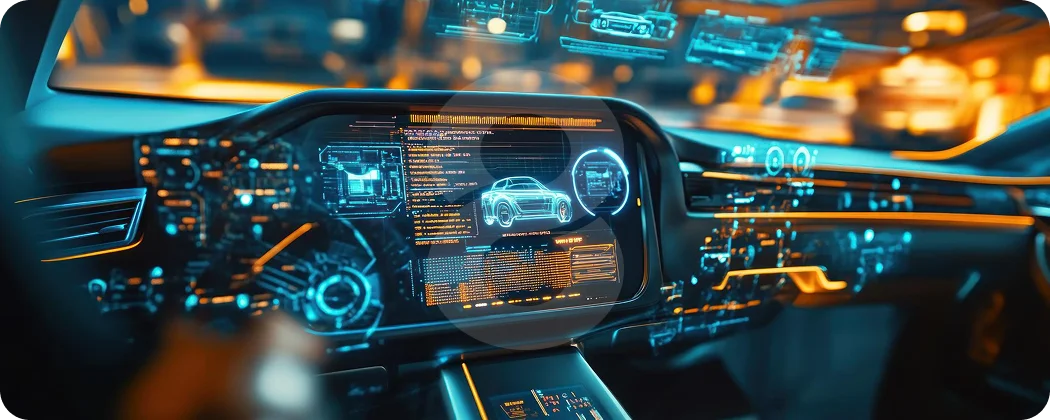
Not so long ago, a mechanic’s toolkit was comprised of only wrenches, gauges, and a good ear. A laptop with a diagnostic port is currently the single most potent device in any garage. Vehicles of today have more than 100 million lines of code, comparable to commercial aircraft. All ingredients, including brakes, the infotainment screen, etc., are connected by a network of electronic control units (ECUs), and in such cases, a physical examination alone will not tell you much.
A vehicle code reader plays a crucial role in diagnostics. It connects directly to the OBD-II (On-Board Diagnostics) interface, a standard port installed in nearly all passenger cars sold since 1996. By reading fault codes stored in the vehicle’s ECUs, technicians and vehicle owners can quickly and accurately identify issues early—often before they escalate into costly mechanical failures. A coding for car can help you identify some of the most frequently occurring things, and they include
- Ignition malfunctions and engine misfires
- Problems with oxygen sensors and exhausts
- Shift solenoid and transmission error code problems
- ABS and the traction control system warning
- System leaks through evaporative emissions (EVAP)
The reading codes are only the beginning.
From Fault Codes to Full Diagnostics
A simple instance of a code reader will inform you that there is an issue with your oxygen sensor. A car scanner, on the other hand, narrates everything. The state-of-the-art diagnostic scanners are much more than fault codes; to the point, they offer the following:
- Live data streaming: Live sensor values as the engine is underway.
- Actuator testing: One of the commanded individual components, such as fuel injectors or cooling fans, is turned on.
- Module resets: Zero learned adaptations and reset service interval counters.
- Guided diagnostics: Step-by-step repair options that are developed directly into the interface.
In the case of professional shops, having a simple code reader or a full diagnostic scanner can spell out either a 30-minute troubleshooting session or a three-hour guessing game. Brands such as BMW, Mercedes-Benz, and Ford design proprietary vehicle systems that only manufacturer-level tools can access. Specialized scanners with dedicated software unlock these systems, which is why modern diagnostic tools now operate as continuously updated software platforms that support the latest vehicle models, ECU versions, and fault codes.
Read More: 30 Best Android Automotive Apps to Help You Build Your Own
What Is a Car Computer Programmer?

Behind each melody, each adjustment, and each change of modules lies a car computer programmer. This is a term that is applied to the hardware devices utilized to read and write data to the vehicle ECUs, as well as to the human experts who utilize them. When changing an ECU of a car, it is usually necessary to program it with the right software to suit the particular car, a process known as “flashing.” In the absence of this, the new module will not interact with the rest of the vehicle systems properly.
Coding for cars are employed in a wide variety of locations, which include the following:
- ECU replacement and setup: Reconfiguring a new ECU to fit the vehicle VIN and setting up ECU replacement and setup. Programming a new ECU with the VIN and setup of the vehicle.
- Performance tuning: Tuning fuel maps, ignition timing, boost limits, and rev ceilings.
- Post-repair calibration: Resetting radar sensors, ADAS cameras, and steering angle sensors after bodywork
- Immobilizer programming: This is the process of changing the keys and transponders to the security system of the vehicle.
- Firmware releases: Implementing manufacturer patches that correct known software bugs in control modules.
It involves a profound knowledge of engine behavior and an advanced collection of programming tools. Even a failed programmer session can render an ECU useless, and therefore, the programs that run these devices are of equal importance to the hardware.
The Importance of Car Programming Software
Car programming software lies at the core of every programmer’s device. This is how technicians can interact with the brain of a vehicle. Good car software has an organized display of all the modules within the vehicle, shows the existing calibration files, enables users to save the existing data prior to any changes, and helps in guiding users through the flashing processes with protective measures to avoid corruption. Most successful platforms in the market are characterized by several reasons:
- Provided support on a large variety of vehicle brands through a single interface.
- Proprietary calibration data is encrypted to provide a secure connection.
- Rollback and backup capability in the event of flash interruption and failure.
- Checks of compatibility before data is written to a module are automatic.
- New support model years and ECU variants are updated regularly.
- Have audit logs that are understandable to technicians to follow all the programming events.
In the case of independent shops, as well as dealerships, it is not a choice to invest in quality car programming software but rather the key to a modern repair workflow. An incorrect flash may cause an ECU to be bricked and leave a customer without a car and a shop with an expensive warranty bill.
It is projected that the software platform market will represent only 2% of the overall software and electronics automotive market by 2030. It will have a CAGR of 12% from 2023 through 2030, growing to $13 billion.
Automotive Software Development: Building the Solutions Behind the Tools
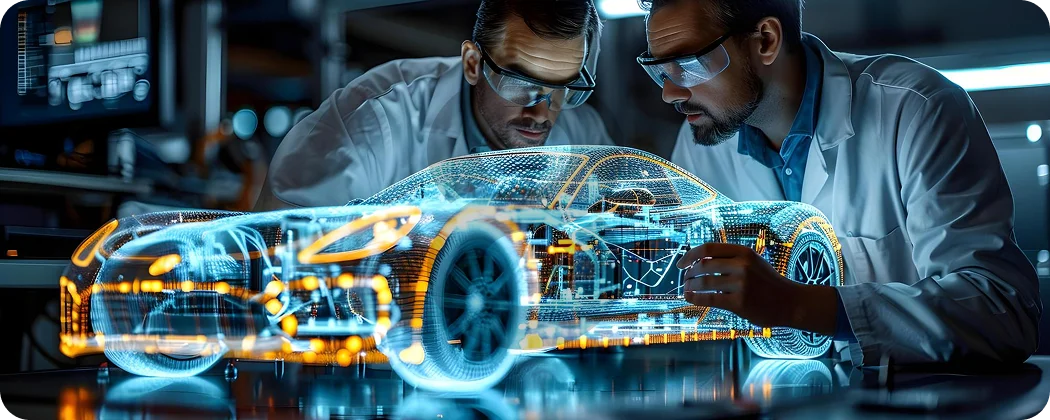
We have all these tools, the scanners, the programmers, and the platforms used in diagnosing, because of the competent staff that works in automotive software development. This is a specialized discipline at the intersection of embedded systems, real-time computing, cybersecurity, and mechanical engineering. The programmers in this area create the code that runs on ECUs, the desktop and cloud software that the technicians use in the workroom, and the communication protocols that enable the various systems of a vehicle to communicate with one another in a reliable manner.
There are rigorous standards of automotive software development. Functional safety requirements of automotive systems are defined by ISO 26262, whereas most large OEMs now use a standardized software framework (AUTOSSAR) (Automotive Open System Architecture). The problems developers have with this space are distinctive:
- The software should be able to work effectively at temperatures between -40 deg C and above 125 deg C
- Code should be able to satisfy hard real time deadlines in micro-seconds
- The systems should be able to endure electromagnetic interference by the motors, alternators as well as external sources
- The security should be very strong to withstand any attack that is transmitted through Bluetooth, Wi-Fi, and cellular networks
- The reliability should be able to carry the entire lifespan of a car 10 to 15 years or above
The creation of software that is up to these standards involves intensive procedures, special equipment, and teams of developers possessing extensive expertise on the domain.
Read More: Artificial Intelligence in Automotive Industry – Trends & Use Cases
API Integration: Bridging Vehicles to the Digital World
Connected vehicle platforms have been one of the most disruptive phenomena in the automotive software in recent years. The amount of coding for cars are generating these days is immense: telemetry, location, driving behavior, and maintenance alerts. It is of immense value to not only for fleet managers but insurance companies as well as the vehicle owners. To make use of that data, it is necessary to integrate by API: connect vehicle data systems with the external software applications with the help of well-defined programming interfaces.
With API integration, the list of powerful use cases is long:
- Real-time GPS and engine health information of thousands of vehicles can be pulled by fleet operators.
- Driving behavior metrics are available to insurance providers, and they use these metrics to come up with individualized usage-based premiums.
- Dealership CRM systems have the capability of generating automatic maintenance warnings on the basis of real vehicle mileage.
- OEMs are able to deploy over-the-air (OTA) updates to cars in the field.
- Third-party applications can display fuel consumption data, travel logs, and intensive maintenance hints to users.
API integration also allows over-the-air (OTA) updates to the system through which manufacturers such as Tesla can update software directly to the vehicle without the need to visit a dealership. The integration of APIs becomes even more prominent in the automotive software ecosystem as additional OEMs implement OTA functionality.
Software Testing: Why It’s Non-Negotiable in Automotive Systems

Due to the critical (safety-wise) nature of automotive software, software testing is not a quality assurance box but a legal and moral necessity. An error in a navigation app would make a wrong turn in the wrong street. The failure of an ABS control module due to a bug may result in the loss of a life. That dissimilarity in outcome requires a totally new degree of rigorous testing.
Software testing in automobile testing is done in a variety of layers:
- Unit testing: check of isolated functionality of individual functions and code modules.
- Integration testing: ensuring modules are able to communicate with each other properly.
- Hardware-in-the-loop (HIL) testing: Execution of software on simulated vehicle hardware within a controlled laboratory.
- Full vehicle validation: Testing the full software stack on an actual vehicle in real-world driving.
- Security testing: Penetration testing, fuzzing, and code audits to determine the vulnerabilities before deployment.
The extra layer puts trust in the fact that the software is going to perform properly in all situations, including edge cases that can only happen once a million times of driving with it. The security testing has become as important as the functional validation, given the fact that vehicles are nowadays linked to the internet, cellular networks, and Bluetooth devices.
Analysts estimate the automotive TIC (Testing Inspection Certification) market will grow from roughly $23.3 billion in 2025 to about $37.2 billion by 2035 as electrification, connected vehicles, and software complexity drive testing and certification needs.
Software Design: The Foundation of Reliable Automotive Tools

All good diagnostic tools and all sound ECU programmers begin with carefully designed software. Good software design is not simply clean code in automotive applications; it consists of creating systems that are safe, maintainable, and durable. The essential guidelines of successful software development in the automotive industry are:
- Modular architecture: Parts that may be updated on their own without affecting the entire system.
- Clear separation of concerns: Ensuring that the communication layer, business logic and user interface are clearly separated.
- Good error management: Graceful degradation and not hard crashing in case of unexpected circumstances.
- Future-proofing: The data models and interfaces are to be future-proofed to support new protocols and vehicle types.
- Intuitive UX: User interfaces, which reveal vital information fast, minimize technical mistakes in stressful situations.
Well-designed automotive software anticipates long-term use. Today’s vehicles often remain on the road for 15 years or more, so developers must build software that teams can support, maintain, and expand over time. They design these systems to accommodate new protocols, evolving ECU architectures, and changing regulatory standards as the industry advances.
Read More: 10 Best Apple CarPlay Apps for Your Next Automotive Venture
The Future Is Already Under the Hood. Are You Ready?
Automobile software does not have a decelerating rate of change. EV has brought along a brand new category of ECUs: battery management, motor controllers, and thermal management. All require new diagnostic and programming software. The software involved in autonomous driving capabilities is of exceptionally high complexity, and its use can lead to a single untested edge case with real-world implications. And with cars growing more integrated, the distinction between car software and enterprise IT has nearly been eliminated.
It will not be the same stores, tuners, and fleet operators who survive in this environment who will be holding on to the old ways, but those who have accepted the change early. A diagnostic scanner on cars that is professional in each bay. Quality coding for cars with frequent updates. A car scanner, which can communicate with all ECUs of the lot. A car computer programmer is in the hands of one who understands how to use it.
And as to the companies developing the next generation of automotive tools, the formula is simple: invest in the talent of software development, collaborate with trusted software development service providers, create linked features on sound API integration underpinnings, never ship without extensive software testing, and trust smart software design to bring every product to a good, much less exceptional, level.
The modern automobile is a computer-driven car. Ensure the software that drives it and tools used in diagnosing it are up to the task of the road ahead.