


Global ecommerce revenue is projected to reach about US$3.52 trillion in 2025 and grow to approximately US$4.79 trillion by 2030, showing a steady increase in digital commerce value worldwide.
Online trade is all about milliseconds, and businesses are not ready to devote time to slow platforms that delay development or irritate clients. Scalability, speed, and flexibility become the success pillars as the volume of transactions skyrockets and the shoppers need to be able to experience seamless personalized shopping experiences.
The tactical decision that will make a difference between leaders and laggards is the selection of an appropriate ecommerce technology stack. To the business that deals with massive amounts of catalogs, millions of users, and complicated integrations, the underlying technology delineates performance, security, and flexibility.
This guide examines the best scalable ecommerce technology stack, prominent architecture layers, and future-proofing enterprise platforms.
What Is Ecommerce Development and Why Technology Stack Matters
It is necessary to have a feel of what ecommerce development is on an enterprise level before delving into tools and frameworks.
The creation of digital platforms through which online purchases and sales occur is referred to as ecommerce development. But enterprise ecommerce is not just a simple storefront. It involves:
- High-availability systems
- Distributed architectures
- Secure payment processing
- Real-time inventory synchronization
- Global performance optimization
- Multi-channel user experiences
The main driving force behind all this is the ecommerce technology stack, which is a composite of frontend, backend, databases, cloud service, API, and third-party integrations that all drive the platform.
The poor selection of a stack results in bottlenecks of performance, technical debt, security vulnerabilities, and scalability. Conversely, an ecommerce tech stack that was properly designed allows fast innovation, easy scaling, and ROI over the long term.
Core Layers of a Scalable Ecommerce Technology Stack
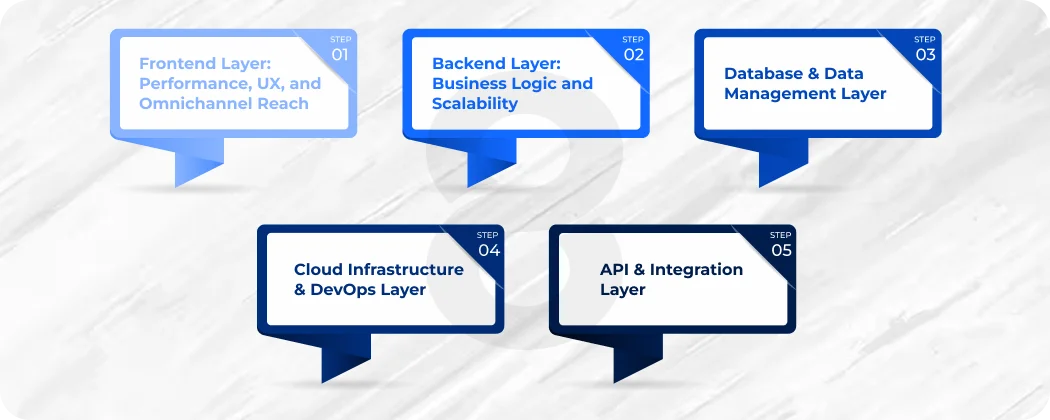
A current enterprise-grade e-commerce technology stack is modular, cloud-native, and API-driven to allow seamless scaling, high-performance, secure integration, and flexible omnichannel experiences, and allow fast innovation and long-term business growth.
|
Layer |
Purpose |
Recommended Technologies |
Key Benefits |
|
Frontend |
Customer-facing interface, UX & performance |
React.js, Next.js, Vue.js, Nuxt.js, Tailwind CSS, Material UI |
Fast page loads, responsive design, brand consistency, omnichannel reach |
|
Backend |
Business logic, order processing, integrations |
Node.js (NestJS), Java (Spring Boot), Python (Django/FastAPI) |
Scalable APIs, independent service scaling, and operational stability |
|
Database & Data Management |
Transaction handling, inventory, search |
PostgreSQL, MySQL, MongoDB, Redis, Elasticsearch |
Low latency, accurate inventory, real-time personalization |
|
Cloud Infrastructure & DevOps |
Scalability, deployment, and resource management |
AWS, GCP, Azure, Kubernetes, Docker, Terraform |
Elastic scaling, high availability, continuous deployment, resilience |
|
API & Integration |
Connect internal & third-party systems |
REST APIs, GraphQL, API Gateways, Webhooks |
Seamless integrations, accelerated feature expansion, and long-term flexibility |
1. Frontend Layer: Performance, UX, and Omnichannel Reach
The frontend is the interface, customer-facing part, in which the speed, usability, and visual consistency would have a direct impact on the engagement and conversion rates. Decoupled or headless architectures are becoming a trend among enterprises to provide a smooth experience over the web, mobile, and other new digital touchpoints.
Recommended Frontend Technologies
- React.js / Next.js for server-side rendering and SEO
- Vue.js / Nuxt.js for dynamic UI components
- Tailwind CSS or Material UI for scalable design systems
This layer is important to the Ecommerce store development because it offers light, speedy page loads, cellular friendliness, brand adaptation, as well as a custom user experience that is seamlessly compatible across devices, platforms, and customer communication mediums.
2. Backend Layer: Business Logic and Scalability
The backend provides the core commerce functionality, such as product management, price logic, order processing, authentication, and 3rd party integrations. To achieve enterprise-level performance and flexibility, microservices-based architectures have been adopted by industries as the standard for scalability of ecommerce platforms.
Enterprise Backend Technologies
- Node.js with NestJS for scalable APIs
- Java (Spring Boot) for mission-critical systems
- Python (Django/FastAPI) for data-driven commerce logic
With the help of containerized microservices, enterprises can automatically scale individual services, decrease system dependencies, and ensure stability when the system load levels peak (during flash sales, seasonal promotions, and worldwide product launches).
3. Database & Data Management Layer
In the case of enterprise ecommerce systems, data consistency, low latency, and high availability are needed to ensure smooth shopping experiences. A properly-designed data layer will provide reliability in transaction processing, tracking inventory correctly, and real-time access to customer and product details.
Recommended Database Stack
- PostgreSQL / MySQL for transactional data
- MongoDB for flexible product catalogs
- Redis for caching and session management
- Elasticsearch for advanced search and filtering
The optimized data architecture is much more effective in increasing the speed of checkouts, relevance of search, accuracy of inventory, and personalization capabilities, which are the key to high traffic and complex enterprise e-commerce services.
4. Cloud Infrastructure & DevOps Layer
The e-commerce scaling will need a cloud-native system that dynamically reacts to traffic. The business should possess an elastic environment that ensures maximum output, minimal disruption, and resource utilization during the peak season and the low season.
Cloud & Infrastructure Tools
- AWS, Google Cloud, or Microsoft Azure
- Kubernetes for container orchestration
- Docker for service portability
- Terraform for infrastructure as code
This middleware is the foundation of the best e-commerce tech stack as it allows automation, continuous deployment, scalability worldwide, fault tolerance, and operational resilience in geographically dispersed markets and consumer bases.
5. API & Integration Layer
Enterprise ecommerce systems rely heavily upon integrations with third-party and internal systems. APIs act as the connectivity tissue and enable real-time communication between trading platforms, payment gateways, transport companies, promotional tools, and business software.
Integration Technologies
- RESTful APIs and GraphQL
- API gateways (Kong, AWS API Gateway)
- Webhooks for real-time event handling
Deep integration layers simplify the process of picking a technology stack that enables long-term growth, speed in adding features, and avoids the costly effort of re-engineering an architecture, adding new tools, partners, and channels.
Read More: Artificial Intelligence in Ecommerce – How AI Drives Sales, Growth, and ROI
Mobile-First Commerce and App Ecosystems
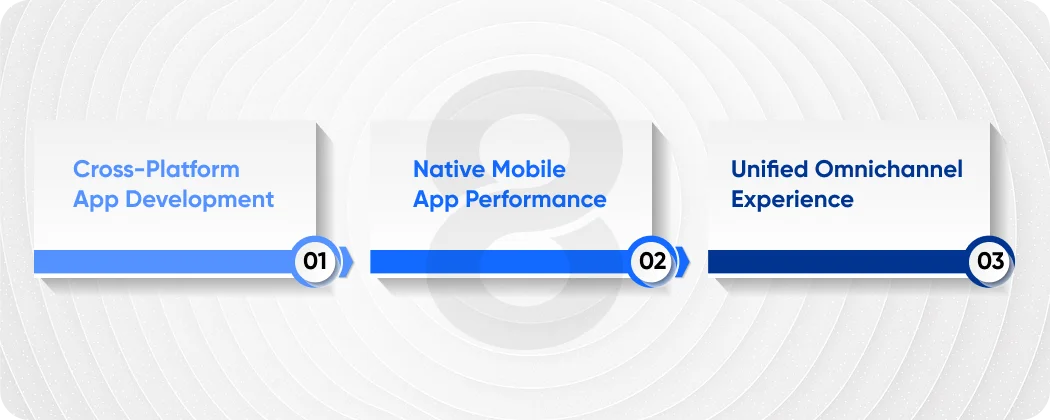
With e-commerce becoming the origin of an ever-growing share of revenues, companies must go to an e-commerce technology layer capable of delivering seamless mobile experiences to enable quick, interactive and personalized shopping across applications, devices and platforms.
1. Cross-Platform App Development
Using Flutter or React Native in your ecommerce technology stack allows developing cross-platform apps with less expenditure and no loss in performance, similar UI, and fast delivery of new features to both iOS and Android platforms.
2. Native Mobile App Performance
App development using Swift on iOS and Kotlin on Android supports the latest enterprise-level speed and responsiveness, which makes ecommerce apps very efficient in terms of performance and improves user experience in mobile-first commerce applications.
3. Unified Omnichannel Experience
The combination of mobile applications, web, and backend systems forms a coherent ecosystem of omnichannel, and the e-commerce technology stack will guarantee data synchronization, personalization of interactions, and the presence of the user in all touchpoints.
According to Statista, by 2030, the number of ecommerce users is expected to reach around 4 billion globally, reflecting broader internet adoption and digital buying behaviors.
Tech Stack Insights from the World’s Leading E-Commerce Giants
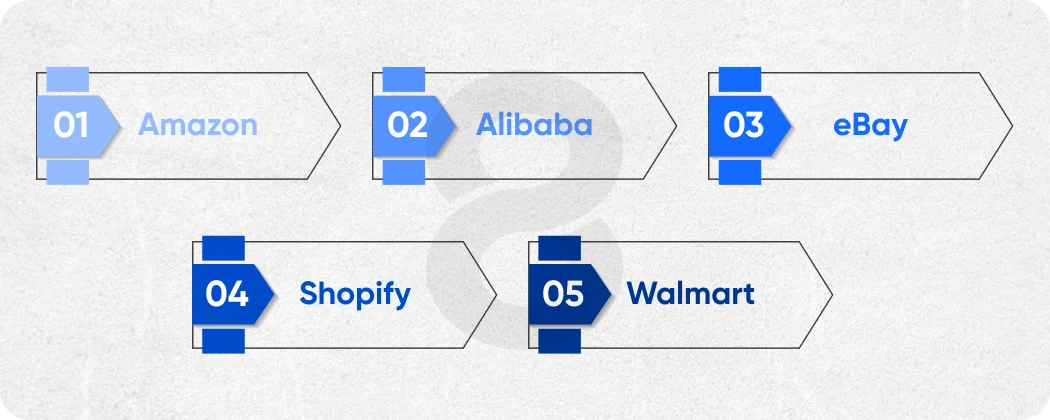
The successful e-commerce brands use the technology stacks that are robust and scalable in order to provide a smooth shopping experience, manage huge traffic, and continuously innovate with the customer convenience in mind.
1. Amazon
Amazon is run on a highly scalable, microservices, micro-architecture that is capable of supporting large finite volumes of traffic and real-time transactions. The cloud-first strategy helps it to be fast, reliable, and constantly innovate in the context of global marketplaces.
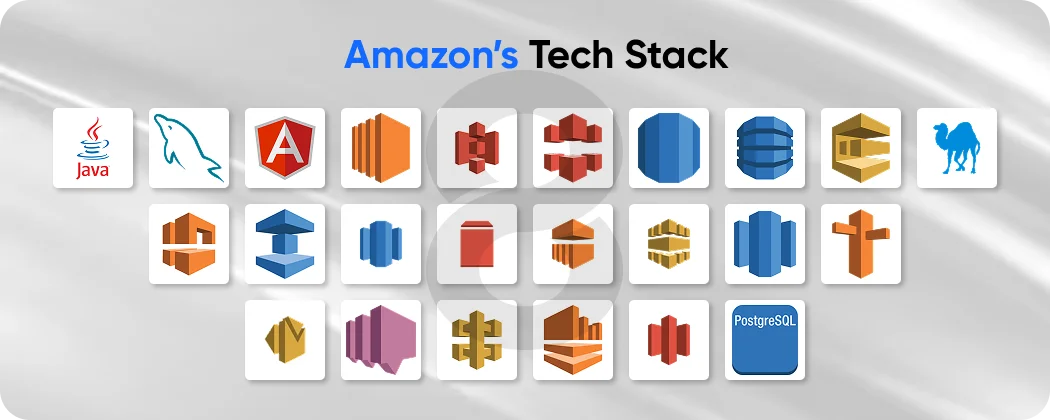
Key Takeaways:
- Microservices ensure independent scaling
- Cloud-native infrastructure boosts reliability
- Data-driven personalization enhances user experience
Read More: How Much Does it Cost to Build an App Like Amazon
2. Alibaba
The e-commerce ecosystem of Alibaba operates with the use of distributed systems that facilitate a large number of users and multifaceted cross-border trade. Its technology platform lays stress on elasticity, AI-based insights, and omnichannel functions.
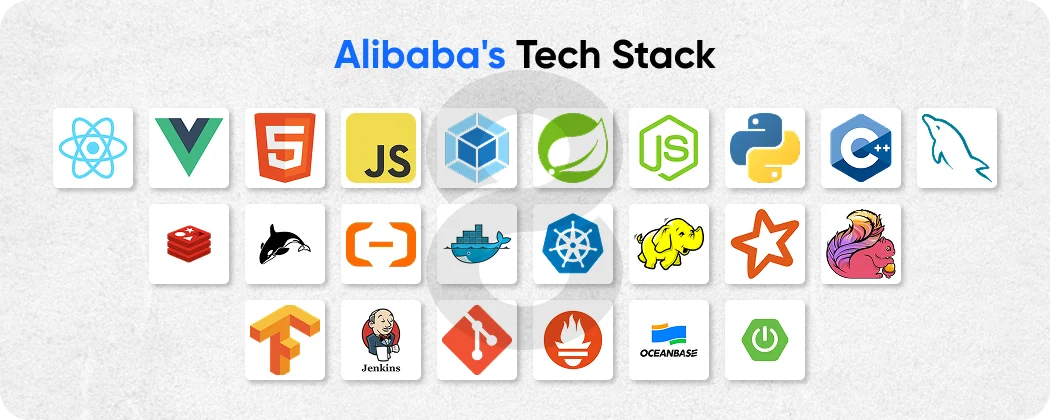
Key Takeaways:
- Distributed architecture supports a huge scale
- AI improves recommendations and operations
- Strong omnichannel integration
3. eBay
eBay uses a service-based architecture to support real-time bidding, listing, and transactions. It has a stack that is dedicated to stability, performance, and secure data management of millions of simultaneous users across the globe.
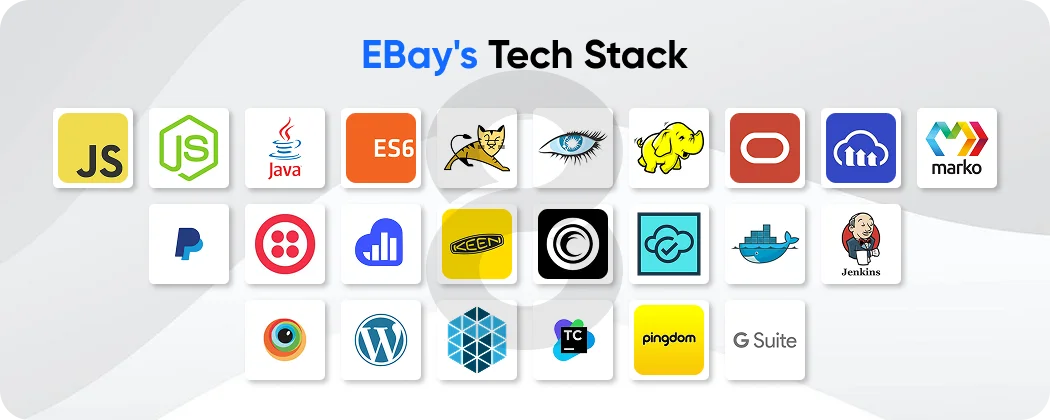
Key Takeaways:
- Service-oriented design improves flexibility
- Real-time processing supports auctions
- Strong emphasis on security and trust
4. Shopify
Shopify is a cloud-based, modular architecture that is used to empower merchants of any size. Its technology layer enables it to be quick to set up stores, integrate apps, and grow at scale without needing technical skills on the part of its users.
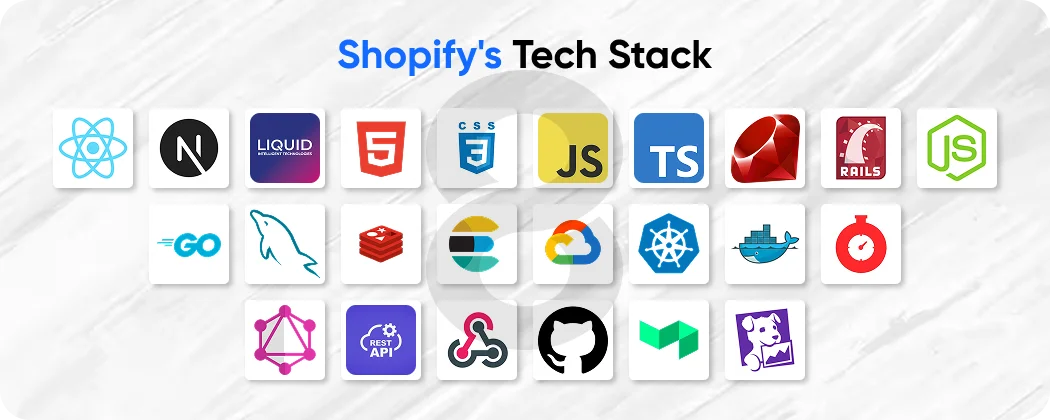
Key Takeaways:
- Modular architecture enables customization
- Cloud infrastructure ensures scalability
- Developer-friendly ecosystem
Read More: How Much Does Shopify Cost
5. Walmart
The omnichannel retail of Walmart is developed to make use of e-commerce at the enterprise level. Its stack combines inventory, logistics, and customer information to provide similar experiences both online and offline.
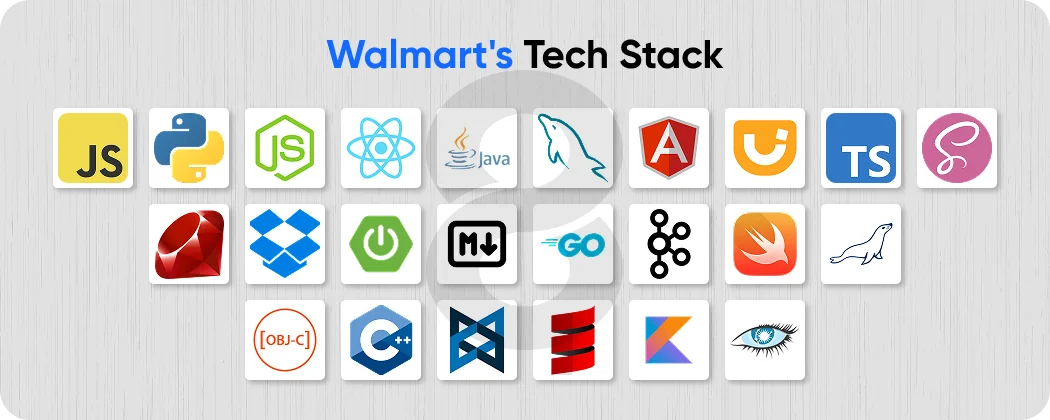
Key Takeaways:
- Omnichannel-first architecture
- Real-time inventory synchronization
- Enterprise-grade scalability and performance
Read More: How to Build Apps Like Temu and Shein
Security, Compliance, and Enterprise Readiness
A safe ecommerce technology stack in the case of enterprise business also guarantees the confidence of the customers, the safety of the sensitive information, and the ability to operate internationally due to the stringent standards of security, compliance, and governance without performance or scaling impairment.
OAuth 2.0 and JWT-Based Authentication
Contemporary e-commerce solutions are based on the OAuth 2.0 and JWT authentication models to provide token-based access across platforms. This practice enhances identity control, third-party integration, and protects large-scale ecommerce operations.
PCI-DSS Compliance for Secure Payments
In any ecommerce tech stack, payment security is essential, particularly when a business is dealing with a large transaction volume. Compliance with PCI-DSS has guaranteed the security of card processing and reduced fraud risks, as well as instilling confidence among users in international e-commerce sites.
Data Encryption at Rest and in Transit
An e-commerce technology stack is scalable and can be secured using sophisticated encryption software to secure customer and transactional information. At-rest and in-transit encryption helps to avoid breaches, enhance compliance, and implement enterprise-grade security systems.
Role-Based Access Control (RBAC)
The RBAC enables businesses to control access within their e-commerce layer of technologies. Restricting users to a system based on their user roles improves internal security, reduces the occurrence of human errors and ensures operational integrity of businesses.
Enterprise Governance and Regulatory Readiness
Future-ready ecommerce technology stack serves the regional compliance requirements, audit logging, and policy governance. This will make sure that enterprises can go global with the varying standards of legal, security and data protection that will be met smoothly.
Evaluating the Best Tech Stack for Ecommerce Enterprises
At the enterprise level, the ecommerce tech stack is the most appropriate combination of scalability, flexibility, and performance, so the ecommerce tech stack can sustain more complicated operations, high volumes of traffic, and constant innovation.
Key evaluation criteria include:
- Horizontal scalability
- Modularity and flexibility
- Performance under peak loads
- Integration capabilities
- Developer productivity
- Long-term maintainability
Although there is no one-size-fits-all solution, the cloud-native, headless ecommerce technology stack on microservices is always the most ideal technology stack for ecommerce businesses that want to scale and be resistant over time.
How Ecommerce Technologies Drive Business Growth

The current ecommerce technology is more than simple functionality, but it is a growth catalyst with the ability to be scalable, innovative, personalized, and performant with a well-organized ecommerce technology stack with enterprise objectives.
They empower enterprises to:
- Launch is quicker with the help of modular architectures, reusable elements, and perpetual integration and release streams.
- Individualize user experiences with real-time information, artificial intelligence and behavior-based suggestions in various customer touchpoints.
- Scale out to new markets using cloud scalability, multi-currency capabilities, region-specific localization features, and compliance capabilities.
- Add AI-based recommendations to increase product discovery, increase average order value, and customer engagement.
- Optimize conversion funnels by using advanced analytics, A/B testing, performance optimization and effortless checkout.
The ecommerce technology stack can be a competitive advantage when combined with business goals, enabling it to become dynamic, innovative, and develop over the long run with the assistance of modern eCommerce technologies.
How 8ration Empowers Enterprises with a Future-Ready Ecommerce Technology Stack
We are 8ration, a company that focuses on the development of scalable technology stacks in ecommerce to enable businesses to offer smooth and high-performance digital commerce platforms.
We use sophisticated app development to build cloud-native infrastructure, micro services that are modular and secure APIs to future-proof platforms.
Our solution guarantees fast innovation, channel parity, and operational stability so that companies can expand naturally, maximize conversion, and lead in the competitive digital trading environment.
Read More: eCommerce App Development Cost – Ultimate Guide
Final Thoughts!
The process and adoption of a scalable ecommerce platform is one of the most impactful technology-driven decisions that an enterprise may make. The future of an ecommerce technology stack must be cloud native, modular, secure, and sensitive to evolving customer requirements.
By investing in modern frontend architecture, microservice-based backend, resilient cloud architecture and mobile-first experiences, enterprises can produce platforms that are simple to scale and offer high-performance.
Lastly, an adequate technological stack is necessary both to facilitate ecommerce and to also foster innovation, resilience, and long-term digital success.