



Hiring developers sounds simple until it becomes expensive, slow, and weirdly stressful for no reason. On paper, it looks like a straightforward business task. You define the role, shortlist candidates, run interviews, and hire someone good enough to build the thing. In reality, it rarely stays that clean for very long. For businesses looking to hire a software developer in Australia, the process often becomes even more competitive, time-consuming, and costly due to high demand and limited top-tier talent availability.
Because the moment you actually start hiring, you run into the real stuff. Talent gaps. Budget pressure. vague requirements. Developers who interview well but cannot work inside real product environments. Agencies that sound polished but feel vague once technical questions start getting specific. And then the biggest issue of all, businesses often start hiring before they are even clear on what they actually need.
That is where things start going wrong quietly in the digital solutions in Australia landscape. If you want to hire software developer in Australia properly in 2026, the process has to be more strategic than just posting a role and hoping the right person appears. Australia has a strong technology market, a capable talent pool, and a very healthy product ecosystem, but that also means competition is real, rates vary widely, and bad hiring decisions get expensive fast. This guide is for businesses that want to make better hiring decisions without wasting time, money, or momentum.
Why Australia Is Still a Strong Market for Developer Hiring
Australia remains one of the more attractive software hiring markets for businesses that care about quality, communication, and long-term delivery. The local ecosystem is strong, especially across product teams, SaaS businesses, enterprise platforms, and startup environments. Demand is also growing as digital adoption continues to push businesses toward better products, better automation, and stronger internal systems.
That matters because when businesses decide to hire software developer in Australia, they are not just paying for code. They are often paying for better execution, cleaner collaboration, and a stronger understanding of modern product delivery.
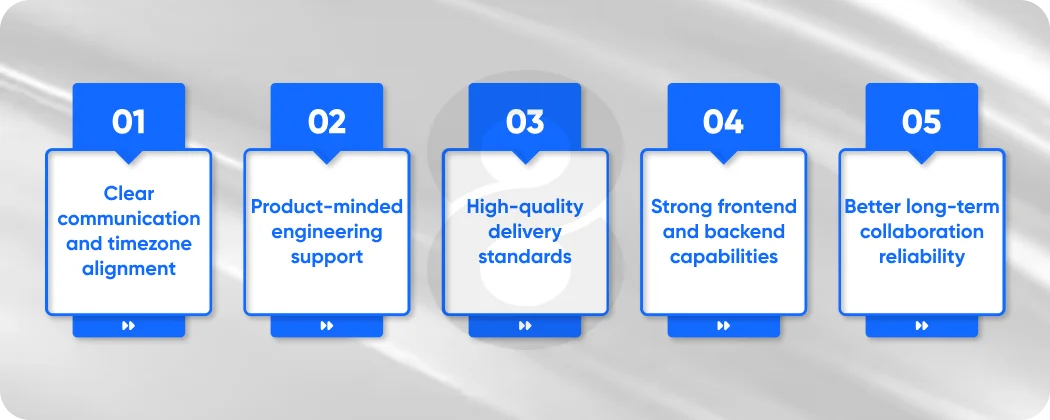
Australia is especially attractive for businesses that need:
- Clear communication and timezone alignment
- Product-minded engineering support
- High-quality delivery standards
- Strong frontend and backend capabilities
- Better long-term collaboration reliability
A technically strong developer who cannot work inside real business constraints is still a problem. The market for app development solutions in Australia tends to be stronger when you need developers who can work across product, engineering, and execution without creating unnecessary chaos.
Read More: 10 Top Mobile App Development Companies in Australia
What Most Businesses Get Wrong Before They Start Hiring
A lot of hiring mistakes happen before the first interview even begins.
That is because businesses often think the problem is “finding talent,” when the actual problem is usually “unclear hiring structure.” If your role is vague, your expectations are messy, and your scope is still moving around every week, even a strong hire will struggle.
Before you try to hire software developer in Australia, you need clarity on what the role is actually supposed to solve.
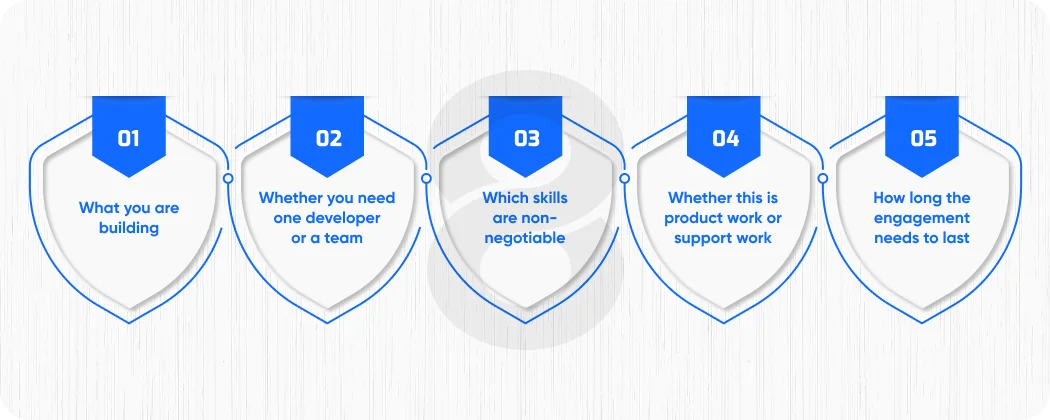
You should know:
- What you are building
- Whether you need one developer or a team
- Which skills are non-negotiable
- Whether this is product work or support work
- How long the engagement needs to last
That sounds obvious, but it gets skipped constantly. A business that says “we need a developer” is usually still too early. A business that says “we need a backend-heavy developer who can help stabilize our API architecture, support mobile release timelines, and work well with product” is hiring much more intelligently. That difference affects everything.
Step 1: Define the Role Before You Define the Person
This is the part that saves the most money later. Before looking at resumes, agencies, or portfolios, define the work clearly. The wrong hire often comes from a badly defined role, not a bad candidate.
Ask yourself these questions first:
- Is this a product build or a maintenance role?
- Do we need frontend, backend, full-stack, or DevOps support?
- Is this tied to web development, internal systems, or a customer-facing app?
- Will this person be building from scratch or improving an existing system?
- Do we need someone tactical, strategic, or both?
Once that is clear, your hiring process becomes much cleaner. Because the truth is, businesses do not fail hiring because there are no developers available. They fail because they hire general talent for specific problems and then act surprised when delivery gets messy. That is one of the fastest ways to waste budget in software development.
Step 2: Choose the Right Hiring Model
Not every business needs the same kind of developer relationship. That is why the hiring model matters almost as much as the person.
If you want to hire software developer in Australia properly, choose the model based on your delivery needs, not just what feels familiar.
Common hiring models include:
- Full-time in-house developer
- Contract or freelance developer
- Dedicated remote developer
- Project-based development partner
- Staff augmentation through an external team
Each one solves a different business problem.
Best Hiring Model by Business Need
# |
Hiring Model |
Best For |
Main Advantage |
Main Tradeoff |
| 1 | In-house developer | Long-term internal product growth | Strong team integration | Higher long-term cost |
| 2 | Freelancer | Small, defined tasks | Flexible and fast | Lower continuity |
| 3 | Dedicated developer | Ongoing product support | Focused delivery | Requires good management |
| 4 | Agency / Development Partner | End-to-end builds | Broader expertise | Less direct control |
| 5 | Staff augmentation | Scaling an existing team | Faster hiring access | Still needs internal structure |
If your business is early-stage, fast-moving, or still validating product direction, a flexible model usually makes more sense than rushing into a full internal team.
That is especially true if your work includes mobile app development, backend systems, and customer-facing delivery all happening at once.
Step 3: Know What Skills Actually Matter
This is where a lot of non-technical businesses get distracted. They start focusing too much on buzzwords, frameworks, and whatever sounds impressive on paper, instead of evaluating whether the developer can actually solve the right business problem.
Technical skills to assess:
- Core programming language proficiency
- Framework and architecture experience
- API and backend integration capability
- Database handling and optimization
- Version control and collaboration workflow
- Testing and debugging discipline
- Cloud and deployment familiarity
Delivery skills to assess:
- Communication quality
- Problem-solving under ambiguity
- Product thinking
- Ability to explain technical tradeoffs clearly
- Comfort working across teams
A developer can be technically capable yet a terrible business fit. That part matters more than people think.
Step 4: Match the Hire to the Product Type
This is where hiring becomes much smarter. Different products need different engineering profiles. The person who is great for a quick MVP may not be the same person you want handling architecture decisions for a growing product.
If you are building a customer-facing product:
Look for someone who understands usability, performance, and clean product delivery.
If you are building internal systems:
Prioritize workflow logic, reliability, and integration capability.
If you are building platform-based tools:
Focus on scalability, security, and backend architecture.
If you are working with modern automation:
You may need someone familiar with AI integration and system orchestration, not just app delivery. That is also where AI development becomes relevant. A lot of businesses now want developers who can work around AI-assisted workflows, automation layers, recommendation systems, or product-side intelligence.
That does not mean every developer needs to be an AI engineer. It means the modern hiring process should reflect what products actually look like now.
Step 5: Understand Developer Cost in Australia
This part matters because businesses either underestimate the budget or overreact to the first expensive quote they receive.
Developer cost in Australia varies based on:
- Experience level
- City or hiring region
- Technical specialization
- Product complexity
- Hiring model
The fundamental drivers of cost do not change; experience, location, and tech stack are all important in determining the final software development costs. The hourly rates are usually higher when specialization is increased, reflecting the additional knowledge, proficiency, and technical complexity involved in more complex solutions.
Typical Hiring Cost Ranges in Australia
# |
Developer Type |
Estimated Range |
Best Fit |
| 1 | Junior developer | Lower cost range | Support work, simple tasks |
| 2 | Mid-level developer | Moderate range | Product features, business apps |
| 3 | Senior developer | Higher range | Architecture, scaling, critical systems |
| 4 | Specialized developer | Premium range | AI, cloud, security, complex products |
| 5 | Dedicated external team | Varies by scope | Faster builds and broader delivery |
The mistake businesses make is assuming cheaper equals smarter. It usually does not. The cheaper hire often becomes more expensive later through delays, rework, technical debt, and messy execution. That is not a budget win. That is delayed pain.
Read More: App Development Costs in Australia – 2026 Guide
Step 6: Evaluate Portfolios Like a Buyer, Not a Fan
A lot of businesses look at portfolios the wrong way. They get distracted by polished interfaces, big logos, or vague claims about innovation, and forget to evaluate whether the work actually proves delivery quality. When reviewing a developer or team, look for signs of real product competence.
Better questions to ask:
- What kind of systems have they actually built?
- Have they worked on products similar to yours?
- Can they explain tradeoffs clearly?
- What role did they actually play in those projects?
- Did they build, lead, support, or just contribute partially?
A good portfolio should help you understand how they think, not just what they have touched. This matters a lot if you are hiring around cross-platform development, because plenty of teams say they do it, but not all of them do it well. Some can build cross-platform apps. Fewer can build ones that actually feel polished, scalable, and commercially usable. That difference matters.
Step 7: Interview for Delivery, Not Just Knowledge
They test whether someone can talk about code, but not whether they can actually work inside a product environment where deadlines move, requirements change, and business decisions affect technical priorities every week.
Better interview areas include:
- How they approach unclear requirements
- How do they debug under pressure
- How do they make architecture decisions
- How they handle tradeoffs between speed and quality
- How do they communicate blockers early
A strong developer should not just answer technical questions. They should make you feel more confident about how work will move once the project actually starts. That is the real signal.
Step 8: Watch for These Hiring Red Flags
A bad hire often gives warnings early. The problem is that businesses ignore them because they are in a rush. That usually ends badly.
Common red flags include:
- Very polished communication with vague technical depth
- Overpromising speed without process clarity
- Weak ownership over past work
- No clear testing or deployment discipline
- Poor communication around tradeoffs
- Resistance to documentation or collaboration structure
This is especially important when the project affects revenue, user trust, or operational workflows. Bad hiring does not just slow development. It quietly damages the product.
Read More: The 2026 Founder’s Guide – Finding the Best Mobile App Developers for Hire
Step 9: Think Beyond the Build
A lot of businesses hire for launch and forget that products do not stop existing after version one goes live. That is where short-sighted hiring starts becoming expensive.
Before you hire, ask:
- Can this person support the product after launch?
- Will they leave behind clean documentation?
- Can they work with future developers later?
- Are they building for scale or just speed?
This is where hiring quality becomes a business decision, not just a technical one. Because the right developer does not just help you build faster. They help you avoid future mess.
Common Hiring Mistakes Businesses Should Stop Making
Most hiring mistakes are painfully avoidable.
The biggest ones include:
- Hiring before defining the product properly
- Choosing the cheapest option too quickly
- Confusing technical jargon with actual competence
- Ignoring communication quality
- Hiring for speed instead of fit
- Expecting one developer to solve every system problem
This is why hiring needs more structure than emotion.
Because once the wrong person is inside the product, fixing that mistake usually costs more than the original hiring decision ever did.
How to Make the Right Hiring Decision Faster
You do not need a bloated recruitment process. You just need a better one.
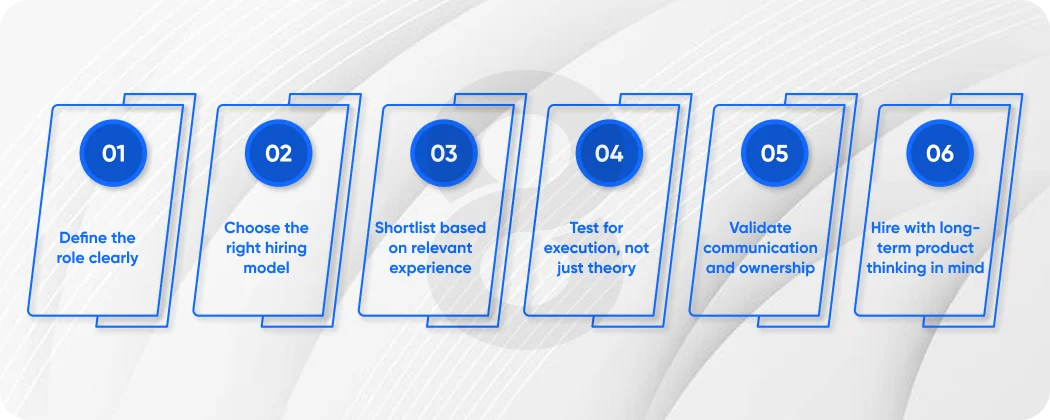
A smarter hiring flow looks like this:
- Define the role clearly
- Choose the right hiring model
- Shortlist based on relevant experience
- Test for execution, not just theory
- Validate communication and ownership
- Hire with long-term product thinking in mind
That is how businesses make better decisions without dragging the process into chaos.
Build the Right Product Team, Not Just the Fastest One
If your business is planning to build, improve, or scale a digital product in 2026, the hiring decision matters more than most people realize. The right developer will not just write code. They will influence delivery speed, product quality, team confidence, and how expensive your future roadmap becomes. Hire for clarity, execution, and long-term fit, not just technical buzzwords or rushed timelines.
Conclusion
Hiring developers in Australia is not difficult because talent does not exist. It is difficult because most businesses approach the process too casually, too vaguely, or too reactively.
If you want to hire software developer in Australia properly, the goal should not be to find someone who simply says yes to the project. The goal should be to find someone who can actually help the product move forward with clarity, reliability, and less operational friction.