


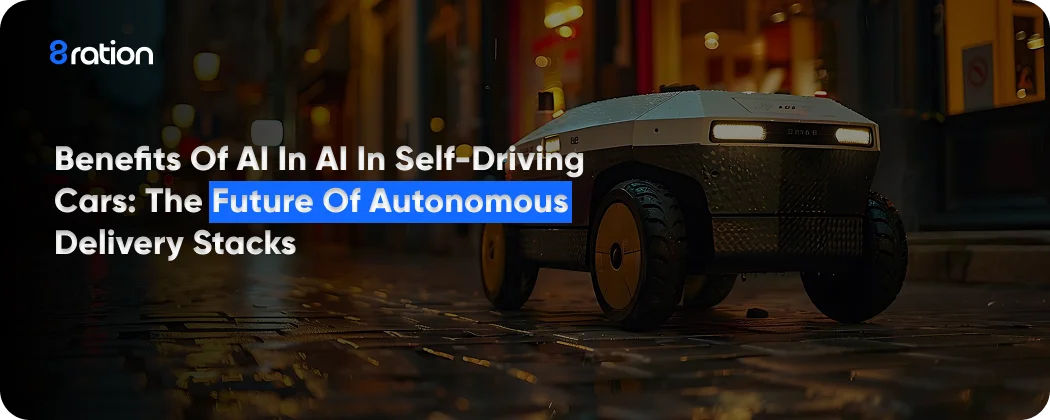
Intelligent algorithms are more powerful in autonomous delivery stacks (consisting of perception, decision-making, navigation, and fleet orchestration), which are able to learn, adapt, and optimize in real time.
With the rise in eCommerce demand and the need to simplify the last-mile delivery, companies are looking to autonomous systems to enhance the efficiency, safety, and scalability of delivery.
As a result, self driving cars with AI is not a science fiction idea anymore; it is a fact of life that defines the future of autonomous delivery. This article will discuss the way AI can be used to drive cars autonomously, the structure of autonomous delivery stacks, and the importance of this technology to the logistics of the next generation.
Understanding Autonomous Delivery Stacks
The concept of the role of AI must be addressed in the context of what an autonomous delivery stack is. An autonomous delivery stack is a system with layers that enable a vehicle to detect the surrounding world, make smart decisions, and act in ways without having to involve a human being.
- Perception layer: Gathers information through sensors, which include LiDAR, radar, cameras and ultrasonic sensors.
- Localization and mapping: Identifies the exact position of the vehicle through the use of GPS, HD maps, and sensor fusion.
- Decision and planning: Processes the data and plans the best routes and maneuvers.
- Control systems: Does acceleration, braking and steering.
- Fleet Management: Manages different vehicles, routes, and delivery times.
The very core of every layer is AI in self driving cars, which allows a vehicle to read and react to the complex environment.
Read More: 20 Android Automotive Apps for 2026
Autonomous Delivery Stacks: A Layered Architecture
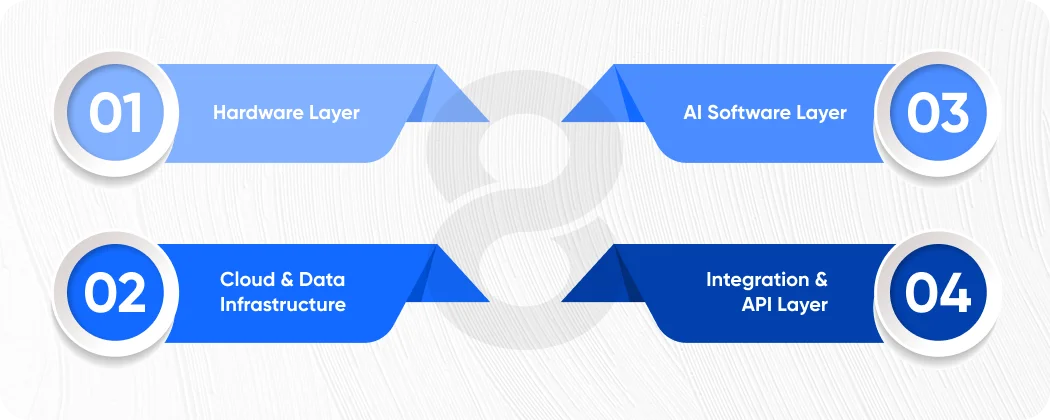
The ability to make autonomous delivery is not dictated by a single algorithm but an entire technology stack. Let’s break it down.
1. Hardware Layer
These are vehicle hardware, onboard computers and sensors. The AI inference can be performed in real-time with high-performance GPUs and edge computing devices, which is necessary to enable autonomous vehicles use AI efficiently with no latency.
2. AI Software Layer
The key component of the system is the AI software layer, which is developed using best AI development practices. This layer includes:
- Computer vision models
- Sensor fusion algorithms
- Decision-making engines
- Predictive analytics
This is where AI in self driving cars provides intelligence at scale.
3. Cloud & Data Infrastructure
Cloud platforms aid in training models, simulation, fleet management, and over-the-air updates. Huge datasets that are gathered on vehicles contribute to ever-increasing AI accuracy and dependability.
4. Integration & API Layer
To deliver independently, vehicles should integrate with logistics solutions, mapping, and order management devices. APIs facilitate real-time interaction between the customers, warehouses, and vehicles.
How Is AI Used in Self-Driving Cars?

The industry often asks how developers employ AI in self-driving cars and why it is so crucial. AI powers self-driving cars, generating huge amounts of data and converting it into actionable insights.
Perception Through Computer Vision
The computer vision powered by AI will allow cars to identify pedestrians, road signs, traffic lights, and road markings. Deep learning algorithms, especially convolutional neural networks (CNNs) are used to analyze camera feeds and classify objects and predict their motion. Without AI, scale-based real-time perception would not be a possibility.
Environmental Awareness and Sensor Fusion
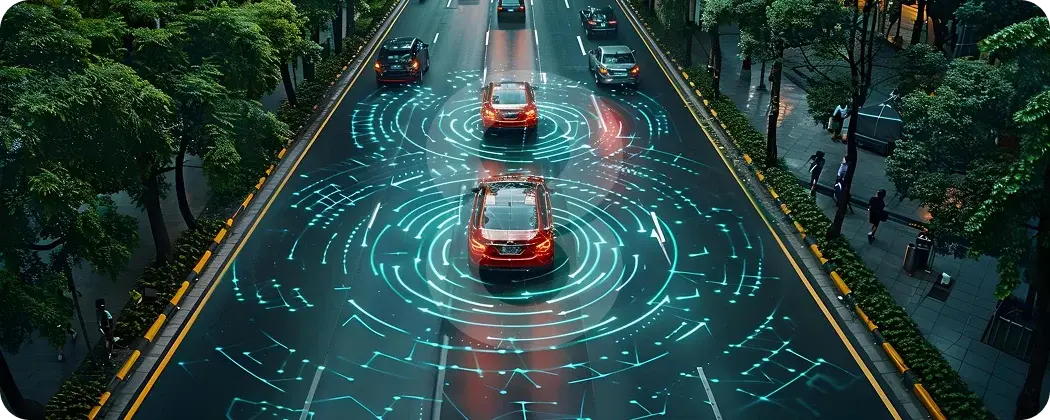
Additionally, AI incorporates information input of over a sensor to construct an image of the environment. This is known as sensor fusion to increase precision and dependability. As a result, the application of AI in driverless cars implies that there is constant performance despite the weather conditions and low visibility.
Decision-Making and Path Planning
Probabilistic models and reinforcement learning can assist autonomous cars to make decisions on when to halt, pass or detour. Through constant learning from new information, the AI on self driving cars adjusts to varying traffic conditions and unexpected situations.
Read More: GPS Location Tracker for Car – Build Your Own GPS App
Artificial Intelligence in Self Driving Cars: Core Technologies
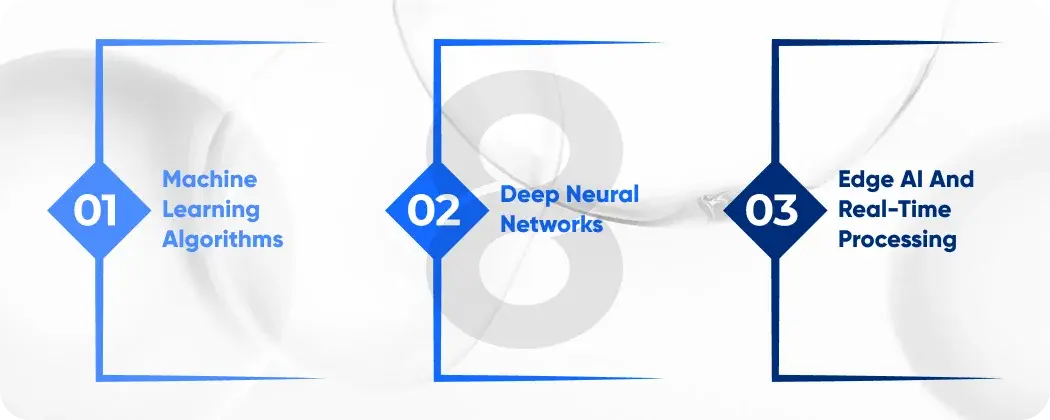
Developers use several AI technologies to ensure the success of autonomous delivery systems. They incorporate deep learning, edge computing, and machine learning into self-driving cars to provide real-time intelligence.
Machine Learning Algorithms
Machine learning allows vehicles to become more efficient over time. Supervised learning assists in the classification of objects whereas unsupervised learning determines trends of traffic behavior. Therefore, AI self driving cars can be trained to be safer and more efficient.
Deep Neural Networks
Deep neural networks can take high dimensional sensor data and produce correct perception and prediction. Complex tasks like detecting lanes and pedestrian intent are critical aspects that these networks provide.
Edge AI and Real-Time Processing
Since the AI will have to make a decision in a few seconds, AI models will tend to be deployed on edge devices in the car. This makes it less latent and reliable even in the case of limited connectivity.
Read More: 10 Best Car Rental Apps in NYC
Do Autonomous Vehicles Use AI? A Definitive Answer
One of the questions is: Do self-driving cars operate with the use of AI? It is a resounding yes. All the degrees of self-driving, driver assist systems to full self-driving cars, are based on AI.
Likewise, to the people inquiring whether self driving cars utilize AI, it is solely dependent. Adaptive cruise control, to the point of fully driverless delivery fleets, AI is the technology that can enable autonomy and make it scalable.
Read More: 20 Car Rental Apps Like Turo
AI in Driverless Cars and Last-Mile Delivery
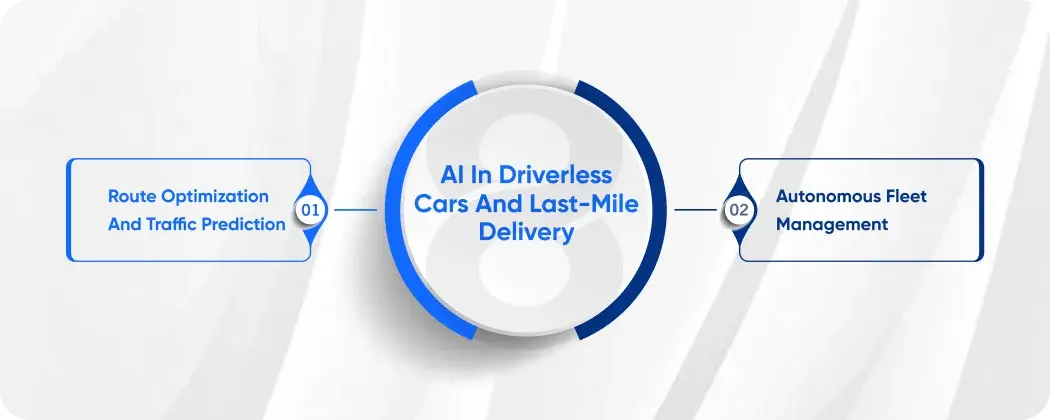
Moreover, one of the costliest and least efficient parts of logistics is the last-mile delivery. In this case, the AI of driverless cars is transformative because it optimizes routes, lowers labor expenses, and enhances the speed of delivery.
Route Optimization and Traffic Prediction
AI can use historical and real-time traffic to identify the most efficient delivery routes. Consequently, autonomous cars that are driven by AI will help avoid traffic jams, save on fuel, and carry out deliveries on time.
Autonomous Fleet Management
In addition to single vehicles, AI can lead to a centralized fleet management system. Such systems distribute tasks, control vehicle health, and dynamically control routes depending on demand. Therefore, autonomous delivery stacks are more resilient and scalable.
Read More: Android Car Operating System – Building Scalable In-Vehicle Apps
Artificial Intelligence in Driverless Cars: Safety and Compliance
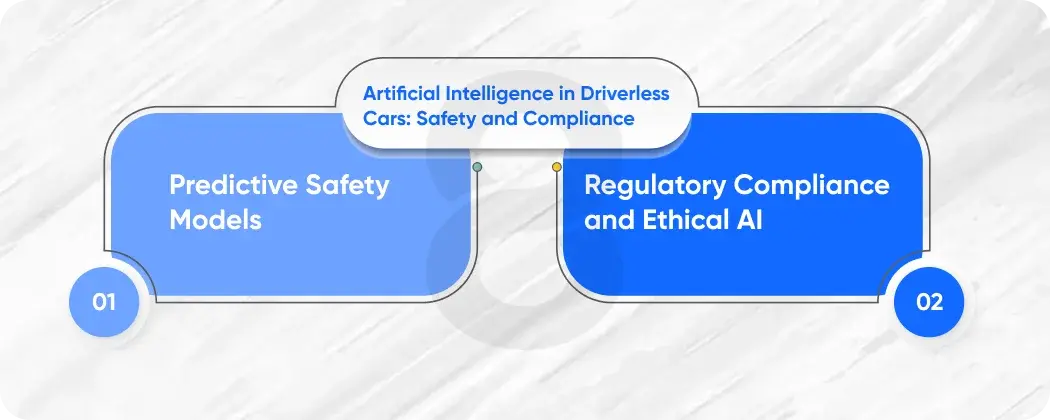
The autonomous systems are concerned about safety. The driverless cars increase safety because they have artificial intelligence that minimizes human error that contributes to most of the road accidents.
Predictive Safety Models
AI analyzes the behavior of pedestrians and vehicles around them to predict possible collisions. This initiative allows autonomous systems to take proactive action well before a dangerous situation occurs.
Regulatory Compliance and Ethical AI
In addition, it is being ensured that AI systems meet the changing regulations. The autonomous cars will be based on ethical decision-making models, which would maintain the safety and equity aspects, which would enhance trust in the new technology.
AI Development for Autonomous Delivery Ecosystems
Developers drive the swift development of autonomous delivery systems through continuous AI advancements. They use AI in everything from simulation environments to real-world testing to enhance reliability and refine algorithms.
Simulation and Digital Twins
Millions of driving situations are simulated by AI to facilitate more rapid training and validation. This speeds up the deployment and reduces risk in the field.
Continuous Learning Pipelines
The autonomous systems are based on constant pipelines of learning, which update the models with new information. With time, AIs in self driving vehicles are stronger and more flexible.
Read More: PayByPhone Parking App – A Guide To Development & Revenue
Human–Machine Interaction: Voice and Speech AI
Although the use of autonomous vehicles will eliminate human drivers, communication with users is necessary. This is where AI-enabled voice assistants and AI speech recognition are involved.
Voice interfaces enable the operator and customers to communicate with delivery vehicles in a smooth manner. B.V. As an illustration, the users can keep track of the deliveries, update, and/or give instructions using natural language. Consequently, autonomous delivery is more natural and accessible.
Read More: 50+ AI App Ideas Generating Millions in Revenue
Challenges Facing AI in Self-Driving Delivery Systems
Even with this promise, AI in self driving cars has several challenges.
Data Quality and Bias
The quality of AI models depends on the quality of the data they are fed. Decisions that are made based on poor-quality or biased data may result in inaccuracy.
Infrastructure and Connectivity
Independent delivery presupposes the existence of special facilities, such as intelligent roads and a stable connection. In the absence of these, AI performance can be limited.
Public Trust and Adoption
Lastly, the adoption is largely reliant on the trust of the population. Acceptance is only achieved by means of transparent communication and proven safety records.
Real-World Use Cases of Autonomous Delivery
Urban Logistics
The self-driving delivery vehicles can navigate through traffic-congested cities in real-time using AI-guided choices which reduce the delivery time and fuel.
Campus & Controlled Environments
The first applications of AI driverless cars are in universities, industrial parks or warehouses, where controlled environments and predictability of routes greatly influence this technology.
Long-Haul Transportation
Autonomous trucks run on highways and implement AI to keep the optimal speed, minimize fatigue of drivers and improve fuel efficiency.
Read More: Artificial Intelligence Like ChatGPT – Build Powerful AI Tools for Your Business
The Future of Autonomous Delivery Stacks
In the future, the future of autonomous delivery is directly associated with AI developments in self-driving cars. With the increased sophistication of AI models, the delivery systems will be more autonomous, more efficient, and more reliable.
The integration between vehicles, smart cities, and supply chains can be anticipated to be tighter. Moreover, AI ethics and control will guarantee responsible use on a large scale.
Final Thoughts!
To sum it up, AI in self-driving cars is the foundation of the autonomous delivery stack, which allows vehicles to feel, make decisions and take actions like never before. AI supports all elements of autonomous delivery, including perception and planning, fleet management, and voice interaction.
The investment in the AI-driven autonomy will only continue to increase as businesses are pursuing faster, safer, and scalable logistics solutions. After all, the future of artificial intelligence and transportation will not only transform the delivery industry but also redefine the mobility industry.