



The cost to develop an Airbnb-like app ranges from $25,000 to $350,000+, depending on the required features. Here are the three different levels of Airbnb-like app development costs: $25,000 to $55,000 (Simple App), $55,000 to $130,000 (Mid-Range App), and $130,000 to $350,000+ (Full-Featured App).
The global sharing economy has changed the way individuals travel, stay, and experience destinations. Airbnb is the core of this disruption because it has changed the concept of hospitality by aligning hosts and travelers via a smooth digital platform. With startups and companies aiming to follow in its footsteps, the question that looms is, how much does it cost to build an app like Airbnb?
To develop an application such as Airbnb, it needs a complex ecosystem that entails live availability, safe payments, geolocation, verification of users, scalable cloud computing, and an effective user interface/user experience design. Technical architecture, complexity of features, compliance demands, and scalability over time are some of the factors that affect costs.
Mobile travel apps generate over $629 billion in global travel market revenue, underlining the importance of app-first strategies.
This guide examines all the cost-driving components of developing Airbnb clones and features, evaluates technology stacks, and offers realistic price estimates of applications such as Airbnb.
Understanding the Airbnb App Business Model
It is vital to know the way Airbnb works as a platform before plunging into the cost of development. In essence, Airbnb is a two-sided market that caters to both hosts and guests.
Core Revenue Streams:
- Commission from hosts per booking
- Guest service fees
- Premium listings and promotions
- Experience bookings and add-ons
Since Airbnb takes revenue on a successful transaction, the app should be refined for trust, reliability, and performance. This has a direct effect on the complexity of development and, therefore, cost.
Moreover, applications such as Airbnb need to facilitate global currencies, multilingual interfaces, taxation, and more regulatory substances, which adds a lot of pressure to the development.
Core Features Required to Build an App Like Airbnb
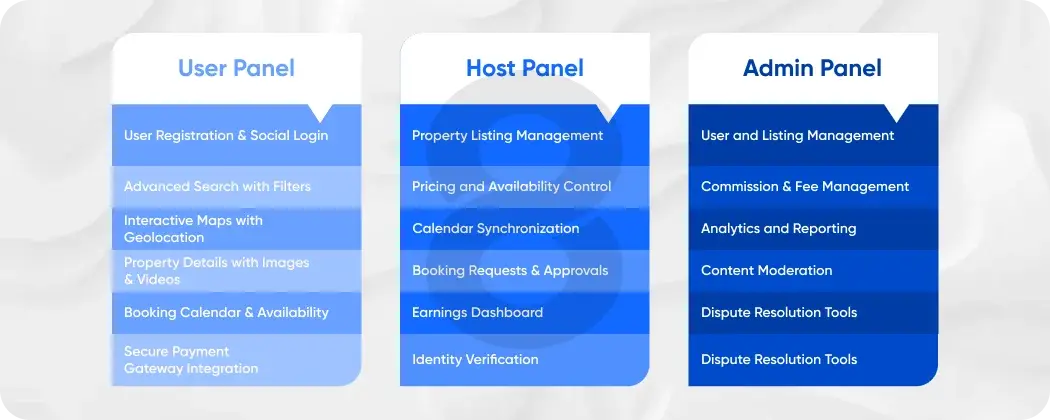
Complexity of features is a major factor that affects the price to develop an application such as Airbnb since each user role will demand specific functionalities, workflows, permissions, integrations, and user experiences that extend the development time and technical work.
1. User Panel (Guests)
Visitors ask for a smooth, speedy, and effortless booking process that is free of friction and creates trust and helps travelers explore, compare, and book accommodation at the touch of a button across gadgets.
-
User Registration & Social Login:
Allows guests to create an account immediately and via email or social account; less onboarding is required, but still with secure authentication and a quicker rate of platform use.
-
Advanced Search with Filters:
Their system lets the travelers filter property listings based on price, location, amenities, and availability to narrow down on the listing that exactly looks like what the travelers like.
-
Interactive Maps with Geolocation:
Shows real-time property locations in animated maps, with the help of which the user can explore the neighborhood, evaluate the proximity, and make a confident booking choice.
-
Property Details with Images & Videos:
Offers in-depth property details (in the form of quality pictures, descriptions, facilities, and house policies) to enhance the level of transparency and booking assurance.
-
Booking Calendar & Availability:
Displays availability and date options in real-time and eliminates instances of booking the same room more than once and also gives the guests the freedom to make their plans effectively without having to go over and over again.
-
Secure Payment Gateway Integration:
Provides secure and encrypted payments through credible payment gateways, and it gives guests a variety of ways to pay and trusts them during the booking process.
-
Reviews and Ratings:
Allows visitors to review and rate the properties based on verified reviews and ratings and establishes trust and allows making wise decisions based on genuine user experiences.
-
In-App Messaging with Hosts:
Enables direct, real-time interaction between guests and hosts to bring clarity and answer queries, as well as increase overall booking satisfaction.
-
Push Notifications:
Sends real-time notifications to guests related to booking confirmations, booking reminders, messages, and promotions, enhancing communication and decreasing the amount of updates missed.
-
Wishlist & Saved Properties:
Enables users to save favorite listings to be used in the future so that they can compare easily and revisit or make repeat bookings.
-
Multi-Currency & Language Support:
Offers localization through currencies and languages to ensure that the site is convenient and reachable to all international tourists.
-
Booking History & Trip Management:
Provides consumers with a centralized dashboard where they can easily manage their future trips, previous bookings, receipts, and travel specifications.
All these user-friendly features demand a high-end backend structure, secure API, and solid third-party integrations, greatly enhancing the complexity of the development process but with the outcome of a scalable, high-performance experience that matches the current expectations of the traveller.
2. Host Panel
The supply side of any Airbnb-like application is made up of hosts, who use the platform to operate their property listings, bookings, and income effectively via a centralized, user-friendly dashboard.
- Property Listing Management: Hosts are able to effortlessly make, update, and maintain property details, including descriptions, images, amenities, and house policies, to get qualified visitors.
- Pricing and Availability Control: Dynamic pricing systems enable the host to control prices, charge seasonal rates, and ensure that they have availability of rooms to maximize occupancy and earnings.
- Calendar Synchronization: Integrated calendar synchronization Allows prevention of duplication of bookings by synchronizing availability on many platforms in real time.
- Booking Requests & Approvals: Hosts have the benefit of instant booking requests that will include the guest details, and hence approvals, rejections, or amendments can take place directly on the dashboard.
- Earnings Dashboard: An open earnings display gives real-time information about the revenues, payouts, the bookings made, and future earnings.
- Identity Verification: Secure identity verification fosters trust by verifying the host credentials through document checks and platform-authorized verification processes.
- Communication Tools: Inbuilt messaging applications enable a seamless interaction with the guests, which makes it clear, trustworthy, and easy to coordinate the process of booking throughout the lifecycle.
A robust host panel increases trust, eases management of property, and retains more hosts, increasing platform dependability, scalability, and growth in a long-run marketplace.
3. Admin Panel
The admin panel is the control tower that the owner of the platform can use to survey the operations, impose policies, handle users, and ensure transparency in all activities within the marketplace.
- User and Listing Management: Administrators are able to review, authorize, edit, or disable user accounts and property listings in an efficient manner.
- Commission & Fee Management: Create commission rates, service fees, and dynamic pricing guidelines easily to generate sustainable revenue.
- Analytics and Reporting: Get practical insights on the bookings, revenue patterns, user activities, and platform performance.
- Content Moderation: Check platform credibility by doing due diligence on the listing, images, description, and user content.
- Dispute Resolution Tools: Ensure that conflict situations between host and guests are easily handled through formal communication and resolution processes.
- Payment and Refund Oversight: Follow up transactions, issue refunds, and have secure and compliant payment processing.
The creation of a properly designed admin dashboard needs good backend development, role-based access control, and scalability to make sure that it is efficient in terms of operations, platform security, and long-term business expansion.
Read More: Mobile App Development Cost Breakdown
Advanced Features That Increase Development Cost
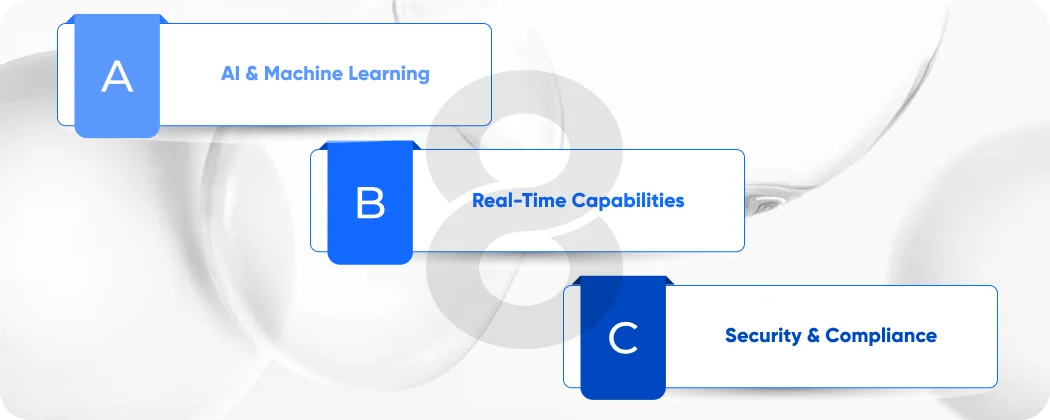
Advanced functionality to enable higher personalization, security, and real-time performance is needed to compete with the established Airbnb-like apps, having a direct effect on the complexity of development, infrastructure needs, and overall scalability of the platform.
AI & Machine Learning
- Personalized property recommendations: AI can study user behavior, preferences, and history of booking to present potential listings, enhancing the level of engagement, conversion, and overall satisfaction with booking.
- Dynamic pricing suggestions: Machine learning makes the demand, seasonality, and market trends and allows the hosts to adjust prices to maximize the occupancy at the maximum, without human assistance.
- Fraud detection algorithms: Artificial intelligence (AI) fraud detection will ensure that user activities are monitored and patterns are tracked in real-time to prevent fake listings and payment abuse, and suspicious behavior on the site.
Real-Time Capabilities
- Live chat with WebSockets: Instant messaging allows host-guest interaction in real-time, decreasing the rate of booking tension and increasing trust, responsiveness, and overall user experience.
- Instant booking confirmation: On-site booking validation will provide instant confirmations, which will remove delays and increase the confidence of the users, as well as efficiency in transactions.
- Real-time availability updates: Live synchronization will also keep the listings updated with correct availability to eliminate cases of double booking and to maintain the reliability of the platform.
Security & Compliance
- Data encryption (AES-256, SSL): End-to-end encryption will secure sensitive user data, payments, and communications, ensure privacy, and adhere to international security standards.
- GDPR and regional compliance: Intrinsic compliance systems protect user privileges, deal with consent, and guarantee legal data processing in various jurisdictions.
- Secure authentication protocols: Multi-factor authentication and secure session management prevent attacks on user accounts through unauthorized access and credit-based actions.
These complex features make the Airbnb app very expensive, but they contribute to the growth of trust, retention, less risk of operations, and ROI in the long term, as they will provide a safe, smart, and trusted booking platform.
Read More: How Much Does Artificial Intelligence Cost – AI App & Software Pricing
Technology Stack Required for an Airbnb-Like App
The technology stack has a direct impact on performance, scalability, and cost that dictates the speed of the application, the efficiency of the infrastructure, the level of security, the flexibility of the integration, the effort required to maintain it in the long term, and the capacity of the platform to grow as user demand grows.
Frontend Technologies:
- React Native or Flutter (for cross-platform app development)
- Swift (iOS) / Kotlin (Android) for native apps
Backend Technologies
- Node.js, Django, or Ruby on Rails
- REST or GraphQL APIs
Microservices architecture for scalability
- Database & Storage
- PostgreSQL / MongoDB
- AWS S3 or Google Cloud Storage
Third-Party Integrations
- Stripe, PayPal for payments
- Google Maps & Mapbox
- Firebase for notifications
Cross-platform app development may help to save initial investment, to speed up time-to-market, and to make maintenance easier, but native apps offer better performance, platform-specific user experience, and system-on-a-chip integration but need independent development teams.
“According to Statista, Airbnb ranks among the most downloaded mobile travel apps globally, highlighting the value of user-centric mobile experiences.”
Development Approach: Native vs Cross-Platform
The decision to use native or cross-platform application development influences the performance, cost, and schedule. Whereas native provides better UX and speed, cross-platform saves on the cost of development of mobile apps and shortens the time-to-market of apps such as Airbnb.
Native Development
Native apps are developed individually on iOS and Android platforms in Swift and Kotlin and provide impressive performance, more fluent animations, and platform-based UX. Nonetheless, it adds costs and time-to-market to the Airbnb app, which is optimal in high-end Airbnb-type apps with extensive customization.
Cross-Platform Development
Cross-platform development involves packages such as React Native or Flutter, and they are used to develop a single platform codebase. It accelerates the creation of mobile apps, makes it cheaper to create an app similar to Airbnb, and helps to develop apps faster, which is excellent when startups need to create applications such as Airbnb within a short time.
Native vs Cross-Platform Comparison Table
| Criteria | Native Development | Cross-Platform Development |
| Cost | Higher due to separate iOS and Android teams | Lower with single codebase |
| Performance | Best performance and responsiveness | Slightly lower performance |
| Development Time | Longer, as two apps are built | Faster due to shared code |
| UI/UX Quality | Highly optimized, platform-specific | Good, but may feel less native |
| Maintenance | More expensive, separate updates | Easier, one update for both |
| Scalability | Excellent for complex features | Good, but can be limited for heavy apps |
| Best for | High-end, performance-critical apps | MVPs, startups, cost-sensitive projects |
| Ideal for Airbnb-like apps? | Yes, for premium experience | Yes, for faster MVP launch |
Cost Breakdown: How Much Does It Really Cost?
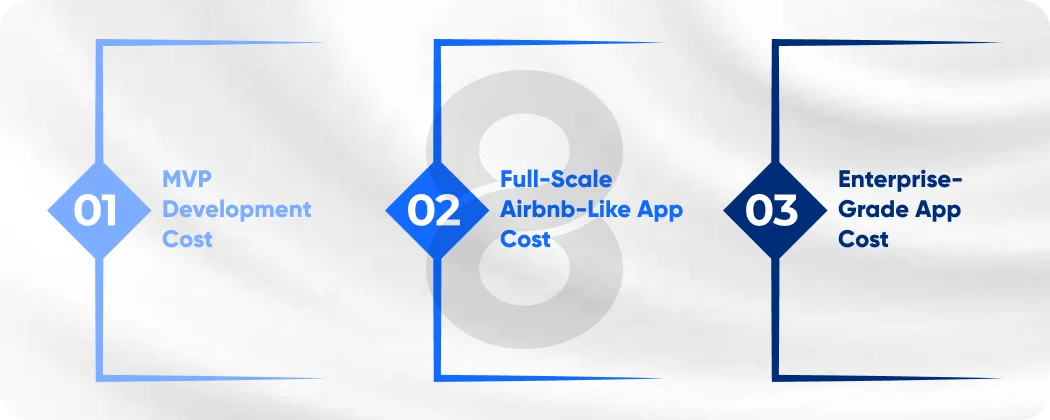
Now, let’s address the most critical question: cost to develop an app like Airbnb.
| Development Stage | Estimated Cost Range | Key Features Included | Ideal For |
| MVP Development | $40,000 – $70,000 | Core booking system, user & host panels, admin dashboard, basic UI/UX | Startups validating market fit |
| Full-Scale Airbnb-Like App | $120,000 – $250,000+ | Advanced search, secure payments, real-time messaging, reviews, analytics, and scalability | Market-ready product |
| Enterprise-Grade Solution | $300,000+ | AI-based recommendations, dynamic pricing, fraud detection, multi-country compliance | Large-scale platforms |
MVP Development Cost
The MVP of an application such as Airbnb is based on core aspects of application registration, search, reservation, payment, and host management. It is created to be able to test the idea within a short period of time, mitigate risk, and allow initial testing of the idea that has the least investment.
Full-Scale Airbnb-Like App Cost
A full-scale Airbnb-like application has such advanced features as AI suggestions, dynamic pricing, in-app chat, feedback, and powerful administration dashboards. The version has more aggressive traffic, security, and UX support and is more expensive and time-consuming to develop.
Enterprise-grade App Cost
The development of Airbnb clone apps that are enterprise-grade implies a sophisticated microservices architecture, scalability worldwide, sophisticated analytics, compliance, multi-currency support, and high-end features.
It requires a specialized team, a high level of security, and extensive testing, leading to increased cost and high levels of reliability and performance.
Factors That Influence App Development Cost
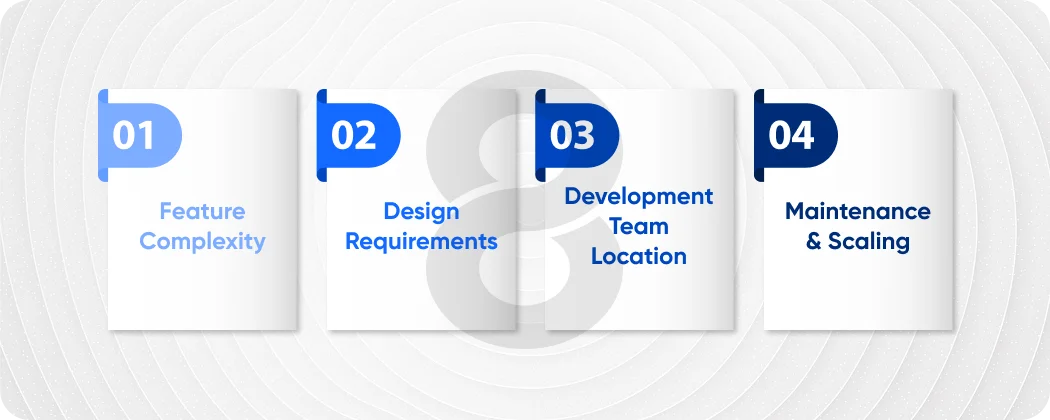
Several variables directly impact the cost to build an app like Airbnb:
1. Feature Complexity
The complexity of features has a direct influence on the cost and time of development. High-tech features like real-time chat, real-time prices, booking schedules, and artificial intelligence have additional impacts on the budget of an Airbnb-like platform because they need more engineering hours, tests, and integrations.
| Feature Category | Examples | Development Effort | Estimated Cost (USD) |
| Basic | User registration, search, listing | Low | $15,000 – $25,000 |
| Medium | In-app chat, booking calendar, payments | Medium | $25,000 – $60,000 |
| Advanced | AI recommendations, dynamic pricing | High | $60,000 – $120,000 |
| Enterprise | Multi-region scalability, analytics | Very High | $120,000 – $250,000+ |
2. Design Requirements
The quality of the design determines the user’s trust and involvement. Design research, prototypes, and testing need to be done to achieve custom UI/UX, animation, and brand identity. The less a work of art and the more tailor-made the interface, the higher the cost of the design and development.
| Design Aspect | What It Includes | Time Required | Estimated Cost (USD) |
| Basic UI | Standard components, minimal branding | Low | $3,000 – $6,000 |
| Custom UI | Brand colors, custom icons | Medium | $6,000 – $12,000 |
| Animations | Smooth transitions, micro-interactions | Medium-High | $10,000 – $18,000 |
| UX Research | User testing, feedback iterations | High | $12,000 – $25,000 |
3. Development Team Location
The rates of development are diverse in the world, depending on the availability of talent andthe cost of operation. In selecting the appropriate region, it is a matter of quality against the budget. A good offshore team will provide great output at cheap costs, whereas the local teams will provide closer interaction and higher charges.
| Region | Hourly Rate | Typical Team Size | Quality Level | Cost Efficiency |
| US & Western Europe | $80–$150 | 5–10 | Very High | Low |
| Eastern Europe | $40–$70 | 6–12 | High | Medium |
| South Asia | $25–$50 | 8–14 | Medium-High | High |
4. Maintenance & Scaling
Scaling and maintaining costs are continuous to make your app stable and competitive. Examples of costs are upgrades of the server and bug fixes, feature additions, and performance optimization. The annual maintenance is expected to be a percentage of the original development investment.
| Maintenance Type | Includes | Frequency | Cost Range |
| Bug Fixes | Issue resolution, patches | Monthly | 5–10% |
| Feature Updates | New features & improvements | Quarterly | 5–8% |
| Server Scaling | Infrastructure & performance | As needed | 3–7% |
| Security & Compliance | Updates, audits | Annually | 2–5% |
Read More: Flutter App Development Cost – A Detailed Guide
Timeline to Build an Airbnb-Like App
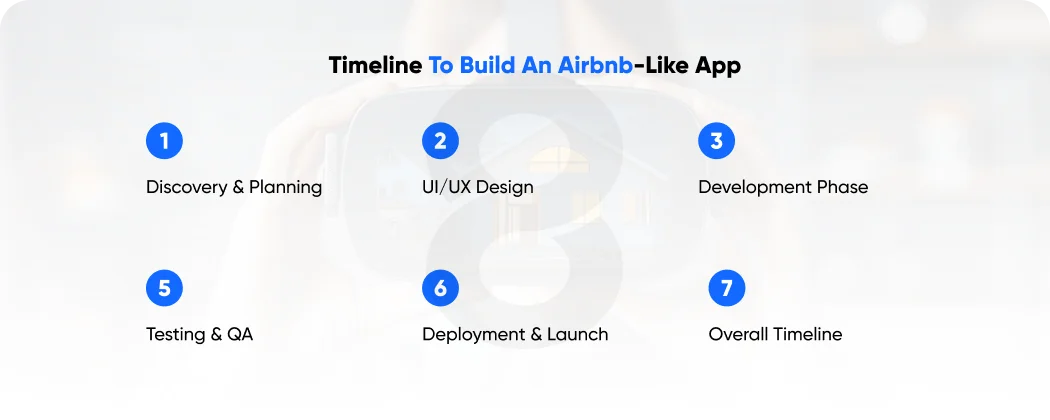
The timeline of a realistic building of an Airbnb-like application will guarantee the organization of the progression, minimize the risks, and provide a scalable product with strong functionalities, an intuitive user interface and user experience, and stable performance.
| Phase | Duration | What You Get | User-Centric Benefit |
| Discovery & Planning | 2–3 weeks | Requirements, roadmap, feature list | Clear strategy reduces risks and ensures aligned goals |
| UI/UX Design | 4–6 weeks | Wireframes, prototypes, UI design | Engaging and intuitive experience boosts conversions |
| Development Phase | 4–6 months | Backend + frontend, APIs, integrations | Reliable booking system with high performance |
| Testing & QA | 3–4 weeks | Bug fixes, performance testing | Smooth, secure app experience with fewer issues |
| Deployment & Launch | 1–2 weeks | App store submission, server setup | Faster go-to-market with launch support |
| Total | 6–8 months | Fully functional Airbnb-like app | Scalable product ready for real users |
Discovery & Planning
We study your objectives, users, and needs in the market to establish features, workflows, and technical requirements so that your Airbnb-like app will be developed on a proper strategy and a clear roadmap.
UI/UX Design
Our designers create easy-to-use interfaces that are user-friendly to the hosts and the guests, centering on smooth navigation, clean layouts, and attractive images that increase the booking conversions and retention.
Development Phase
We develop a highly performant, secure platform that supports reliable booking, payments, messaging, and control over its administration to achieve high performance and easy cross-platform compatibility.
Testing & QA
We do extended functional, performance, security, and usability testing to make sure that your app is bug-free and secure and is ready to be used in the real world, as well as will have an imperfect user experience.
Deployment & Launch
We submit your application to the App Store and Google Play, install server infrastructure, and offer launch support, such as monitoring, optimization, and putting out fires.
Overall Timeline
Planning to launch It takes us 6-8 months to create a fully functional app similar to Airbnb and maintain quality, scalability, and an uninterrupted user experience for both the hosts and the travelers.
Read More: How Much Does it Cost to Develop an iOS App?
Travel App Development Challenges You Must Prepare For
Travel app development presents a set of distinct challenges, including the seasonal traffic peaks, payment issues, building trust, scalability on a global level, and compliance. Not considering them results in poorly done work, loss of security, user churn, and loss of revenue.
- Seasonal traffic spikes
- Payment disputes and refunds
- Host-guest trust mechanisms
- Global scalability
- Legal and tax compliance
Unless these issues are considered in the planning, you could incur expensive rework, performance problems, security failures, user churn and increased support costs, slower updates, and lost revenues.
Read More: How Much Does It Cost to Develop an Android App?
Monetization Strategies for Airbnb-Like Apps
There must be a proper monetization strategy so that the users find value and you can be compensated by way of reasonable commissions, premium host tools, and upgrades so that the site can be viable, credible, and worthwhile to both guests and hosts.
- Commission-based bookings
- Subscription plans for hosts
- Featured listings
- Experience upsells
- Dynamic pricing tools
A strategic monetization plan speeds up the ROI by streamlining revenue and user value optimization, maximizing conversion funnels, ensuring higher repeat bookings, and providing regular cash flow to fund development, marketing, and operations overhead.
Post-Launch Costs You Should Not Ignore
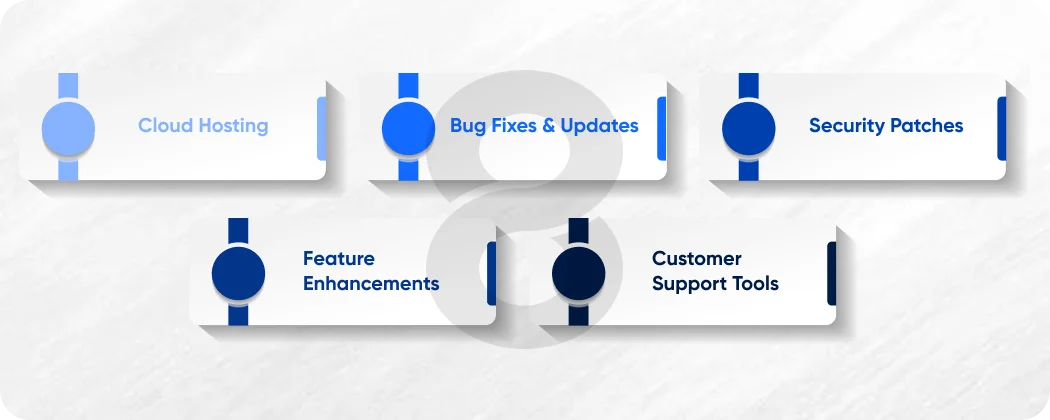
Most founders do not realize the continual costs that come with post-launch, but which are needed to ensure the system is stable, scalable, and optimized to perform and to satisfy long-term and competitive markets.
Cloud Hosting
We offer scalable cloud hosting with dynamic bursting of traffic, which optimizes, lowers downtimes, and keeps your application fast, reliable, and affordable as the number of users scales.
Bug Fixes & Updates
With our monitoring and maintenance package, bugs are immediately found and fixed, performance is improved, and regular updates are also provided that make us more usable, avoid downtimes, and save brand reputation.
Security Patches
We take the initiative to apply security patches and vulnerability tests and updates to ensure the protection of your user data, mitigate cyber risks, and sustain trust on your platform in a dynamic online security environment.
Feature Enhancements
We assist you in developing your app with data-driven functionality, enhancing the existing functionality, and aligning the improvements with the user feedback, trends in the market, and business objectives to ensure continued growth in the long term.
Customer Support Tools
We combine smart customer service solutions, such as ticketing, chat systems, and automation, to assist you in responding more quickly, enhancing service satisfaction, and scaling support activity.
Why Partner With 8ration to Build an App Like Airbnb

Proven Expertise in Marketplace App Architecture
We are experts in designing two-sided marketplace architectures that are scalable and have secure APIs, optimized databases, and modular back-end systems to handle high traffic, real-time bookings, and smooth user interactions.
Cost-Optimized Development Without Compromising Quality
With our agile development philosophy, reusable components, and cross-platform experience, we would be able to minimize the total cost to create an app like Airbnb without sacrificing performance, security, or scalability.
End-to-End Support From Strategy to Post-Launch Growth
Since discovery workshops and UI/UX design are only part of the process, from deployment to optimization and continued maintenance, we provide the entire mobile app development process that guarantees that your Airbnb-like app manages to adapt to the market needs.
Read More: 20 Best Mobile App Development Companies in the USA
Final Thoughts!
The creation of such an app as Airbnb is challenging and very beneficial if it is done properly. From secure payments and scalable architecture to intuitive design, cost, and success are influenced by every choice.
The price to develop an app such as Airbnb will be between $40,000-$250,000+, depending on the type of solution. By spending on quality mobile app development, the appropriate tech stack, and scalability, you will be able to make your Airbnb-like app compete with the most popular apps, such as Airbnb, and grow in a sustainable way.