



Real estate app development covers everything involved in taking a property app from an idea to the app stores. Design, engineering, data integrations, and the maintenance work that never really ends. Most projects land somewhere between $40,000 and $300,000 and take three months to a year or more, depending on how much you’re building.
Whether people actually want these apps stopped being a question years ago. NAR found that 52 percent of buyers first spotted the home they ended up purchasing online and seventy percent searched on a phone or tablet at some point along the way.
So this guide skips the pep talk and gets into the decisions. Which type of app to pick. The features users expect on day one. Plus, what these projects really cost, the handful of tech decisions you can’t undo cheaply, and the reason so many property apps are dead within a year of launching.
The $94 Billion Reason Property is Going Mobile
The property industry resisted software longer than almost any other sector. That resistance is over. Grand View Research expects the global proptech market to grow from about $25 billion to over $90 billion between 2021 and 2030. Most of that spending goes into residential software and North America alone generates over half the revenue.
They live in the space between a buyer scrolling listings at midnight and the agent who eventually closes the deal, and they get paid for owning that space through leads, subscriptions, and transaction fees. That logic holds whether you’re a brokerage, a developer, or a founder with an idea.
Which Type of Real Estate App Should You Actually Build?
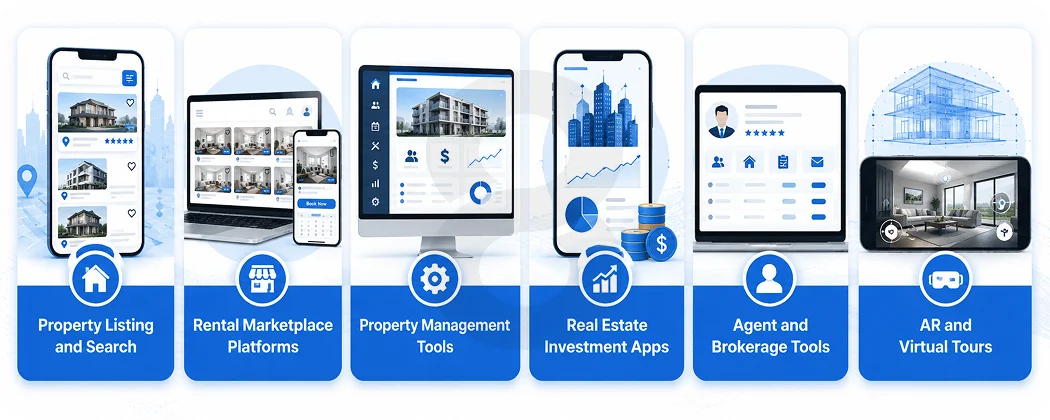
“Real estate app” is a label that hides at least six different products. Different users, different revenue models, different engineering headaches. Choosing the wrong one is also the priciest mistake in the whole project, because you make it before anyone writes any code.
Property listing and search apps
The Zillow playbook. People browse, filter by price and area, flip through photos, then reach out to an agent. The money comes from agents paying for ads and leads. What decides winners here is boring but true: how complete the listing data is, and how good the search feels.
Rental marketplace apps
These sit between landlords and tenants and take over the annoying parts of that relationship. Applications, screening, and rent collection all happen in the app, which means nobody’s texting anyone for the third time about a late payment.
Rent recurs every month, which makes these easier to monetize than sales apps. The tradeoff is that fraud and fake listings stop being edge cases and become your daily problem.
Read More: Marketplace App Development Cost Guide: Features, Factors & Pricing
Property management apps
This one’s for the landlords and managers themselves. Take the property branding off and what’s left is a B2B SaaS product, and it sells the way SaaS sells: on the hours it saves per unit under management.
Real estate investment apps
Fractional ownership, crowdfunding, portfolio tracking. Come prepared for compliance work, KYC flows, and payment infrastructure that has to survive regulator scrutiny. On these products, the regulation will cost you more than the design ever will.
Agent and brokerage tools
CRMs, showing schedulers, open house check-in apps, and transaction management platforms sold to the professionals themselves. Smaller user base, but agents pay for tools that demonstrably close more deals.
AR and virtual tour apps
Apps built on 3D walkthroughs, augmented reality staging, and viewing homes from anywhere. They arrived as a pandemic workaround and never left. Out-of-state buyers depend on them now, and so do new construction sales teams, where a virtual reality experience can put a buyer inside a home that so far exists only on a blueprint.
The Features Buyers Expect Before They Even Sign Up
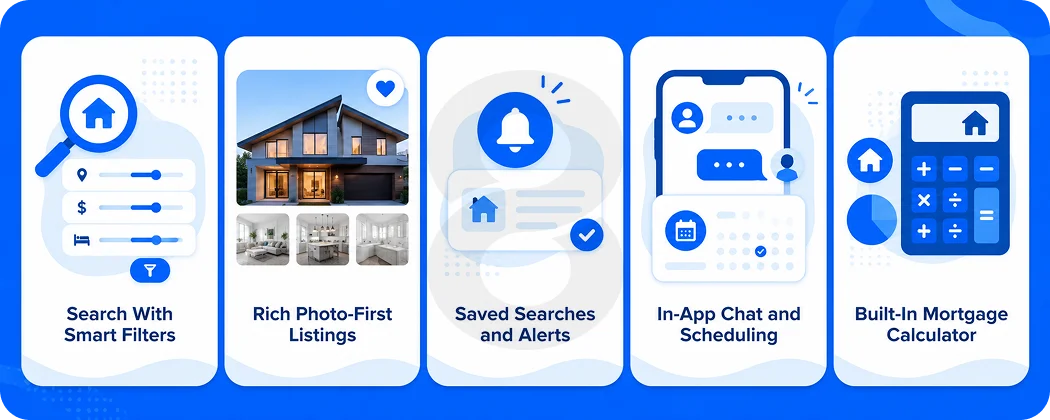
Feature lists sink budgets. The discipline is separating what users assume will exist from what actually differentiates you. Here is how that split looks in 2026.
Non-negotiable core features
- Search with smart filters: Price, beds, square footage, and property type. That’s the floor. Map search where users draw their own boundary used to feel premium; now its absence shows up in one-star reviews.
- Rich listing pages: Big photo galleries, floor plans, and price history. Thin listings get scrolled past no matter how good the house is.
- Saved searches and instant alerts: In competitive markets, homes sell in days. Push notifications for new matches are the single biggest retention feature a listing app has.
- In-app messaging and tour scheduling: Every extra step between interest and contact costs you leads. Users should book a showing without leaving the app.
- Mortgage calculator: Simple, but among the most used screens in any property app because it answers the only question that matters: can I afford this?
Features that actually differentiate
- AI-driven recommendations: Filters only find what people already know to ask for. A suggestion engine that learns from browsing behavior can put a home in front of someone that they’d never have searched for, and that’s the moment users start trusting the app over their own filters. If you’re going to spend on AI development, this is the feature where it shows up in the engagement numbers.
- Automated valuation estimates: Here’s the retention problem with property apps: once someone buys, they stop opening it. A model that tracks what their home is worth against comparable sales fixes some of that, because people will check that number for years after the purchase.
- Conversational search and support: Some people hate filter menus, and honestly, they have a point. Being able to type “show me three-bed homes near good schools under $450k” and just get results is a better experience than toggling nine dropdowns. The same AI chatbot earns its keep on the management side too, where a tenant confused about a lease clause at midnight would otherwise be opening a ticket and waiting until Monday.
- AR view and virtual staging: Empty rooms are hard to buy. Most people simply can’t picture their sofa in a bare space, and plenty of deals stall right there. Letting them point a phone at the room and see it furnished takes that objection off the table.
- Smart home integration: Connect the app to locks, thermostats, and sensors through IoT app development and a rental product can offer self-guided tours, while managers diagnose a heating complaint remotely before deciding whether it’s worth sending anyone out.
- Digital paperwork: E-signatures and a document vault mean the offer, the lease, and the disclosures all stay inside your product. The alternative is what the industry has now: a transaction scattered across email attachments with names like “contract final (REVISED).”
Real Estate App Development Cost Overview
Going by what agencies actually charge North American clients, a real estate app runs anywhere from $40K to $300K plus. The spread is wide because “an app” can mean a clean listing browser or a full transaction platform. Here is how scope maps to budget in projects we see most often:
| App Scope | What It Includes | Timeline | Typical Cost (USD) |
|---|---|---|---|
| Basic Listing App | Property Search, Filters, Map View, Listing Pages, Favorites & Single-platform Support | 3–4 Months | $40,000–$80,000 |
| Mid-Level App | Everything in the Basic App, Plus MLS/IDX Sync, In-app Chat, Tour Scheduling, Mortgage Calculator, Push Notifications & iOS & Android Support | 5–7 Months | $80,000–$150,000 |
| Advanced Platform | AI Recommendations, Automated Property Valuations, AR/3D Tours, Agent CRM Tools, E-signatures & Admin Dashboards | 8–12+ Months | $150,000–$300,000+ |
Four factors move the number more than anything else:
- Data integrations: MLS feeds, CRM sync, mortgage data… none of these are one-time purchases. You pay to build the connection and then you keep paying because feeds break and someone has to notice before your users do.
- Platform strategy: Going fully native means maintaining two separate codebases, and the price reflects that. It’s close to double what one cross-platform build costs.
- Custom AI and AR work: Recommendation engines and AR staging pull real weight in the product, but the engineering hours behind them are serious. Nobody ships these features cheaply.
- Compliance: Investment and payment features don’t travel alone. Say yes to them and you’ve also said yes to KYC checks, escrow handling, and whatever the regulators in each of your markets want to see.
Then there’s the bill after the bill. Whatever the build cost, plan on spending another 15 to 20% of it every single year just keeping the thing healthy.
That covers OS updates, feed fixes, and general maintenance. Property apps age badly when neglected, because everything they depend on keeps moving: listing feeds change, map SDKs update, app store rules tighten.
Read More: How Much Does Real Estate App Development Cost in 2026
Native, Cross-Platform, or Web? The Tech Decision That Shapes Everything
The platform question comes down to audience and budget. If your users skew heavily toward iPhone, which is common in higher-value US metro markets, a dedicated iOS app delivers the best camera, ARKit, and performance experience. If you are targeting rental audiences or international markets, Android development cannot be an afterthought, since Android holds the global majority.
For most listing and rental products, though, cross-platform is the sensible route. One Flutter codebase gets you into both stores, shaves about a third off the timeline, and holds up fine under the maps and photo galleries these apps are built around.
Once you get past the interface, the choices that really matter are data choices. US listing apps usually pull MLS data through IDX or the RESO Web API and every MLS has its own licensing terms and display rules. It means what’s allowed in Dallas may not fly in Denver.
Layer in maps (Google Maps or Mapbox), payments, e-signatures, and a CRM connection, and the backend starts looking less like an app project and more like a system integration job.
From Idea to App Store in 7 Steps
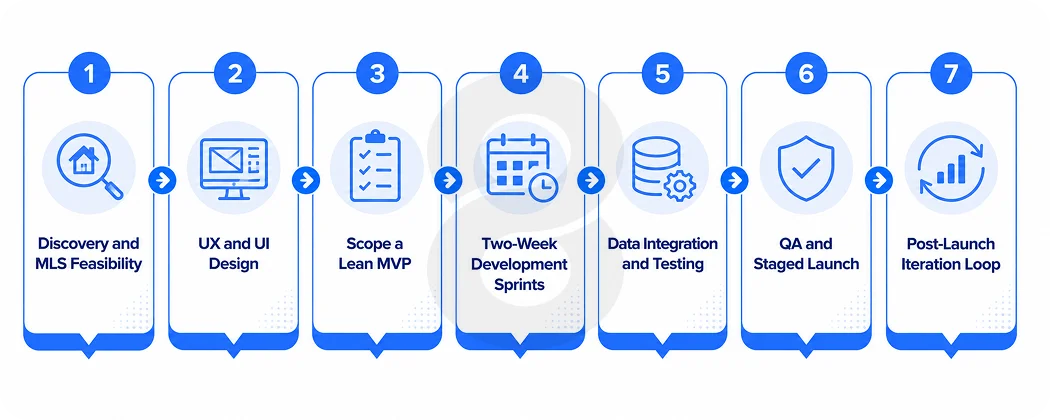
- Discovery and market research: Nail down who the app is for, how it earns, and the one thing it will do better than what already exists. This is also when you confirm MLS access and licensing for your target markets. Do it now, because finding out after design is finished gets expensive.
- UX/UI design: A property app is a visual product before it’s anything else. Wireframes and a design system built around photo-heavy browsing. Then put those prototypes in front of five to ten actual buyers or agents. An afternoon of awkward feedback at this stage saves months of rework later.
- MVP scoping: Cut the feature list to what proves the core value. For a listing app, that usually means search, listing pages, favorites, alerts, and agent contact. Nothing else.
- Development sprints: The backend, APIs, and app builds move in two-week cycles and you review working software at the end of each one. That rhythm exists so problems show up in week four.
- Data integration and testing: Now the MLS/IDX feeds and third-party APIs get wired up and fed actual production data. Brace yourself for this phase, because the documentation always describes a cleaner world than the one your data arrives from.
- QA and launch: Testing across devices and prepping for app store review before rolling out in stages avoid any issues that hit a small group first instead of everyone at once.
- Post-launch iteration: Watch what people search for and who keeps coming back. That’s your roadmap from here on, not the feature list from the original pitch.
Why Most Real Estate Apps Quietly Fail
App stores are full of property apps with a few thousand downloads and one-star reviews about outdated listings. The failure patterns repeat so consistently they are worth naming.
Stale data
The number one complaint in property app reviews. Users tolerate a plain interface. They do not tolerate falling in love with a home that sold last week. Reliable, frequent listing sync is worth more than any visual polish.
No answer to “why not Zillow?”
A generic national listing app cannot outspend the portals. Winners pick a wedge: a specific city, rentals for a niche audience, new construction, agent tooling, or an experience the portals are too big to build well.
Ignoring the episodic nature of home search
The apps that last give people a reason to keep them around. Tracking their home’s value, neighborhood alerts, maintenance tools, rent payment. You can’t patch retention in later; it has to be part of the original product thinking.
Underestimating trust and security
Property apps handle identity documents, financial details, and home addresses. One breach or one rental scam that spreads on social media can end a young platform. Security review belongs in the budget from day one.
Read More: Top 10 Real Estate App Development Companies
How 8ration Approaches Real Estate App Development
8ration is a custom software and app development company, and property technology has become one of its busier practices. Brokerages, startups, and property managers come to the team for real estate app development at different stages, some with nothing but an idea that needs an MLS feasibility check, others with a design ready to build.
Either way, the same team carries the project through UX design, development across mobile platforms, data integration, and the support work that follows launch.
The work spans listing and search apps, rental marketplaces, and management tools, along with the newer layer of the market: recommendation engines and property chatbots built through its AI practice, and immersive viewing experiences from its AR and VR teams.
VisionHome is a recent example, an AR app 8ration built that lets homeowners drop virtual furniture and renovations into their actual rooms before spending money on either. It’s a fair picture of how that AR capability turns into products people actually use.
Engagements usually begin with a scoping call and a fixed estimate rather than an open-ended contract, and with teams across different parts of the world, development and support keep moving around the clock.
Read More: Benefits of AI in Real Estate Apps Using Predictive Analytics
Build the App Buyers Keep, Not Just Download
Three things separate the real estate apps that stick from the ones that fade. The data layer is the actual product. A sharp wedge beats a long feature list. And retention gets decided during planning, not in a post-launch scramble.
Get those right and everything else about this market works in your favor: buyers glued to their phones, proptech budgets climbing, and an industry still running on clunky software that’s overdue for replacement.
So start with the app type and the revenue model. Confirm MLS access before design begins. Keep the MVP small, and be honest about what years two and three will cost. Zillow took a decade to become Zillow. The app that carves out its own corner of this market will take some patience too.