Everyone keeps talking about AI like it’s some magical black box that fixes everything instantly, but we know that’s not how it works. You try running those huge models and suddenly things feel weird. Slow responses, expensive to run, unpredictable outputs, impossible to scale without a fortune in GPUs. That’s exactly why many teams are now turning to small language models to deliver faster, more cost-efficient, and scalable AI performance without the heavy infrastructure burden.
This is where small language models start to matter. They’re not flashy. They don’t try to do everything. They’re focused, fast, cheap, predictable, controllable, and surprisingly capable if used right.
Small models are perfect for when you actually want AI integration, workflow automation, AI chatbot development, or AI development that works reliably every single day. No demo mode, no fancy slides, just AI that actually fits your team and workflow.
If you’ve been wondering which open-source models you can actually deploy for projects, this guide is your roadmap. We’ll cover 10 open-source small language models, what they do, when to use them, and how to make them work in real life without spinning your head.
Why Small Language Models Are The Game-Changer
Big models are flashy. They wow at demos, generate long essays, answer everything under the sun. Cool, right? But when it comes to production, they fall short:
- Slow inference makes everything lag
- Infrastructure costs explode
- Outputs aren’t predictable
- Scaling to multiple users becomes a nightmare
Now compare that with small language models:
- Lightweight, cheap, fast, reliable
- Easy to fine-tune for your domain
- Predictable and controllable outputs
- Integrates smoothly with workflow automation, AI chatbot development, and AI integration
Small models are reliable, deployable, and actually usable for real business workflows. They’re not the show-off AI you use once they become part of your daily operations.
How to Pick the Right Small Model
Not all small models are equal. Don’t just pick one because it’s trending. Consider these:
- Task Fit – Generating text, summarizing, answering questions, or following instructions? Different models excel in different areas.
- Domain Knowledge – Some models already know your industry; others need fine-tuning.
- Compute Needs – Can it run on your server or edge device? Check memory and speed.
- Licensing – Open-source doesn’t always mean free for commercial use.
- Community Support – An active community helps fix issues faster.
Small models shine where consistency, control, and integration matter more than raw power. They’re great for AI integration, workflow automation, and AI chatbot development, and they allow fast experimentation in AI development projects.
10 Top Open-Source Small Language Models for Your Next AI Project
# |
Model Name |
Size |
Best Use Case |
Pros |
Cons |
Integration Suitability |
| 1 | GPT-Neo 125M | 125M | Text generation | Fast, lightweight, easy to fine-tune | Limited creativity, small context window | Great for AI integration, small workflow automation, and prototypes |
| 2 | GPT-J 6B | 6B | Q&A, structured text | High-quality outputs, open-source | Heavier, slower inference than ultra-lightweight models | Good for AI development and structured tasks |
| 3 | BLOOMZ-560M | 560M | Multilingual tasks | Supports multiple languages, lightweight | Limited domain coverage, may need fine-tuning | Works for multilingual AI chatbot development and small automation |
| 4 | LLaMA-7B | 7B | Research, instruction-following | Strong small-scale performance, lightweight | Needs fine-tuning for production | Ideal for AI integration and domain-specific workflow automation |
| 5 | Alpaca-7B | 7B | Instruction following | Predictable, adaptable, community support | Limited context window | Good for AI chatbot development and internal instruction tools |
| 6 | Falcon-40B distilled 7B | 7B | Instruction tasks | Fast, distilled version, easy to integrate | Loses nuance due to distillation | Works well for structured workflow automation tasks |
| 7 | MPT-7B Instruct distilled | 7B | Instruction + reasoning | Lightweight, structured outputs, reasoning capable | Fine-tuning required for domains | Great for AI integration, workflow automation, and reasoning tasks |
| 8 | RWKV-4 1B | 1B | Streaming/incremental tasks | Extremely fast, small memory footprint | Smaller community, less creative | Perfect for edge deployment, workflow automation, and fast execution |
| 9 | OpenLLaMA-3B | 3B | Small deployments | Stable, predictable, lightweight | Limited dataset coverage | Works well for dashboards, internal tools, AI integration |
| 10 | Koala-7B | 7B | Instruction + conversation | Instruction-tuned, open-source, integrates easily | Some hallucinations possible | Ideal for AI chatbot development, small workflow automation, and text tasks |
1. GPT-Neo 125M
GPT-Neo 125M is a lightweight, fast small language model built for text generation and small projects. It runs on minimal hardware and is easy to fine-tune for your domain. It is ideal for AI integration, basic workflow automation, or AI chatbot development prototypes.
Pros:
- Lightweight and fast
- Easy to fine-tune
- Low infrastructure cost
Cons:
- Limited creativity
- Small context window
- Not great for long conversations
Tips: Start with short prompts, structured tasks, and simple automation workflows. It works well when speed matters more than raw intelligence.
2. GPT-J 6B
GPT-J 6B is bigger and more capable than GPT-Neo 125M. It produces high-quality text, answers questions accurately, and is open-source. It is suitable for AI development pipelines where outputs need to be reliable but infrastructure is not unlimited.
Pros:
- High-quality outputs
- Flexible for multiple tasks
- Open-source
Cons:
- Heavier model
- Slower inference than ultra-lightweight models
Tips: Use GPT-J 6B for structured reasoning tasks, Q&A systems, and prototypes that require slightly more context without moving to large models.
3. BLOOMZ-560M
BLOOMZ-560M supports multiple languages, making it excellent for global teams or multilingual chatbots. It integrates nicely with workflow automation and AI chatbot development, allowing you to handle diverse user inputs efficiently.
Pros:
- Multilingual support
- Lightweight and efficient
- Good for small tasks
Cons:
- Limited domain coverage
- Requires fine-tuning for specific industries
Tips: Ideal for chatbots in multiple languages or summarization tasks. Avoid using it for very technical or niche domains unless fine-tuned.
4. LLaMA-7B
LLaMA-7B is a research-focused small language model optimized for text generation and reasoning tasks. It is lightweight yet capable, making it ideal for AI integration or internal AI development workflows.
Pros:
- Strong small-scale performance
- Handles instruction following
- Lightweight for a 7B model
Cons:
- Needs fine-tuning for production
- Less creative without adaptation
Tips: Great for summarization, research assistance, and small tools. Fine-tune with domain-specific data for better results.
5. Alpaca-7B
Alpaca-7B is built for instruction following, making it reliable for structured outputs. It works well for AI chatbot development and simple workflow automation projects. It is easy to fine-tune for your specific domain.
Pros:
- Predictable instruction-following
- Strong community support
- Adaptable for multiple tasks
Cons:
- Limited context window
- Not ideal for very complex workflows
Tips: Use Alpaca-7B for internal support bots, instructional automation, or short text generation tasks. Its lightweight nature makes deployment simple.
6. Falcon-40B distilled 7B
Falcon-40B distilled to 7B is optimized for instruction-following tasks while remaining fast and lightweight. It is perfect for workflow automation where speed and structured output are important.
Pros:
- Fast and lightweight
- Good for instruction-based tasks
- Easy integration
Cons:
- Loses some nuance due to distillation
- Not ideal for creative tasks
Tips: Use it in repetitive workflows, automated instructions, or small team AI tools. It works well in production without heavy hardware.
7. MPT-7B Instruct distilled
MPT-7B Instruct is a small model optimized for reasoning and instruction-following. It is lightweight, easy to integrate, and reliable for AI integration, workflow automation, and AI development.
Pros:
- Structured outputs
- Lightweight and fast
- Good reasoning abilities
Cons:
- Requires fine-tuning for specific domains
- Context window is limited
Tips: Perfect for step-by-step automation, summarization, or bots that need predictable structured responses. Start small and iterate for better outputs.
8. RWKV-4 1B
RWKV-4 1B is a streaming-optimized model, extremely fast and lightweight. It is ideal for workflow automation, incremental tasks, or AI development on edge devices.
Pros:
- Very fast inference
- Small memory footprint
- Lightweight deployment
Cons:
- Smaller community
- Not very creative
Tips: Use RWKV-4 for streaming tasks, chatbots with short conversation windows, or automation scripts where speed is more important than complexity.
9. OpenLLaMA-3B
OpenLLaMA-3B is a small, lightweight version of the LLaMA family designed for stable deployment. It is good for AI integration and small production applications.
Pros:
- Stable and lightweight
- Easy to deploy
- Predictable outputs
Cons:
- Limited dataset coverage
- Needs domain fine-tuning
Tips: Perfect for dashboards, internal automation tools, and lightweight chatbots. Fine-tune for niche tasks for better accuracy.
10. Koala-7B
Koala-7B is instruction-tuned for conversation and structured outputs. It is great for AI chatbot development, workflow automation, and AI development projects requiring reliable text.
Pros:
- Instruction-tuned outputs
- Open-source and lightweight
- Integrates into existing workflows
Cons:
- Some hallucinations possible
- Fine-tuning improves performance
Tips: Use Koala-7B for chatbots, small instruction-following systems, or internal text generation tools. Validate outputs for production use.
Read More: What is Spatial Intelligence? Examples, Uses, and Improvement Tips
Real-World Use Cases
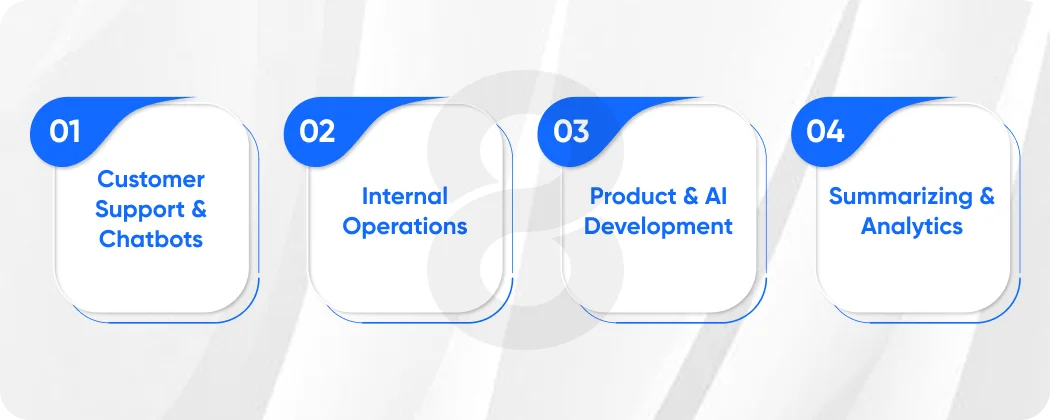
Customer Support & Chatbots
Generic chatbots feel robotic and fail on slight deviations. Small language models fix that:
- Consistent tone
- Handles edge cases better
- Integrates into existing systems
- Perfect for AI chatbot development
Internal Operations
Approval workflows, routing, repetitive decisions. Small models are perfect because:
- Workflow automation speeds processes
- Reduces errors
- Easy to debug
- Fits team operations without extra training
Product & AI Development
Building AI into apps or tools? Small models shine:
- Run efficiently on mobile or edge devices
- Quick prototyping for AI development
- Reduce latency, compute costs
- Works for AI integration in production
Summarizing & Analytics
Small models can summarize internal reports, meeting notes, or compliance data:
- Fast, reliable summaries
- Extract structured information
- Supports decision-making
- Integrates with internal dashboards
Implementation Tips
- Start Small – Choose one workflow to test
- Fine-Tune Carefully – Fewer, high-quality examples work best
- Integrate Gradually – Don’t replace the whole workflow at once
- Monitor Outputs – Even small models can hallucinate
- Iterate Fast – Adjust with feedback loops for continuous improvement
When used with AI integration, workflow automation, and AI chatbot development, small models deliver predictable, deployable results.
Read More: What Is Agentic AI? Definitions And Real-World Examples
Benefits of Small Language Models
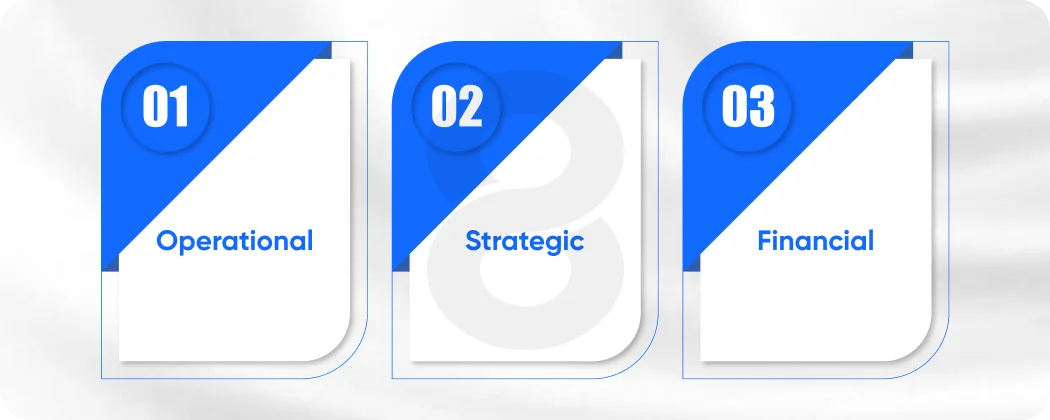
Operational
- Lightweight, fast inference
- Easier deployment
- Scalable without huge infrastructure
Strategic
- Predictable outputs
- Easier to debug
- Control over behavior
Financial
- Lower infrastructure costs
- Faster ROI
- Cheaper to maintain
Challenges You Might Face
- Data – Limited, scattered, needs cleaning and formatting
- Tech – Fine-tuning and integration need expertise
- People – Resistance to change or adoption
- Workflow – May require process adjustments
Despite these challenges, small models win because predictability, control, and integration outweigh raw size.
Read More: 8 Industries Being Redefined by Computer Vision in 2026
Mini Case Examples
1. Retail Support Bot
- FAQ-trained small model
- Integrated with CRM
- Reduced response times 50%
2. Internal Expense Approval
- Automated approvals using small model
- Saved 20 hours weekly
- Reduced errors significantly
3. Marketing Report Summarization
- Summarizes campaign reports
- Generates actionable insights
- Adoption improved efficiency
Stop wasting time with flashy AI that fails in real workflows. Start small, build reliable systems that scale, integrate with AI integration, workflow automation, AI chatbot development, and AI development. Pick one workflow, iterate fast, expand gradually, and watch results improve daily. Small models aren’t just tools, they’re your team’s silent productivity booster.
Conclusion
Open-source small language models aren’t a compromise. They’re practical, reliable, cheap, and fast. Big models are flashy; small models deliver. Used correctly, they enable AI integration, workflow automation, AI chatbot development, and AI development that actually works. Start small, iterate fast, and build AI that becomes part of your operations, powering real results every single day.