


Why Most On-Demand Apps Quietly Collapse Early
A lot of founders still think launching an app means the difficult part is finished. Honestly, that is usually where the real problems start appearing. Because building an on-demand platform is not only about creating an interface where people place orders or request services. The difficult part is building an operational system that still works properly once real users start behaving unpredictably.
That is where many apps fail quietly. Not because the idea was terrible. Not because the market did not exist. Usually because the system underneath the experience was weaker than the founders initially realized. That is exactly why stronger on-demand app development strategy matters much more now than it did even a few years ago.
Because users became less patient, competition became more aggressive, and operational mistakes became far more visible.
According to CB Insights, no market need (or poor product-market fit) is one of the leading reasons for startup failure, cited in around 42% of cases in their analysis of startup post-mortems. Operational issues such as running out of cash, flawed execution, and scalability challenges are also among the biggest reasons digital products and startups fail early.
Read More: Why 80% of Apps Fail: A Founder’s Guide to Success
The Biggest Mistake Happens Before Development Even Starts
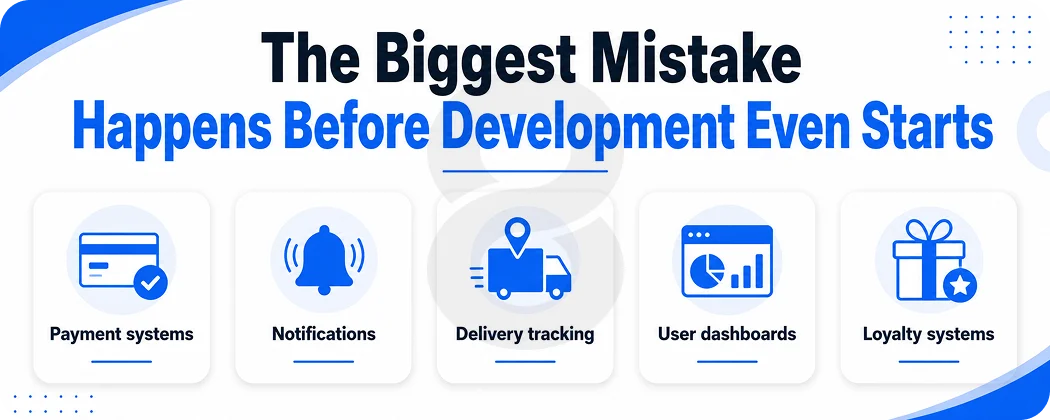
This is where things usually begin going wrong. Most teams focus heavily on features before they fully understand the workflow itself.
So they start discussing:
- Payment systems
- Notifications
- Delivery tracking
- User dashboards
- Loyalty systems
All before answering one important question properly. What problem are users actually solving repeatedly with this app? Because if that answer is weak, then the app usually becomes another downloaded platform people forget about within days.
A strong on-demand app development process starts by understanding behavior patterns first instead of simply stacking features together quickly.
At 8ration, product planning usually starts around user movement, operational pressure points, and retention behavior before interface decisions become the main focus.
Read More: Mobile App Designs for Inspiration: 7 Trends Redefining User Engagement in 2026
Convenience Became the Bare Minimum Already
This part matters a lot now. Earlier, simply offering convenience digitally was enough to stand out. That is no longer true anymore.
Users already expect:
- Fast ordering systems
- Real-time updates
- Smooth payments
- Instant onboarding
- Mobile-first experiences
Those things are expected automatically now. That means weak execution becomes visible immediately. If the app feels confusing, slow, inconsistent, or overloaded with friction, users leave quietly without explaining why. And honestly, most businesses underestimate how quickly that happens.
This is exactly why modern mobile app development strategy directly affects whether on-demand platforms retain users properly or not. Because users compare your experience against every major app already installed on their devices daily.
Why Most On-Demand Apps Fail Early
Subscriptions are by far the most profitable and sustainable monetization model for fitness apps. Apps like Noom, Calm, and Headspace generate the overwhelming majority of their revenue through monthly and annual membership plans, and investors strongly prefer subscription-based business models because of their predictable recurring income. If you plan to use subscriptions, build that infrastructure from day one using tools like Stripe or RevenueCat; retrofitting a subscription billing system into an existing app architecture is significantly more expensive than implementing it from the start. The corporate wellness segment is also rapidly growing, with employers increasingly purchasing employee fitness app licenses as part of workplace wellness benefits, creating a B2B revenue channel that can generate much higher account value than consumer subscriptions.
Read More: Mobile App Development Process – From Idea to Launch
Real-World Examples: What Apps Like These Actually Cost
It helps to anchor these estimates against products people already recognize. While exact development costs for major apps are rarely made public, industry estimates based on feature complexity and team size provide realistic approximations of what it would cost to build similar products today.
App Benchmark |
Type |
Estimated Build Cost Today |
| MyFitnessPal-like app | Nutrition + activity tracker | $80,000 – $150,000 |
| Peloton-like app | Live + on-demand video, community | $200,000 – $500,000+ |
| Nike Training Club-like app | Workout library + guided programs | $60,000 – $130,000 |
| Calm-like app | Meditation + sleep + audio | $50,000 – $120,000 |
| Fitbit-like wearable companion | Device sync + health dashboard | $80,000 – $200,000 |
| Simple yoga app MVP | Guided videos + progress tracking | $20,000 – $50,000 |
Read More: How Much Does It Cost to Build an On-Demand App in 2026?
Most Founders Build Features Before Building Systems
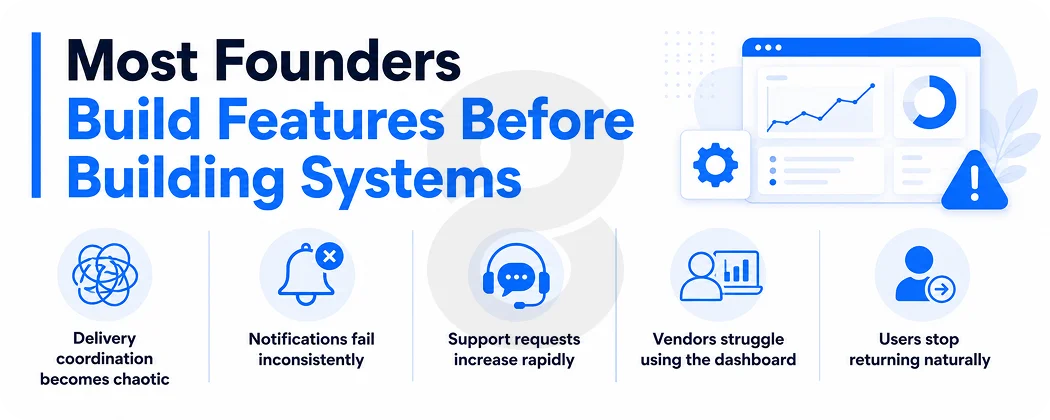
This happens constantly. The app looks impressive visually. The investor pitch sounds polished. The launch campaign feels exciting.
Then actual operations begin and suddenly:
- Delivery coordination becomes chaotic
- Notifications fail inconsistently
- Support requests increase rapidly
- Vendors struggle using the dashboard
- Users stop returning naturally
That is not usually a design issue. That is a systems issue. And this is exactly where stronger software development planning changes outcomes significantly. Because scalable platforms are built around operational logic first instead of visual presentation alone.
AI Is Quietly Reshaping On-Demand Platforms Already
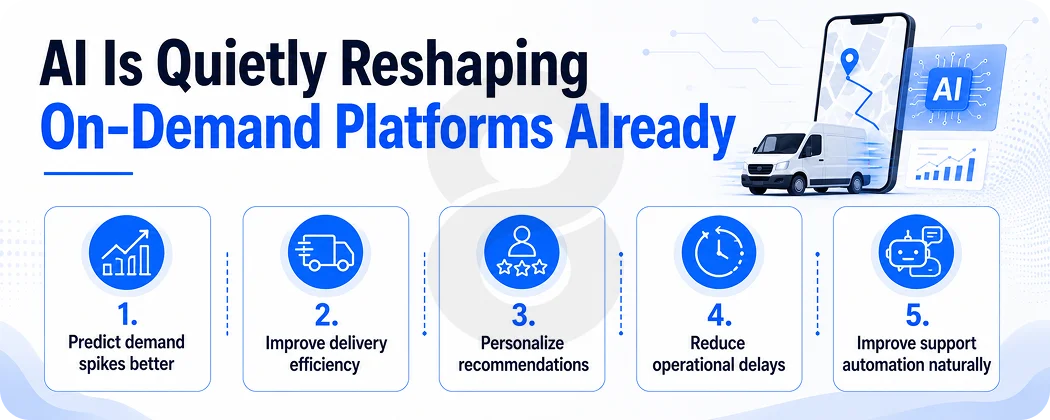
A lot of businesses still think AI only matters for large tech companies. That is honestly outdated thinking now.
Through proper AI development, on-demand platforms can already:
- Predict demand spikes better
- Improve delivery efficiency
- Personalize recommendations
- Reduce operational delays
- Improve support automation naturally
And with structured AI integration, most of these improvements happen quietly in the background without disrupting the user experience. That matters because modern users now expect systems to behave intelligently automatically. If your platform feels static while competitors feel adaptive, retention becomes harder very quickly.
Why User Friction Quietly Destroys Retention
This is honestly one of the biggest reasons on-demand products fail after launch. Too much friction everywhere. The signup process becomes annoying. The navigation feels overloaded. The ordering flow feels confusing.
The support experience feels disconnected. None of those issues sound catastrophic individually. Together, they quietly destroy engagement. A strong on-demand app development strategy focuses heavily on reducing unnecessary friction from every step of the experience.
Because users rarely explain what frustrated them anymore. They usually just uninstall the app silently.
The Infrastructure Problem Most Teams Ignore
A lot of apps are built for demos instead of real operational pressure. That becomes obvious once traffic increases slightly.
Suddenly:
- Load times increase
- Notifications lag
- Transactions fail occasionally
- Tracking systems become inconsistent
- Vendor systems stop syncing properly
This is where stronger enterprise app development architecture becomes extremely important. Because operational reliability matters more than launch excitement long term.
According to Gartner research, poor digital experience quality can reduce customer retention rates significantly across service-driven platforms.
That matters even more in on-demand businesses because convenience expectations are already extremely high.
Read More: On-demand App Development: The Complete Guide for Startups and Enterprises
What Strong On-Demand Systems Actually Improve
Area |
Improvement |
Why It Matters |
| User Experience | Lower friction | Better retention |
| Operations | Faster coordination | Improved efficiency |
| Scalability | Stable growth handling | Lower system failure |
| Analytics | Better visibility | Smarter decisions |
| Personalization | Higher engagement | Better user loyalty |
Why Launching Fast Usually Backfires
This advice gets repeated constantly:“Launch quickly and fix later.” Sometimes that works. A lot of times it creates expensive operational damage instead. Because once users lose confidence in the platform early, getting them back becomes much harder.
That does not mean products should launch slowly forever. It means systems should launch realistically. A smarter on-demand app development process focuses on stability, usability, and operational readiness before aggressive scaling begins.
Because rebuilding trust after failure usually costs far more than preparing properly before launch.
Read More: A Complete Guide to Choosing Time Zone Compatible App Developers
What Strong Teams Do Differently Before Launch
The better teams usually focus on operational behavior instead of only visual presentation. That means testing things like:
- Real delivery timing pressure
- Multi-user coordination
- Vendor dashboard usability
- Customer support load
- Peak traffic behavior
Because apps rarely fail during presentations. They fail during actual usage. And honestly, that difference changes how successful teams approach product planning entirely.
Read More: How to Choose the Right Mobile App Development Company
How the 8ration Team Approaches On-Demand Platforms
One thing the 8ration team focuses on heavily is operational realism. A lot of on-demand products are designed around ideal behavior instead of actual user behavior. That creates problems quickly.
Instead, systems are usually planned around:
- Real-world workflow pressure
- Scalable infrastructure planning
- User retention patterns
- Friction reduction strategy
- Adaptive backend architecture
The goal is not simply launching another app. The goal is building a system that still functions properly once growth pressure starts increasing.
If Your App Already Feels Frustrating Internally, Users Will Feel It Faster
A lot of businesses think users will overlook operational problems early after launch. They usually do not. If the onboarding feels confusing, if performance feels inconsistent, or if workflows feel disconnected, users notice immediately even if they never explain it directly.
A strong on-demand app development strategy fixes operational weaknesses before scaling pressure exposes them publicly. And honestly, that matters more now than ever because user expectations continue increasing every year.
Final Thoughts
Most on-demand apps do not fail because the market disappeared. They fail because the experience underneath the idea was not prepared properly for real-world usage. That difference matters a lot. Because modern users already expect speed, convenience, personalization, and stability automatically.
The platforms succeeding long term are not simply launching faster. They are building smarter systems underneath the experience from the beginning. And that is exactly why stronger on-demand app development matters so much now. Not because apps need more features. Because users now expect products that actually work smoothly once real usage begins.