



The shopping experience of the world has gone permanent. Both large, billion-dollar businesses with hundreds of orders per minute and small startups that shake up the old retail have provided examples of eCommerce businesses around the world. The one thing that businesses investing in a cohort of smooth mobile app experiences have is that they grow the quickest. By using professional eCommerce app development services, businesses can create seamless, user-friendly shopping experiences that drive higher engagement and increase sales.
This blog dissects the most interesting successful eCommerce business examples, such as Alibaba, Walmart, Allie, Amazon, and others, and demonstrates that mobile apps are the key to their success.
What is eCommerce and Why Does it Matter?
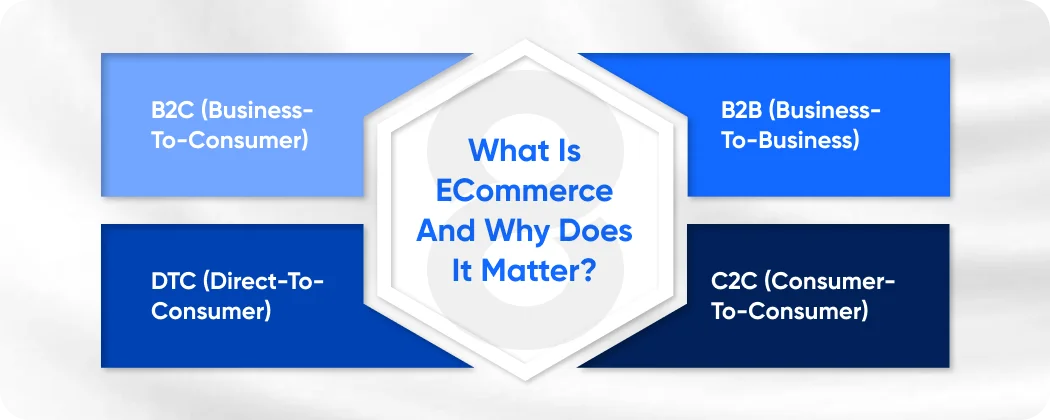
Before diving into the case studies, it is important to first get acquainted with the landscape. eCommerce involves the purchase and sale of goods and services over the internet. However, it is not limited to a single model. In fact, eCommerce businesses operate in various forms that differ significantly from one another:
- B2C (Business-to-Consumer): Brands that sell to individual consumers, such as Walmart, Amazon, and SOS.
- B2B (Business-to-Business): Businesses that sell to other businesses, e.g., Alibaba, Amazon Business, and Salesforce.
- DTC (Direct-to-Consumer): Brands bypassing the retailers and owning the customer relationship.
- C2C (Consumer-to-Consumer): Sites that allow a person to sell products to fellow consumers; consider eBay and Etsy.
Knowing the types of eCommerce business examples allows businesses to learn what model to follow and how to create the correct mobile technology to accomplish the same.
The Reason Mobile Apps Become the Key to eCommerce Growth
The truth is as follows: approximately more than 70 percent of all the eCommerce traffic in the world is via mobile devices now. However, traffic cannot make the money, but conversions can. And this is where mobile applications make the difference between the winners and the others.
An eCommerce-based mobile application will provide:
- Quicker load and easier checkout than mobile browsers
- Push messages that reconnect customers and salvage unfinished shopping carts
- Real-time behavioral information-based personalized shopping experiences
- Single-tap payment systems through Apple Pay, Google Pay, and saved cards
- A reward system integrated into the loyalty program, where frequent purchases are rewarded, and a habit is developed
All the eCommerce business examples that we are going to walk through will demonstrate this fact with real numbers and real results.
Case Study 1: Allie Marketplace – Smart C2C eCommerce Business
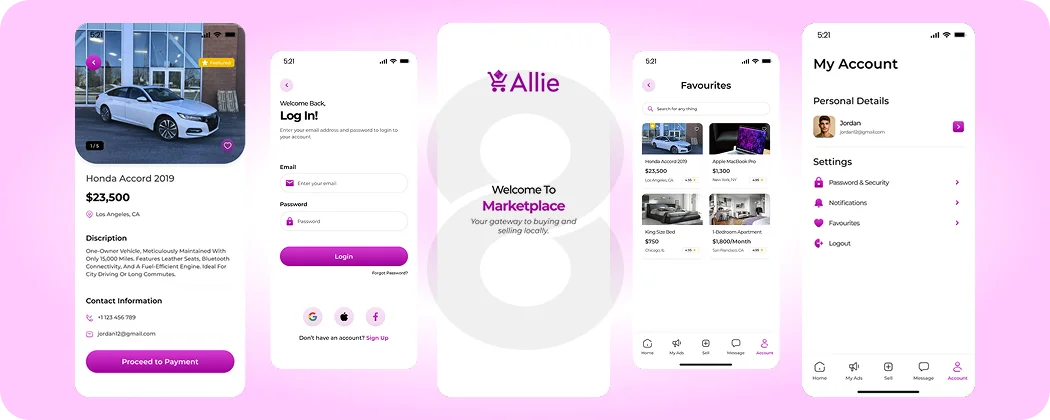
Allie Marketplace, a C2C platform created by 8ration, is one of the most promising examples of emerging ecommerce businesses, which is trusted by businesses in the USA, UAE, Europe, and Asia. The example of Allie Marketplace is one of the most successful eCommerce business cases. Proving that you do not have to be a billion-dollar company to create a strong, growth-propelling mobile eCommerce experience.
- The Issue: Local purchasing and selling have never been integrated. Sellers struggled to connect with local buyers effectively, faced trust and security issues in transactions, and often discovered relevant local products by chance. Existing platforms either operated on a global, detached scale or offered overly simplistic solutions that users could not trust. The market demanded a smarter, community-based platform tailored to local businesses, one of the least active segments in eCommerce.
- The Mobile App Strategy: 8ration has developed Allie Marketplace, a mobile-first C2C business with its fundamental focus on three principles: smart product discovery, safe payments, and live-time communication. This is how each pillar can be converted into a great eCommerce business case:
- Intelligent Product Discovery: Unlike other sites that bombard users with a huge list of products, Allie has intelligent searching and recommendation algorithms to help find the most appropriate local listing using the location, browsing history and the likes of a user. This is the personalization approach observed in the biggest successful eCommerce business models.
Reasons This is One of the Most Topical eCommerce Business Exemplars of Today
Allie Marketplace is an indication of a rise of other forms of eCommerce, with examples that include hyperlocal commerce. With consumers becoming more interested in purchasing from small businesses, promoting local businesses, and tracking down unique products. That cannot be found on large-scale marketplaces; C2C applications such as Allie will have a great place to grow.
Read More: 15 Best Apps Like Temu for E-Commerce Store Ideas
Case Study 2: Amazon – The King of B2C eCommerce Business Excerpts

Amazon cannot be left out of the list of eCommerce business examples. The company started as an online bookstore in 1994 and today is a $1.9 trillion commerce ecosystem with more than 66,000 orders being done per minute during peak time.
- The Challenge: As mobile usage surged in the early 2010s, Amazon ensured its shopping experience adapted seamlessly to smaller screens without sacrificing speed or conversion.
- The Mobile App Strategy: Amazon has created one of the most downloaded and popular shopping applications in the world. Their application has a one-second checkout (which is also common in the entire sector), order tracking, personalized AI-powered product suggestions, voice shopping on Alexa, and AR View in your room. Additionally, this feature allows customers to envision home products and furniture before they make a purchase.
- The Findings: Amazon has a huge portion of its total sales through the mobile app. An engine of personalization that suggests products to users, depending on historical browsing, patterns of purchase, and even time of day. It is projected to contribute about 35 percent of all the revenues at Amazon.
- Lessons learned in this eCommerce business example: Frictionless checkout, personalization, and speed are essential. Amazon did not simply put its website in a cell phone form; it created a mobile-first engine.
Read More: How Much Does it Cost to Build an App Like Amazon
Case Study 3: Alibaba – The Largest B2B eCommerce in the World

Alibaba is the only company that can be mentioned when it comes to examples of B2B ecommerce. Alibaba.com was established in 1999 by Jack Ma. It links Chinese manufacturers, wholesalers, and suppliers with more than 190 buyers. The company generates an annual gross merchandise value of over $1 trillion, making it the largest eCommerce business on Earth.
- The Challenge: Alibaba had to open the complex, high-value B2B transactions, where trade agents, physical trade shows, and lengthy negotiations were customary, to a digital platform and make them available to small and medium businesses across the globe.
- The Mobile App Strategy: The Alibaba mobile application to serve B2B customers enables procurement managers to search and seek authorization quotes, verify supplier certification, manage payments via Alibaba escrow service, and track shipments of their products internationally, all on a smartphone. Real-time messaging with suppliers is also a part of the app, and it does away with the time-zone tension that had previously rendered global sourcing so agonizingly slow.
- The Results: There are hundreds of millions of mobile daily active users on the Alibaba platforms. The company transacted more than 84 billion dollars worth of sales within 24 hours during its 11.11 Global Shopping Festival (Singles Day) each year (mostly via mobile devices).
- The Best Lesson of this B2B eCommerce Experience: Even high-value, business-level transactions can be effectively handled using mobile as long as the app is designed to meet business processes and not consumer shopping patterns.
Read More: Best Scalable Ecommerce Technology Stack for Enterprise
Case Study 4: Walmart – Omnichannel Excellence

Walmart is among the most educational examples of successful eCommerce businesses that are the classic retail giants making a decisive, successful shift into digital commerce. Walmart has invested billions in eCommerce and mobile strategy, with more than 10,500 stores worldwide in 24 countries, and is expanding its online presence.
- The Mobile App Strategy: The Walmart application is an omnichannel commerce masterpiece. It includes delivery of groceries and curbside pickup reservations; an in-store map, which directs clients to the specific product locations. A barcode scanner, which allows clients to check prices and product details. Walmart Pay, which allows contactless payment, and tailored offers depending on the local store and the purchase history of a shopper.
- Features: The most interesting feature is the Scan and Go functionality, which allows customers to walk around the store scanning the item and check out all the way through the app and not have to go to the lines at all. This aspect mediates between the digital and the real in a way that pure online players, such as Amazon, cannot replicate.
- The Results: The eCommerce sales at Walmart have been increasing on an annual basis, and the digital grocery is one of the best performers. The Walmart app has always been one of the most downloaded shopping applications in the US. Walmart drives its buy-online-pickup-in-store (BOPIS) system through its mobile application. Enabling the company to capture billions in incremental revenue that would have otherwise gone to online-only retailers.
Case Study 5: Alibaba’s Taobao & Tmall – B2C and C2C eCommerce Types With Examples

Although Alibaba.com deals with business-to-business examples of eCommerce, Taobao (C2C marketplace) and Tmall (B2C brand marketplace) of Alibaba make up a complete picture of the available types of eCommerce and examples of such eCommerce operating within a single corporate umbrella.
Tmall also has flagship stores of international brands such as Nike, Apple, L’Oreal, and thousands more. This provides them with direct contact with the Chinese consumers. Taobao opens the opportunity for individual sellers and small businesses to sell products and sell them directly to consumers.
- The Mobile App Strategy: Both applications are mobile-first in nature. Tmall has an app that has a live-streaming shopping format. Brand representatives or influencers showcase products in real time, and viewers buy them with a single tap. Generating billions in sales and inspiring other platforms worldwide to adopt the same approach.
- The Results: Live commerce on Tmall alone has resulted in sales of more than 60 billion every year. The example of eCommerce business demonstrates that it is not only the technology. But also innovation in mobile shopping formats that can generate completely new sources of revenue.
Read More: eCommerce App Development Cost Guide for 2026
Case Study 6: eBay – Classic C2C eCommerce Business Model

eBay is among the earliest examples of e-commerce businesses, originating in 1995; it was the first business to sell to consumers online. The history of eBay is also one of mobile reinvention.
- The Problem: eBay had to introduce a new mobile experience since Amazon Prime transformed the expectations among consumers regarding delivery and trust to remain relevant to both buyers and sellers.
- The Mobile App Strategy: eBay has remodeled its mobile application to serve as a visual search: users can take a picture of anything, and the application will locate several similar or comparable entries. To sellers, the app automatically adds the product information and recommends the prices based on the sales history. And the whole task of listing the product will take less than two minutes.
- The Results: eBay has over 74 billion dollars in gross merchandise volume. The platform has motions that constitute most of its transactions. The visual searching ability led to a quantifiable improvement in the listing creation. Especially for the casual vendors, who otherwise considered the process too cumbersome.
- Key Takeaway: eBay, being one of the oldest examples of eCommerce businesses, serves as an indication that mobile innovation can provide fresh blood to mature platforms. The trick was to address actual areas of friction between buyers and sellers instead of merely changing the outlook of the app.
Case Study 7: Shopify – Powering Thousands of eCommerce Businesses

However, Shopify is not a remarkable example of just one storefront but rather the backbone of hundreds of thousands of eCommerce business examples all over the planet. Shopify supports more than 200 billion dollars in yearly business, whether it is individual entrepreneurs or medium-sized companies.
- The Mobile App Strategy: Shopify offers a merchant app that allows a store owner to manage every aspect of their business via a smartphone: all-in-one to take orders, update product information, issue refunds, run discount campaigns, and view real-time sales data. To customers, all the Storey sites powered by Shopify will be automatically optimized for mobile shopping.
- The Results: The platform has allowed selling online in 175 countries. Business operators who adopt Shopify mobile commerce systems have significantly higher conversion rates.
Read More: How Much Does Shopify Cost
Major Themes in All the Successful eCommerce Business Examples
When examining all these successful examples of eCommerce businesses, whether it is the B2B marketplace of Alibaba. The C2C platform of eBay, or the omnichannel of Walmart, some common themes are always present:
Mobile is the Primary, Not an Add-on
Each of the brands described created a mobile experience that was unique in the way in which people use their mobile phones. The victors did not simply downsize the site; they redesigned the mobile experience. It allows businesses to create a mobile-first approach to the solutions that would be intuitive and engaging.
Personalization Drives Revenue
Be it the recommendation engine of Amazon or the deals offered in the stores of Walmart. Personalization of behavioral data is the biggest conversion driver of any kind of e-commerce business. Companies that use Magento application development are able to incorporate customized shopping experiences into the mobile applications in a very friendly manner that enhances the development of engagement and sales.
Solving Friction Wins Customers
Someone identified real problems and solved them with technology: Warby Parker built a virtual try-on, eBay developed visual search. Walmart launched Scan & Go, and other mobile innovations in eCommerce followed the same approach. Content development with BigCommerce provides enterprises the opportunity to introduce comparable frictionless tools in product search, checkout, and after purchase.
Data Is The Real Competitive Advantage
Knowing what customers want even before customers have even thought about what they want. Magento and BigCommerce app development provides companies with an opportunity to implement analytics-driven functions, which will allow them to make smarter decisions and grow more quickly.
Conclusion: Driving Growth with Mobile Apps in eCommerce
Based on the successful case of eCommerce business experiences, whether that is Alibaba’s business-to-business marketplace or Amazon’s business-to-consumer domination. Therefore, it is evident that mobile is not a discretionary requirement anymore but rather a mandatory requirement. Companies deploying mobile applications make their experience smooth, enhance conversions, and build customer loyalty.
All these eCommerce examples show one clear point: adopting a mobile-first approach with smart, user-friendly design drives growth. By creating intuitive interfaces, delivering personalized experiences, and leveraging information-based insights. Your business can follow the footsteps of market leaders and succeed in today’s competitive digital environment.