


The monetization model of most successful apps is based on in-app ads, subscriptions, and freemium upgrades that allow users to unlock premium features. They generate significant revenue through in-app purchases, transaction fees, and data-driven personalization that improves user engagement and retention.
Mobile apps are not the current tools in the market; they are billion-dollar engines that transformed consumer behavior in 2026 and will power the global digital economy. It is important to learn how the most downloaded apps generate income for the developers, entrepreneurs, and businesses, making an effort to succeed in such a flooded marketplace. Among millions of applications fighting for attention, the apps that make it to the top have learnt how to engage and monetize.
Analysts forecast that the global mobile application market, including consumer spending, subscriptions, ads, and enterprise services, will grow from around $330 billion in 2025 to over $1.25 trillion by 2035, reflecting a strong 14–15% CAGR over the decade.
The most downloaded apps in the world also strategically captivate users and generate more revenue through impressive design. Starting with social media giants to vital productivity apps, these applications use creative models and technology to outperform others in the market. No matter what you are planning to develop iOS app or you are on the hunt to find solutions to advanced Flutter app, you can be able to find the blueprint to success by studying the methods behind the apps that have had high downloads.
Mobile App Market Landscape in 2026
By the close of 2026, analysts expect the global mobile app market to surpass $500 billion. This is due to a booming growth of smartphone usage, faster networks, and changing consumer needs and expectations. The testament of the intersection of strategy, design, and monetization is the most downloaded apps of all time.
The 2026 app ecosystem is being defined by key market trends:
- AI-Driven Personalization: Applications are making use of sophisticated algorithms to predict user needs, retaining and engaging users to a higher degree.
- Integration of immersive Technology: From augmented reality to vision-based applications, immersive experiences have become the norm. An example is Vision Pro app development, which is being applied in social media and eCommerce to develop new levels of engagement.
- International Availability: Cross-platform structures enable applications to operate smoothly across Android, iOS, and web, which achieves optimal coverage.
The most downloaded apps in this landscape integrate functionality, engagement, and monetization into one seamless experience.
Read More: How the Best Pregnancy Tracker Apps Handle HIPAA and GDPR in 2026
How the Most Downloaded Apps Monetize
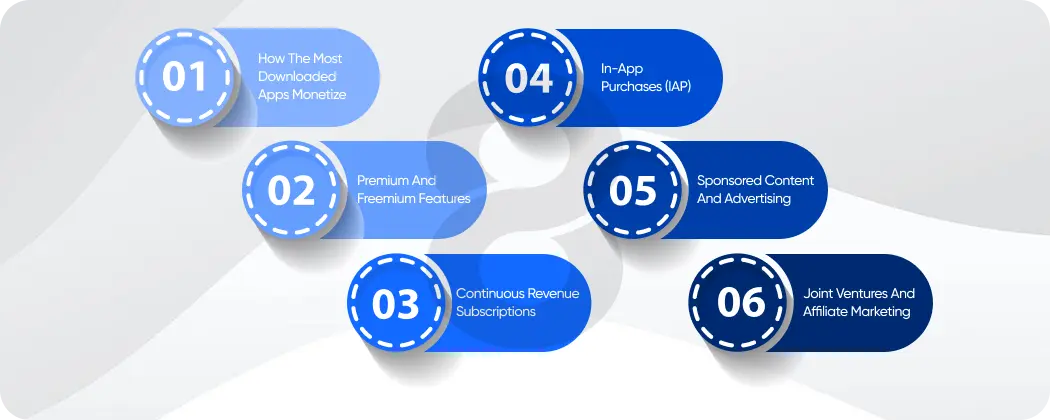
In the case of discussion on the most downloaded apps around the world, it is obvious that the sphere of revenue creation is multidimensional. These applications often do not depend on one monetization approach, but combine several methods so that they can earn maximum returns.
Premium and Freemium Features
The most widespread type of approach is the freemium one. The application is free with basic functionality, which has drawn a huge user base, but the high functionality is charged. There are productivity apps, such as those that can provide access to basic tools at no price but provide more powerful analytics or offline features at a cost. Strategic design makes users perceive the high-end product as valuable rather than just an add-on.
Continuous Revenue Subscriptions
Subscriptions are incredibly effective as the apps that are based on constant value. Video streaming, fitness applications, and news applications provide monthly or annual subscriptions, regularly including proprietary features. These apps keep users on board and achieve predictable revenue by developing a continuous loop of value. This tendency is also an indication of a change from one-time buying to long-term interaction.
In-App Purchases (IAP)
Games and eCommerce platforms now use in-app purchases to sell additional features, digital items, or premium content. Top applications design creatively and use psychological triggers to encourage micro-purchases. Similarly, wellness and lifestyle apps apply these models by offering premium content or specialized features.
Sponsored Content and Advertising
Advertisement is still one of the central elements of monetizing apps. The most efficient apps will be transparent and become an extension of the marketing process, unlike traditional ads. TikTok, Instagram, and YouTube make huge profits with programmatic ads, influencer relationships, and branded content. Placing the ads wisely will make the ads interactive and not disruptive to users, such that it will be a win-win situation.
Joint Ventures and Affiliate Marketing
Other applications monetize themselves using affiliate programs and brand deals. Health apps, such as the ones that prescribe supplements or exercise merchandise, have commissions on sales. Likewise, enterprise-based solutions work with other software platforms to provide integrated services, which increase the revenue streams without direct user charges.
Emerging Monetization Trends in 2026
Adopting new technologies and new ways of doing business is the most downloaded apps in 2026.
AI-Driven Personalization
Artificial intelligence enables applications to change dynamically based on user actions and enhance the interaction and monetization potential. Streaming media presents content that fits the tastes of the individual person, whereas shopping applications do so dynamically. This is facilitated by sophisticated software integration capabilities, which can be used to bridge various types of datasets, which can result into coherent user experiences.
Blockchain and Tokenization
Web 3 and blockchain are also creating novel monetization opportunities in the app. Social applications and games now give users tokens they can exchange or trade for unique experiences. Tokenized ecosystems increase engagement and user investment, generating new revenue streams.
Subscription Bundles
Numerous apps are now being bundled, i.e. they are offering more than one platform, and they sell it at a reduced cost. Music, fitness, wellness and entertainment apps are co-operating to increase lifetime user value. Cross-device accessibility ensures that customers can have the seamless experience of smart phones and tablets among other devices.
AR-Enhanced Commerce
AR is transforming the user experience of applications, especially retail and gaming. AR gives customers an opportunity to virtually test products and buy them, which raises the conversion rates and makes eCommerce app development a popular feature in the market nowadays.
According to a report:
In 2026, global mobile app downloads are projected to reach $143 billion on the Google Play Store, a 30% increase from 2021. Meanwhile, the Apple App Store is expected to see $38 billion downloads, reflecting a 15% growth over the same period.
5 Most Downloaded Apps of All Time
 TikTok: Capturing Attention
The algorithm of TikTok generates addictive content in brief form that keeps one glued to the product. The sources of revenue are in-app purchases, gifts, brand partnerships, and advertisements. TikTok shows how Android app development lets a company engage with a large global market and, at the same time, achieve high performance on millions of devices.
 WhatsApp: Core and Monetization
WhatsApp demonstrates that utility apps are not yet monetized. In addition to the free messaging feature, WhatsApp Business and payment features are a source of revenue, which explains the importance of enterprise app development in B2B solutions.
 Instagram Social Commerce Innovator
Instagram is a mixture of socializing and business in which a user can shop for posts and stories. Influencer and sponsored content are two significant sources of revenue, and AR functionality is expanding the limits of Vision Pro app development in immersive shopping.
 YouTube: Revenue Giant by Streaming
YouTube has been a video streaming pioneer, always being among the apps that are downloaded the most. Its multi-layered approach to monetization is:
- Ad Revenue: This is the main source of income of YouTube,e which is targeted ads that are placed before, during, and alongside videos. Premium and programmatic ads bring in billions of dollars every year.
- YouTube Premium Subscriptions: The subscribers are charged for ad-free streaming, offline downloads, and exclusive content.
- Super Chats and Memberships: Live streams will enable the viewers to tip the creators, which increases the level of engagement and also provides alternative sources of revenue.
 Facebook: Social Networking and Advertising
Facebook is another application that has been downloaded the most because of its worldwide social network coverage. Its business model is mainly advertising-based; however, it is utilizing new opportunities of commerce and monetization:
- Specific Ads: The Facebook ad platform will enable businesses to target very specific audiences and ensure a significant amount of ad revenue.
- Facebook Marketplace and Shops: Allows users to purchase and sell goods in the application, which offers eCommerce opportunities.
- Gaming and App Integrations: Collaboration with third-party games and apps makes it more engaging and provides an opportunity to buy in-app.
Through the integration of social connectivity and high software design development, Facebook, one of the most downloaded apps, will guarantee that users dedicate more time in-app, thereby reaching a maximum number of ad impressions and revenue generation.
Read More: 40 Best Technology Stacks for Mobile App Development in 2026
Key Strategies for App Monetization in 2026
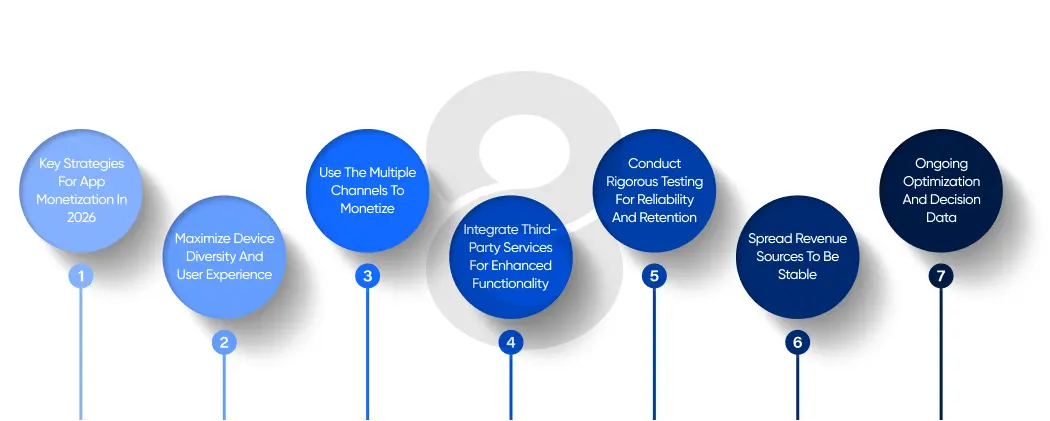
By 2026, mobile apps will dominate the digital space, and users will judge successful apps by engagement and revenue, not just by download numbers. But based on the revenue and the level of engagement. An app has been able to accomplish. Developers and businesses wishing their apps to succeed in the competitive market should understand the strategies of app monetization. The success is in the ability to make every part of the app as efficient as possible in terms of design and performance, as well as the means of monetization and the overall user experience.
Developers must apply these strategies to create applications that deliver value while generating sustainable revenue. Whether you are working on niche solutions such as eCommerce app development and vision pro app development.
1. Maximize Device Diversity and User Experience
A significant aspect of the monetization of applications is ensuring compatibility of the application with all devices. By 2026, consumers will expect apps to deliver the same seamless experience across smartphones, tablets, wearables, and even the latest AR/VR devices.
- Responsive layout and adaptive designs: The app should be able to scale smoothly to the various screen sizes, resolutions, and orientations.
- Scalable graphics and user interface elements: Keep graphics and the interface clear and accessible to all devices to avoid frustration and being left behind.
- Performance optimization: Slower and crashing applications will lose customers and it will directly impact the revenue generated in terms of subscription, in-app purchase and advertisement.
By emphasizing a seamless, uninterrupted experience, applications can engage users more effectively, improve retention, and increase the likelihood that users purchase premium services or subscriptions.
2. Use the Multiple Channels to Monetize
The most prosperous applications hardly have just one source of revenue. Combining subscriptions, in-app purchases (IAP), and advertising will be the key in 2026:
- Subscriptions: Subscriptions produce more dependable recurring income and can be priced on different levels of premium access.
- In-App Purchases: Ask users to make small and repeatable purchases, like in-game virtual items, higher functionality in productivity apps, or special content in media apps. IAP is an effective service monetizing tool.
- Advertising: Free users can be monetised using display-based ads, native ads, and rewarded videos without interfering with the experience. Advertisements are most effective when they are placed in a smart manner, depending on user behavior.
By integrating these channels, apps are able to maximize revenue and serve various groups of users. Such as those who want free access, those who can pay, and those who engage with advertisements.
3. Integrate Third-Party Services for Enhanced Functionality
The use of modern apps is seldom done in isolation. By using the third-party services, their integration not only enhances functionality but also opens up more monetization possibilities:
- Payment Gateways: Secure and easy payments encourage in-app purchases and subscriptions to the platform.
- Analytics and Tracking Tools: With the knowledge of the activity of the users, the developers are able to maximize the monetization, refine the features of their offering and offer better retention rates.
- Content and API Integration: Consumers can become more engaged with their applications by accessing external APIs such as streaming services, eCommerce applications or social networks.
Software integration ensures these tools work smoothly with the app, creating a frictionless experience that drives user interactions and boosts profit.
4. Conduct Rigorous Testing for Reliability and Retention
The app should be convenient and dependable so that the user can trust the app and make as much revenue as possible. Crashing apps or those with issues related to their performance will lose customers and decline subscription, in-app purchase, and advertisement income.
Test strategies that would work are:
- Functional Testing: Assures that all of the features are working properly in all situations and on all platforms.
- Performance Testing: Maximizes response time, responsiveness, and resource consumption.
- Compatibility Testing: This ensures that the app is compatible with various platforms, operating systems, and hardware settings.
Investment into intensive software testing is not a nice-to-have one: it has a direct effect on retention, which is the best predictor of revenue. Satisfied and engaged users tend to subscribe, purchase in-applications, and view advertisements.
Spread Revenue Sources to be Stable
In 2026, the most lucrative apps will be the ones that combine several ways of monetization to generate financial resilience:
- Subscriptions offer consistent, repeated revenues and amplify customer lifetime value
- In-App Purchases enable the user to buy the features that are most important to them, which provides incremental revenue
- Advertising does not antagonize the free users, no audience group is left untouched
- This multi-layered strategy means that in case any revenue-generating avenue is performing poorly. The other ones can cover up, and growth is stable in the long run
Ongoing Optimization and Decision Data
Monetization strategies cannot remain the same, as they need monitoring and optimization. With the help of analytics, apps can:
- Determine the most engaged and revenue-generating characteristics
- Experiment with the various subscription plans, models, and in-application purchases
- Maximize ad placement, forms, and targeting to maximize revenue
Decision-making based on data enables the developers to react fast to trends and to adjust to users’ preferences. And to improve the monetization strategies as time progresses.
Launch Your Next Revenue-Generating App with 8ration

Clearly, the roadmap to the most downloaded apps in 2026 speaks volumes: strategy plus user experience. As well as revenue diversification, are the keys to success. It can be the exploitation of subscriptions, in-app purchases, advertising, or sophisticated personalization. All decisions should be made in alignment with bringing real value to the users, and the monetization should be optimized.
At 8ration, we specialized on taking a good idea and turning it into an effective application. We have experience in iOS app development, Android app development, cross-platform app solutions. Whether it is Ionic app development or smooth web app development, we are keen to make sure that your app achieves not only millions of downloads but also long-term revenue.