



It had been the only viable approach to build two separate native apps. One for iOS. One for Android. Two teams, two codebases, twice the budget and twice the hassle when something goes wrong. Most businesses ceased to understand math several years ago.
The cross-platform application development framework market is expected to increase from $15.67 billion in 2025 to $42.60 billion by 2034 with a CAGR of 11.75%. It’s not like this occurs for no reason. Flutter and React Native have come a long way that most users can’t tell that their app is not native. Businesses receive quicker launches, reduced expenses, and a team that preserves it all.
In this guide, you will learn which are the best cross-platform app development companies in the world, what to consider when picking a company, how much you will actually pay for it and which are the best frameworks for the projects you are looking to build.
Why Businesses Are Choosing Cross-Platform App Development
It has come to be a smart business decision rather than a cost-saving measure to develop across platforms. It is used by start-ups to make fast-paced moves. Moreover, it is used by enterprises to ensure consistency among their products. It’s used by SMBs because maintaining two teams of natively written software is impractical. No matter the reason, the outcome is the same: One codebase, two platforms, fewer problems.
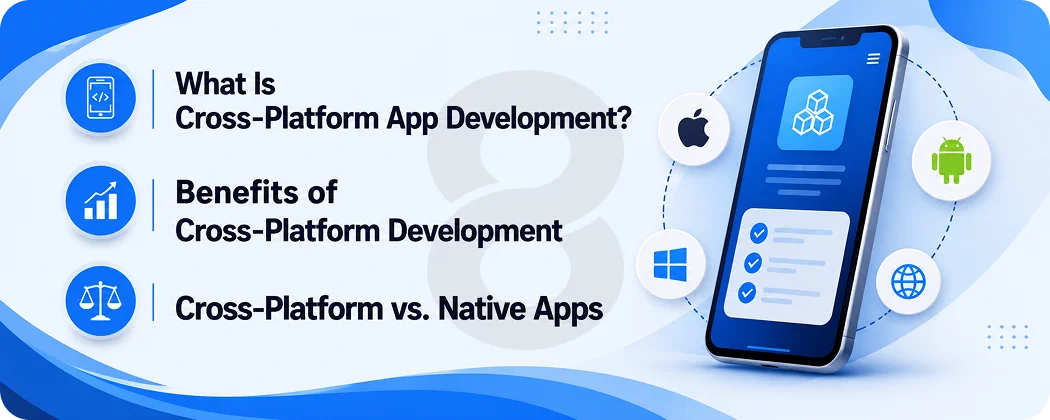
What Is Cross-Platform App Development?
Cross platform development is code written once and run on iOS and Android, and now more and more, web and desktop platforms. Teams does not write any separate Swift and Kotlin projects but rather writes once and runs everywhere.
Currently, the key platforms that enable this are Flutter, React Native, and others. They all approach the problem in different ways. However, all aim at minimizing costs by up to 50 percent and developing apps 1.5 times faster; 90 percent of the coding is shared across iOS and Android.
Benefits of Cross-Platform Development
- Faster development: one team builds for both platforms simultaneously
- Lower cost: no need to maintain two separate native codebases
- Easier maintenance: bug fixes and updates roll out across platforms at once
- Consistent UI: users get the same experience on iOS and Android
- Faster updates: pushing new features doesn’t require double the work
- Wider audience reach: you launch to all users at once, not in stages
Cross-Platform vs. Native Apps
| Feature | Cross-Platform | Native |
|---|---|---|
| Cost | Lower (one codebase) | Higher (two codebases) |
| Development Speed | Faster | Slower |
| Performance | Near-native (modern frameworks) | Highest possible |
| Maintenance | Unified updates | Platform-specific maintenance |
| User Experience | Consistent across platforms | Platform-specific feel |
| Scalability | Strong with proper architecture | Strong |
How We Selected the Best Cross-Platform App Development Companies
Here are companies that didn’t necessarily just get picked because they paid more or had the most flashy homepage. They tested their portfolio quality, verified client reviews, depth of frameworks and their ability to support projects after launch.
Evaluation Criteria
The selection process looked at portfolio quality and past delivery, checked client reviews on online platforms like Clutch, took into account industry experience and domain knowledge, assessed technology knowledge about major cross-platform frameworks, evaluated UI/UX ability, security practices, architecture scalability, global/regional presence, domain-specific certifications, communication and project management practices, and the support given after the launch.
Industries Served
| Industry | Typical Solutions |
|---|---|
| Healthcare | Patient portals, telehealth apps, health trackers |
| FinTech | Banking apps, payment tools, investment dashboards |
| Retail | eCommerce apps, loyalty platforms, inventory tools |
| Education | Learning management systems, tutoring apps |
| Logistics | Fleet tracking, delivery management, route optimization |
| Real Estate | Property search apps, agent portals, virtual tours |
| Manufacturing | Workflow tools, QA apps, equipment monitoring |
| Travel | Booking apps, itinerary planners, local discovery tools |
Top Cross-Platform App Development Companies Across the Globe
These companies are exceptional in that they not only have a depth of real framework, but have a history in multiple industries. The list includes companies in North America, Europe and Asia. Location is important when it comes to cost and time zones.
 8ration
Based in New York, Toronto, Dubai and Kuwait, 8ration is a software and app development firm. The team develops cross-platform mobile apps, from product discovery to post-launch support, with Flutter, Ionic, Hybrid, and NativeScript.
They have developed applications in various areas such as healthcare, travel, logistics and consumer goods, and have live projects available on both the App Store and Google Play.
- Headquarters: New York, USA (also Dallas, Toronto, Dubai, Kuwait)
- Founded: Operating since 2014
- Key Services: Flutter app development, hybrid app development, iOS, Android, UI/UX, AI integration
- Best For: Startups and mid-market businesses needing full-cycle cross-platform delivery
- Rating: 4.9/5 (Clutch)
 Goji Labs
Goji Labs is a leading studio in Los Angeles specializing in product strategy and technical execution. Their main focus is on enterprise clients who require a partner that will take ownership of the product direction, not just perform work on specifications, and funded startups.
- Headquarters: Los Angeles, USA
- Key Services: Product discovery, cross-platform development, UX design, MVP builds
- Best For: High-budget projects where product strategy matters as much as code
- Rating: 5.0/5 (Clutch, 85+ reviews)
 RaftLabs
RaftLabs has a single design and engineering team, having shipped products for Vodafone, T-Mobile and Wyndham Hotels. They have a pricing structure and a team that’s designed for startups seeking to travel quickly without compromising on quality.
- Headquarters: USA/Remote
- Key Services: React Native, cross-platform development, product design, MVP delivery
- Best For: Startups and growth-stage companies
- Rating: 4.9/5 (Clutch, 50+ reviews)
 GeekyAnts
GeekyAnts is based in San Francisco and is actively involved in the Flutter and React Native communities. Their developers are not only users of these frameworks, but they are contributors as well and this is reflected in their approach to edge cases and performance.
- Headquarters: San Francisco, USA
- Key Services: Flutter, React Native, mobile architecture, performance optimization
- Best For: Companies that need deep framework expertise
- Rating: 4.8/5 (Clutch, 115+ reviews)
 Netguru
Netguru is a famous European studio that has built Flutter and React Native applications for worldwide brands. They prioritize uniformity in user interface and seamless user experiences on different devices, which makes them a dependable option for fintech and enterprise projects.
- Headquarters: Poland
- Key Services: Flutter, React Native, mobile design, product consulting
- Best For: Fintech and enterprise-scale cross-platform projects
- Rating: 4.8/5
 SolveIt
SolveIt is a Warsaw-based Flutter specialist with a great client review track record. They take an architectural approach to building and the app that they deliver is likely to be maintainable long after the engagement has ended.
- Headquarters: Warsaw, Poland
- Key Services: Flutter development, mobile architecture, QA, maintenance
- Best For: Businesses that want Flutter done right, not just done fast
- Rating: 5.0/5 (Clutch, 51+ reviews)
 Appinventiv
Appinventiv is a company that deals with enterprise-level projects in healthcare, logistics, and education. They have worked on large applications with complex backend integrations and have high concurrent user loads.
- Headquarters: Noida, India
- Key Services: React Native, Flutter, enterprise mobile apps, backend development
- Best For: Enterprise projects requiring scale and complex integrations
- Rating: 4.8/5
 Synergy Labs
The company’s primary headquarters in Hollywood, FL, specializes in homegrown clients in the healthcare and consumer app sectors in the United States. They have a small team that remains communicative yet has enough experience to be able to manage serious product builds.
- Headquarters: Hollywood, Florida, USA
- Key Services: React Native, Flutter, iOS, Android, healthcare apps
- Best For: US-based startups in healthcare and consumer verticals
- Rating: 4.9/5 (Clutch, 45+ reviews)
 LeanCode
LeanCode is a Flutter architecture specialist from Warsaw. Their strength lies in the thoughtfully managed and scalable projects that need to be run from the get-go.
- Headquarters: Warsaw, Poland
- Key Services: Flutter architecture, mobile development, backend integration
- Best For: Teams that need clean architecture and long-term maintainability
- Rating: 5.0/5 (Clutch, 39+ reviews)
 IT Craft
With more than 2250 finished projects in its portfolio, IT Craft can build websites using React Native or Flutter. They’re good at taking on difficult demands without making what is a simple project seem difficult.
- Headquarters: Ukraine/Remote
- Key Services: React Native, Flutter, cross-platform development, DevOps, app modernization
- Best For: Diverse project types with varying complexity levels
- Rating: 4.9/5
Company Comparison Table
| Company | Country | Best For | Technologies | Clutch Rating |
|---|---|---|---|---|
| 8ration | USA/Canada | Full-cycle cross-platform | Flutter, Ionic, Hybrid, NativeScript | 4.9/5 |
| Goji Labs | USA | Premium product strategy | Flutter, React Native | 5.0/5 |
| RaftLabs | USA | Startups, MVP delivery | React Native | 4.9/5 |
| GeekyAnts | USA | Framework depth | Flutter, React Native | 4.8/5 |
| Netguru | Poland | Fintech, enterprise | Flutter, React Native | 4.8/5 |
| SolveIt | Poland | Flutter architecture | Flutter | 5.0/5 |
| Appinventiv | India | Enterprise scale | React Native, Flutter | 4.8/5 |
| Synergy Labs | USA | Healthcare, consumer | React Native, Flutter | 4.9/5 |
| LeanCode | Poland | Flutter, clean architecture | Flutter | 5.0/5 |
| IT Craft | Ukraine | Varied project types | React Native, Flutter | 4.9/5 |
Popular Cross-Platform Frameworks Used by Leading Companies
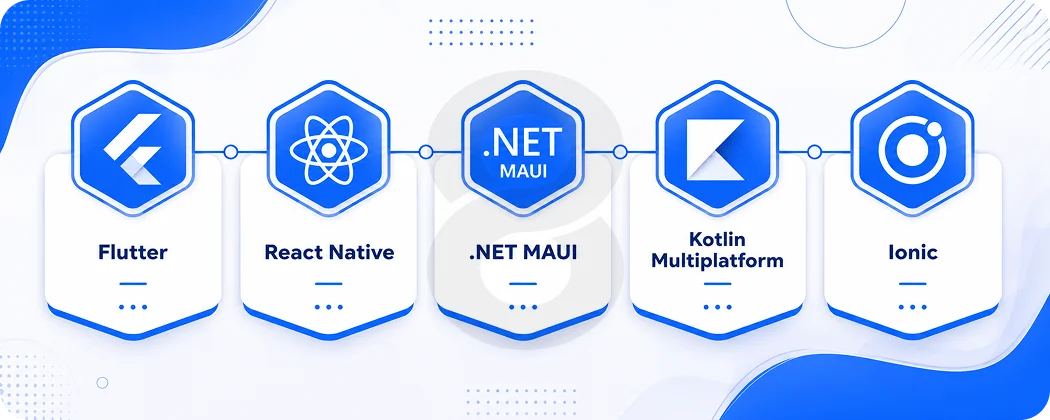
The framework choice is not one of picking the most popular. It depends on the requirements of your project, the ability and skills of your team, the future scalability plans, and what you are building. This is a breakdown of how each major option will actually be used.
Flutter
Developed by Google using the Dart programming language. All of this is rendered using Flutter’s own rendering engine, providing you with consistent pixels across all the platforms. In 2026, 46% of mobile developers use Flutter, and the Impeller engine it uses provides 50% faster frame rasterization.
- Pros: Consistent UI, strong performance, excellent for animation-heavy interfaces
- Cons: Dart is less commonly known than JavaScript, app size can be larger
- Best For: Consumer apps with heavy UI requirements, branded design systems
React Native
Developed with JavaScript and TypeScript. React Native is currently the power behind 12.6% of the top 500 US apps and is now responsible for $287M in revenues just in Q4 2024. This new architecture (Fabric, JSI, TurboModules) is now the default, and is much closer to native performance.
- Pros: Huge talent pool, JavaScript familiarity, strong ecosystem
- Cons: Earlier architecture performance issues (now largely resolved)
- Best For: Projects with JavaScript teams, apps needing rapid iteration
.NET MAUI
How Microsoft is changing Xamarin. MAUI is the appropriate call if your current team is in the C# and .NET world. Not so popular in consumer applications, but powerful in enterprise applications.
- Pros: Deep Windows integration, familiar for .NET teams
- Cons: Smaller mobile community, fewer third-party libraries
- Best For: Enterprise apps with heavy Microsoft stack integration
Kotlin Multiplatform
Enables sharing business logic across iOS and Android, while maintaining native UI for each platform. It’s the next best thing to native without a double write.
- Pros: Native UI on both platforms, no performance trade-offs, TypeSafe
- Cons: UI still needs to be written separately, steeper learning curve
- Best For: Companies that want native UI but want to share business logic
Ionic
Develops apps that use web technologies and run within a web view. Ideal for teams with web development backgrounds.
- Pros: Easy for web developers, fast prototyping, low cost
- Cons: Performance can lag for complex animations, less native feel
- Best For: MVPs, internal tools, apps where peak performance isn’t critical
Framework Comparison Table
| Framework | Performance | UI Consistency | Community Size | Best Use Case |
|---|---|---|---|---|
| Flutter | Excellent | Pixel-perfect | Large | Branded consumer apps |
| React Native | Very Good | Near-native | Very Large | Fast iteration, JS teams |
| .NET MAUI | Good | Platform-native | Medium | Enterprise, Microsoft stack |
| Kotlin Multiplatform | Excellent | Fully native | Growing | Native UI with shared logic |
| Ionic | Moderate | Web-like | Large | MVPs, internal tools |
How Much Does Cross-Platform App Development Cost?
The pricing differs with complexity, features, design, third party integration and the location of your development team. There’s not a specific number but there are reliable ranges.
Cost by App Complexity
The typical cost of a validated build of a cross-platform app is $80,000 to $250,000, which is 35 to 50% cheaper than developing two separate native apps. The savings are mostly due to having one team, rather than two, plus savings in QA and design.
| App Type | Estimated Cost |
|---|---|
| Basic MVP (simple features, minimal UI) | $15,000 to $40,000 |
| Mid-complexity app (API integrations, custom UI) | $40,000 to $100,000 |
| Full-featured product (complex flows, backend, admin) | $100,000 to $250,000 |
| Enterprise app (scale, security, integrations) | $250,000 and above |
Cost by Region
Developer rates vary considerably depending on location. This directly affects what you pay for the same output.
| Region | Hourly Rate (Approximate) |
|---|---|
| USA | $120 to $200/hr |
| Canada | $100 to $170/hr |
| UK | $90 to $160/hr |
| Eastern Europe | $40 to $80/hr |
| India | $25 to $60/hr |
| UAE | $60 to $120/hr |
| Australia | $100 to $180/hr |
How to Choose the Right Cross-Platform App Development Company
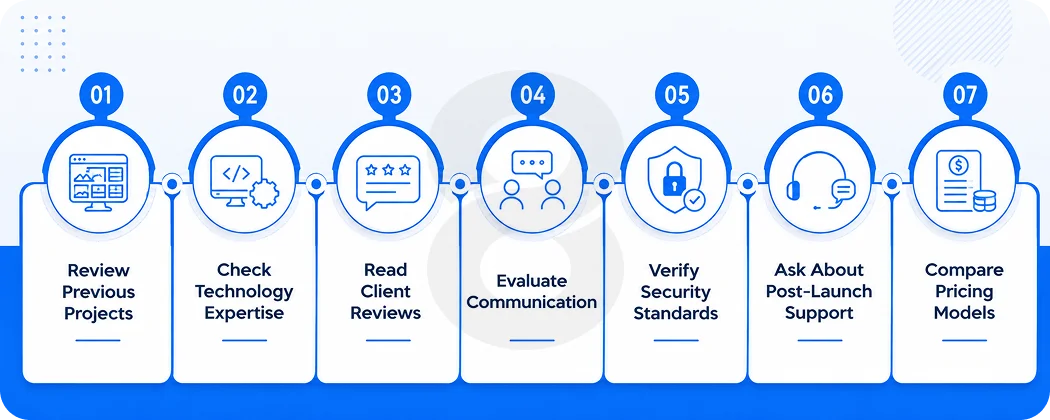
There’s no shortage of development shops claiming to be experts in Flutter or React Native. Narrowing the field takes more than reading their homepage. Here’s what actually matters.
Review Previous Projects
Ask to see live apps, not mockups. Check the App Store or Google Play listings directly. Look for apps in your industry or with similar feature complexity.
Check Technology Expertise
A company that only knows one framework isn’t always the right partner. The best mobile app development companies can advise on which framework fits your specific needs rather than defaulting to whatever they know best.
Read Client Reviews
Clutch, Google, and Trustpilot reviews give you a picture that a company can’t curate. Look for patterns in what clients say went wrong, not just what went right.
Evaluate Communication
Delayed responses during sales is a reliable predictor of delayed responses during development. Pay attention to how quickly they respond, how clearly they explain technical decisions, and whether they ask good questions about your business.
Verify Security Standards
Apps handling user data, payments, or health information need developers who treat security as part of the build, not an afterthought. Ask about their approach to data encryption, authentication, and compliance.
Ask About Post-Launch Support
Shipping the app is the beginning, not the end. Ask specifically what post-launch support looks like, response times for critical bugs, and how updates are managed.
Compare Pricing Models
Fixed-price engagements work well for well-defined MVPs. Time-and-material models suit projects where scope is likely to evolve. Make sure you understand what’s included and what triggers additional costs.
Why Businesses Choose Cross-Platform Development Over Native
The business case for cross-platform development is straightforward once you run the numbers.
| Business Goal | Cross-Platform | Native |
|---|---|---|
| Faster launch | Yes, one team ships both platforms | Slower, two parallel builds |
| Reduced budget | 30 to 50% lower build cost | Higher due to duplicate work |
| Easier updates | One release covers both platforms | Separate release cycles |
| Shared codebase | 70 to 90% code reuse | 0% shared code |
| Broader audience | Launch to iOS and Android together | Staggered platform releases |
| Maintenance effort | Lower, single codebase | Higher, two codebases to maintain |
8ration’s Approach to Cross-Platform App Development
8ration has delivered cross-platform apps across consumer, healthcare, logistics, and travel verticals. The team covers the full cycle: product discovery, UI/UX design, development across Flutter, Ionic, Hybrid, and NativeScript, software testing, and ongoing maintenance. Live portfolio examples include TruckersKonnect (logistics), Be Line (ride-sharing), Matrix Health and Wellness (health tracking), and Dots Travel (travel discovery), all available on the App Store and Google Play.
The team doesn’t push a single framework on every client. Framework selection is based on what the product actually needs: Flutter when UI consistency and performance matter most, Ionic when web teams need to move fast, hybrid apps when budget constraints are real and timelines are tight. What stays consistent is the build quality and the communication throughout the process.
For companies that need to integrate AI capabilities alongside their mobile build, 8ration’s AI development team works within the same project structure, which removes the coordination overhead that usually comes with using separate vendors.
Final Thoughts!
The debate about whether cross-platform development is “production ready” is over. Flutter and React Native are powering apps used by millions of people across healthcare, fintech, retail, and consumer products. The question isn’t whether to go cross-platform. It’s which partner has the framework depth and domain experience to build it well.
When evaluating cross-platform app development companies, look past the framework badges on their homepage. Focus on live apps you can actually download, verified reviews from clients in your industry, and a clear post-launch support plan. Price matters, but a cheap build that ships broken or can’t scale isn’t actually cheaper.
If you’re ready to build, 8ration’s cross-platform team covers Flutter, Hybrid, Ionic, and NativeScript development with a track record across real shipped products.