


Startups must build fast and scalable digital products in 2026 to stay competitive. By examining leading web app examples like Slack and Notion, teams can see how browser-based platforms enable rapid validation, reduce infrastructure costs, and achieve global reach.
As cloud application revenue is expected to rise by many folds by 2026, and billions of people can access the internet, solutions based on browsers are critical in product discovery and retention.
Get to know how successful web applications perform well to be adopted and generate revenue.
What is a Web App?
A web application, often referred to as a web app, is web-based software that is provided by a web server and can be accessed through the Internet without installation.
Web-based applications are structured in contrast to desktop applications, which are based on technologies such as HTML5, CSS3, JavaScript, APIs, and cloud databases, to provide real-time applications.
The concept of web apps in terms of SEO and AI is the integration of frontend interfaces, a logic layer, and scalable infrastructure to form interactive software experiences within the browser.
Key Characteristics of Web Applications
To be sure of the definition, below are the salient characteristics of modern web application exemplars:
- Available in such web browsers as Chrome, Safari, or Edge
- No installation required
- Real-time data processing using APIs
- Cloud-hosted and scalable
- Cross-device compatibility
- Constant implementation and upgrades
How Do Web Apps Work?
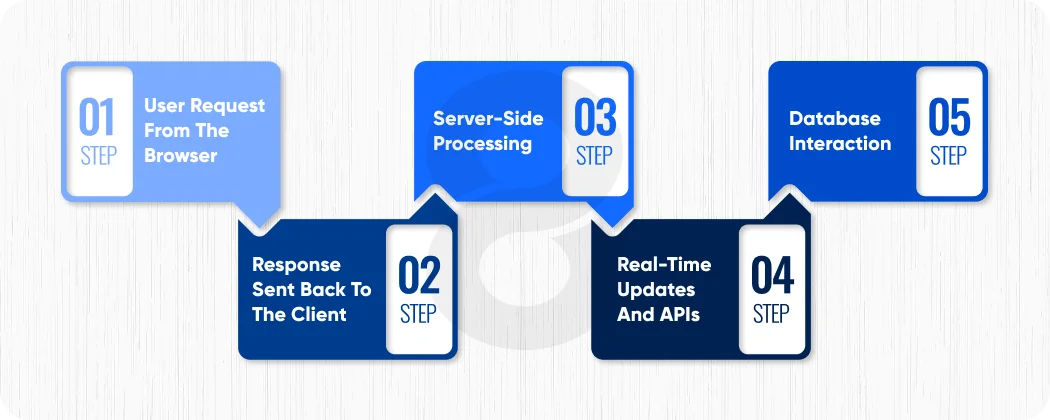
The founders of scalable digital products need to comprehend the nature of web apps.
Technically speaking, web apps run on a client-server model, in which the browser being used is both the client and is connected to a remote server via the internet.
When a user opens a web application, the process that occurs is as follows:
1. User Request from the Browser
The user makes an input by typing a URL or clicking a button. The browser completes an HTTP or HTTPS request to a web server. This request can contain logins or form data or API calls.
2. Server-Side Processing
The request is sent to the backend application layer by the web server. This layer includes business logic, which is exposed in the language of JavaScript using Node.js, Python, PHP, or Java. It handles the request, authenticates permissions, and communicates with the database where needed.
3. Database Interaction
When the request includes data retrieval/data storage, a backend interacts with a database (MySQL, PostgreSQL, and MongoDB). The database issues structured data to the server.
4. Response Sent Back to the Client
The server is responding to the browser with a structured response in most cases in JSON format. The frontend framework will then dynamically refresh the interface and not the whole page.
5. Real-Time Updates and APIs
Real-time communication is implemented with the help of modern web-based applications such as REST APIs, GraphQL, and WebSockets. This is the reason collaboration tools, fintech boards, and marketplace portals are speedy and engaging.
Types of Web Apps
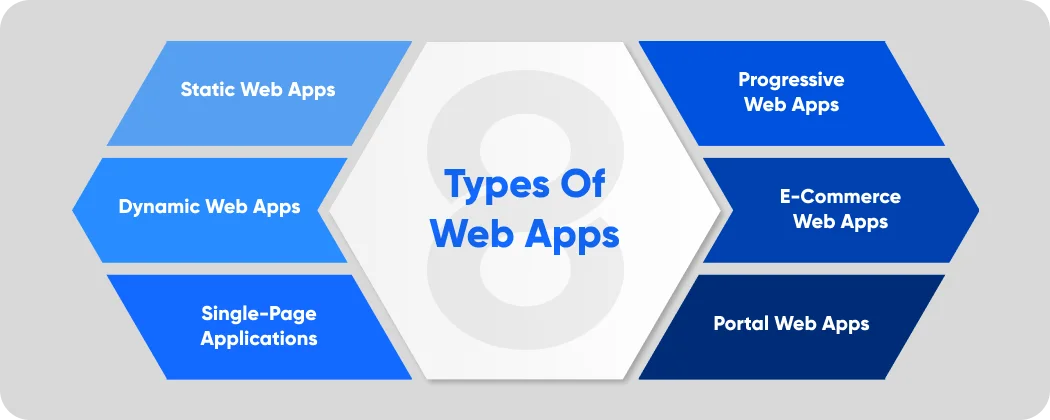
In 2026, web apps will take all sorts of shapes, including simple informational applications all the way through to elaborate enterprise applications. Knowing which kind of web apps take place will enable startups to adopt the appropriate strategy and technology stack.
1. Static Web Apps
The static web apps do not require user interaction and serve fixed content, which is preferred in informational websites, landing pages, and portfolios. They load quickly, have a small backend, and are based on SEO-friendly and browser-based interfaces.
2. Dynamic Web Apps
Dynamic web apps are content created in real-time as a result of user actions or database requests, e.g., e-commerce stores or social sites. They are based on an API-driven and server-side scripting architecture.
3. Single-Page Applications (SPA)
Instead, using JavaScript frameworks such as React or Angular, SPA loads and provides fast and responsive app-like user experiences in the browser by dynamically loading a single HTML file.
4. Progressive Web Apps (PWA)
PWAs represent the most promising elements of web and mobile applications, with offline functionality, push-based features, and installable frontends, which lead to high levels of engagement among web-based applications used by startups focusing on multi-device audiences.
5. E-Commerce Web Apps
E-commerce web apps facilitate online shopping, secure payment, and inventory management as well as analytics. They can be scalable, subscription-friendly, and may frequently be combined with marketing tools to increase conversions and customer retention.
6. Portal Web Apps
Portal web apps combine data and services into a single web-based interface. Organizations often use them within corporate intranets, educational systems, or customer portals to enhance usability and deliver centralized, real-time information.
Top 15 Web App Examples in 2026
The most popular examples of web apps in 2026 will demonstrate how browser platforms can be used to expand, create recurring income, and create cross-platform experiences that are smooth for modern enterprises and startups alike.
# |
Web App |
Category |
Core Functionality |
Primary Revenue Model |
Startup Takeaway |
| 1 | Slack | Collaboration | Real-time team messaging and integrations | Freemium + Per-user subscription | Monetize team productivity tools with tiered SaaS pricing |
| 2 | Notion | Productivity | All-in-one workspace for docs and databases | Freemium + Team plans | Build modular platforms that scale with users |
| 3 | Canva | Design | Browser-based graphic creation | Subscription + Enterprise plans | Simplify complex tools for mass adoption |
| 4 | Shopify | E-commerce | Hosted online store infrastructure | Subscription + Transaction fees | Enable entrepreneurs with plug-and-play commerce |
| 5 | Trello | Project Management | Visual task and workflow boards | Freemium + Premium tiers | Focus on intuitive UX for growth |
| 6 | Zoom Web | Communication | Browser video conferencing | Freemium + Enterprise plans | Deliver real-time services via WebRTC |
| 7 | Google Docs | Productivity | Cloud-based document collaboration | SaaS subscription | Leverage collaboration for stickiness |
| 8 | Figma | Design | Collaborative UI and UX design | Freemium + Enterprise licensing | Use browser rendering for advanced tools |
| 9 | Airbnb | Marketplace | Property booking and listing management | Commission per transaction | Build trust-driven marketplace ecosystems |
| 10 | Stripe Dashboard | FinTech | Payment and financial analytics tools | Transaction-based fees | Adopt API-first monetization strategies |
| 11 | Dropbox | Cloud Storage | File storage and sharing | Freemium + Paid storage plans | Convert free users with usage-based upgrades |
| 12 | Calendly | Scheduling | Automated appointment booking | Freemium + Premium integrations | Remove friction from repetitive workflows |
| 13 | Duolingo Web | Education | Gamified language learning | Ads + Subscription | Blend engagement with recurring revenue |
| 14 | HubSpot CRM | Marketing | Customer relationship management | Freemium + Tiered SaaS plans | Use freemium to enter enterprise markets |
| 15 | Netflix Web | Streaming | Browser-based video streaming | Subscription model | Scale globally with recurring memberships |
 Slack
Slack
Slack is one of the most promising examples of web applications that changed the communication process in the workplace. It allows startups and businesses to consolidate discussions and automate operations, as well as increase collaboration using a secure, web-based infrastructure.
Why It Works
Slack is based on WebSockets as a real-time messaging platform and supports hundreds of third-party APIs. It proves the ability of communication tools that can be used as an alternative to conventional enterprise software through the use of browser-based communication tools.
Business Model
- Freemium SaaS model
- Free basic plan
- Paid per user per month
- Enterprise tier for large organizations
This platform remains a proven example of a web-based application that monetizes through recurring subscription tiers, demonstrating how SaaS collaboration tools generate predictable, ongoing revenue and strengthen customer retention.
 Notion
A good example of a powerful web app is Notion, which has transformed the concept of the digital workforce, integrating documentation, databases, and collaboration tools into a unified, extremely customizable browser-based workspace, which is designed to fit modern teams.
Why It Works
It integrates databases, document management, task boards, and collaboration tools into one interface based on block architecture.
Business Model
- Freemium access
- Paid team plans
- Enterprise licensing
Finally, Notion demonstrates how start-ups can create flexible web-based applications that can be adapted to user demands and grow efficiently from being run by a single founder all the way through to an enterprise organization.
 Canva
Canva
Canva is one of the best examples of a successful mobile web app that enables users to make professional graphic designs directly in a browser without installing complicated desktop programs.
Why It Works
Canva has a rendering engine that is executed directly in a browser. No major software installation needed.
Business Model
- Free templates
- Subscription plan
- Enterprise brand kits
As a disruptive web-based application, shows that creative software built on intuitive design, cloud rendering, and freemium monetization can outperform traditional models worldwide.
 Shopify
Shopify can be viewed as one of the best examples of scalable web application software that allows business owners to launch, run, and expand online stores using an entirely hosted and fully cloud-based commerce platform.
Why It Works
It offers hosted storefronts, payment gateways, and app integrations on a cloud-native platform.
Business Model
- Monthly subscription
- Transaction fees
- App marketplace revenue
All in all, Shopify is a good model of web-based commerce infrastructure that helps start-ups earn money via subscriptions, transaction costs, and marketplace integrations.
 Trello
Trello is currently among the most available examples of web applications in the field of productivity, making the process of managing projects easier through the use of user-friendly visual boards and joint task monitoring within the browser.
Why It Works
Board based on Kanban, which is driven by real-time database updates.
Business Model
- Free plan
- Premium subscriptions
- Enterprise solutions
Thus, Trello is one of the simplest models of web-based tools that transform simplicity and ease into scalable subscription income.
 Zoom Web Client
The web client of Zoom emphasizes the fact that the internet-based applications produced nowadays provide clear video communication without extensive installations, only with the help of the browsers, thus providing the opportunity to collaborate worldwide remotely.
Why It Works
The WebRTC archetype allows live video and audio within the browser.
Business Model
- Freemium meetings
- Paid enterprise subscriptions
As a result, this web-based communication tool illustrates the strength of freemium access and enterprise subscriptions to achieve the sustainable growth of SaaS.
 Google Docs
One of the most popular examples of web applications is Google Docs, which provides real-time document editing and collaboration processes all in a browser-based format.
Why It Works
Live collaborative editing with operational transformation algorithms.
Business Model
- Free usage
- Workspace subscription plans
Being one of the top examples of web-based applications on the global level, it demonstrates how cloud-based productivity tools may conquer both the personal and the enterprise markets.
 Figma
Figma
Figma has transformed digital design, as it is a high-performance web-based tool that allows the collaborative creation of UI and UX directly within contemporary browsers.
Why It Works
A rendering engine written in WebAssembly enables high-performance design tools on the browser.
Business Model
- Freemium
- Paid team plans
- Enterprise licenses
As of today, Figma illustrates the power of creating a high-end browser rendering and freemium SaaS pricing to change the creative industries across the globe.
 Airbnb
Airbnb started as a web-based marketplace and soon emerged as one of the most familiar examples of web applications within the sharing economy, matching hosts and travelers throughout the world.
Why It Works
Architecture on a marketplace that has secure payment APIs and listing management.
Business Model
- Commission per booking
This platform explains how web-based applications can grow by using commission-based models and earn trust by providing safety with regard to payment and listing systems.
 Stripe Dashboard
The dashboard of Stripe has become one of the excellent examples of web apps in fintech and offers developers and startups the browser-based tools to manage payments, analytics, and financial workflows.
Why It Works
Secure payment processing API-first architecture.
Business Model
- Transaction-based fees
It demonstrates the lucrative nature of web application examples using API-first architecture and transaction-based pricing in digital financial systems.
 Dropbox
An example of foundational web application software is Dropbox, where users can access, store, and share files using a secure cloud infrastructure that can be accessed with a browser.
Business Model
- Freemium
- Paid storage tiers
Being a scaled variant of web-based SaaS, it confirms how the freemium storage levels can turn the users into long-term paying subscribers.
 Calendly
Apart from Calendly, the web application is one of the most current examples of using the Internet that helps to link people together in terms of bookings using the help of automated scheduling links and calendar connections.
Business Model
- Freemium
- Premium integrations
This web-based productivity service demonstrates the ability of a frictionless user experience with tiered pricing to generate predictable recurring revenue streams.
 Duolingo Web
One of the most interesting examples of mobile web applications is the Duolingo browser platform, as it is a gamified learning platform for the English language that can be studied on any mobile device without the obstacles of installing the application.
Business Model
- Ads
- Premium subscription
 HubSpot CRM
HubSpot delivers powerful CRM software and stands as one of the strongest examples of a web application for marketing automation and customer lifecycle management.
Business Model
- Freemium
- Tiered enterprise plans
Being a representation of web-based applications that are designed to grow over time, it shows how freemium access points will become enterprise-level recurrent agreements.
 Netflix Web
Netflix operates one of the most advanced web application systems in the digital streaming industry, delivering high-quality video content through browser-based playback technology.
Business Model
- Subscription-base
Statista reports that streaming earnings keep increasing up to 2026, which supports the prevalence of subscription-based online entertainment systems by dominating the consumption of digital products worldwide.
Key Benefits of Web Apps for Startups in 2026
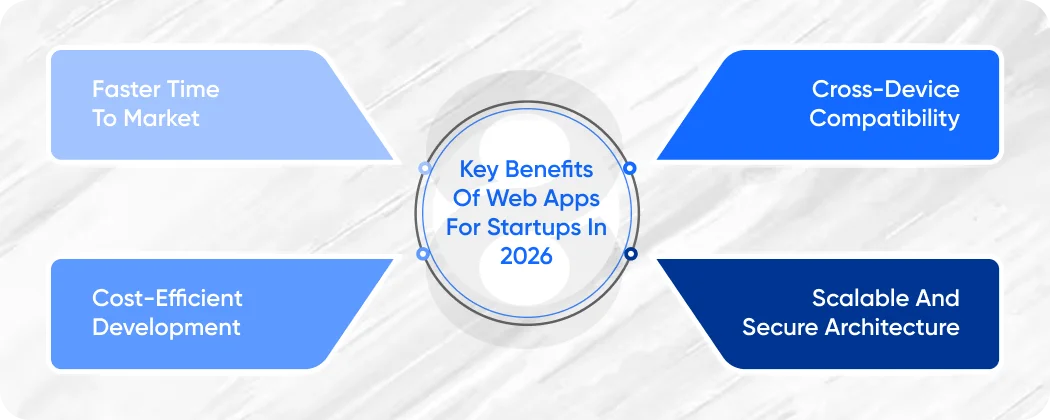
Web apps offer startups scalable, cost-efficient, and user-centric solutions, enabling rapid growth, global reach, and seamless cross-device performance, making them indispensable tools for modern business success in 2026.
1. Faster Time to Market
Web apps allow startups to launch products quickly with minimal setup, leveraging cloud infrastructure and continuous deployment pipelines for rapid iterations, validation, and early customer feedback, ensuring competitive advantage in fast-paced markets.
2. Cost-Efficient Development
By using browser-based technologies, startups reduce expenses on device-specific development and maintenance. Web apps consolidate backend, frontend, and database management, making them highly cost-effective for startups with limited resources.
3. Cross-Device Compatibility
Modern web apps run seamlessly across desktops, tablets, and mobile devices, providing consistent user experiences and wider reach. This enables startups to engage global audiences without multiple platform-specific versions.
4. Scalable and Secure Architecture
Web apps built with microservices, cloud hosting, and secure APIs can handle growing traffic and user data. This ensures startups can scale efficiently while maintaining high performance and robust security standards.
Overcoming Common Web App Development Challenges
Developing high-performing web applications is associated with its own set of challenges, such as cross-browser compatibility and dealing with more intricate backend integrations and scaling multi-million-user databases.
Our developers at 8ration address these challenges straightforwardly through the best web app development practices. With the adoption of responsive design, microservices architecture, cloud hosting, and efficient API integrations, we provide a smooth performance across devices.
The experience of our team will turn possible roadblocks into opportunities because we will develop scalable, secure, and conversion-oriented web applications that will surpass the expectations of our clients and will not slow down the timeline of the implementation.
Final Thoughts!
The most winning startups in 2026 will be creating scalable digital ecosystems rather than products. These are examples of web apps that demonstrate how browser-based platforms can conquer fintech, education, and entertainment.
Statista notes that the market size of the world in regard to the public cloud will grow to more than 1 trillion dollars by the year 2028, which illustrates enormous SaaS growth.
Thus, it is necessary to invest in good architecture, monetization schemes, and conversion-oriented UX. The market is scalable to web innovation, the infrastructure is established, and the opportunity is immense.