


Cars used to be mostly mechanical machines decades ago. Mechanics listened to engines, checked fluids, replaced worn parts quickly. That world is mostly gone now with modern vehicles. Cars today run on complex electronics, sensors, and computers constantly. One car can have more than seventy control units. These manage fuel injection, brakes, navigation, and battery performance. When something breaks, it’s rarely a single simple issue. Modern vehicles fail in complicated ways across multiple systems.
That’s why automotive diagnostics software is essential for every workshop. It helps engineers and technicians analyze data faster. Software identifies faults and explains system behavior patterns clearly. Artificial intelligence pushes diagnostics even further than old tools. Instead of reading error codes, AI analyzes patterns deeply. It compares data across thousands of vehicles automatically.
This allows issues traditional tools often miss entirely. Workshops, manufacturers, and logistics companies now rely on this technology. It’s no longer optional, it’s a core operational tool. Understanding these systems helps businesses manage maintenance efficiently.
Why Modern Vehicles Need Advanced Diagnostics
Modern cars generate huge amounts of sensor data every second. They track engine temperature, braking force, tire rotation, battery voltage. Many other systems constantly feed real-time information too. Without advanced tools, this data is nearly impossible to interpret. Automotive diagnostics software converts raw data into usable insights. It lets technicians quickly understand what’s going wrong inside vehicles.
Vehicles have hundreds of sensors sending real time data. Many mechanical issues start in electronic control systems. Manual troubleshooting wastes technician hours and slows repairs. Complex systems need analysis instead of just guesswork. AI identifies patterns across thousands of past repair cases. Without intelligent diagnostics, repair shops struggle with modern complexity.
Read More: Coding for Cars – Custom Software Solutions for Modern Vehicles
Core Components of a Vehicle Diagnostics Ecosystem
Diagnostics software interacts with multiple layers of car architecture. Each layer gives data or performs a system function. Understanding these components helps explain how software works.
Important system components. Component Role. Onboard diagnostics interface gives access to vehicle data streams. Electronic control units Manage individual subsystems like brakes or the engine. Sensors and actuators Capture mechanical and electrical signals continuously. Diagnostic software platform Processes data and generates actionable insights. Cloud infrastructure stores historical information and advanced analytics results. Each component plays a role in detecting faults or issues.
How Diagnostics Platforms Analyze Vehicle Data
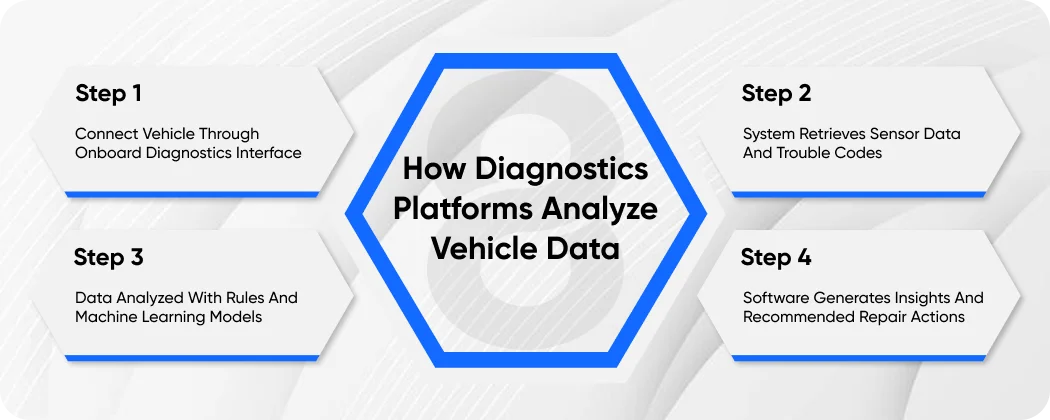
Connecting a car triggers several steps in diagnostics platforms. Many think systems just read error codes automatically. The real process is much more complex and intelligent.
Typical diagnostics workflow
- Step 1: Connect vehicle through onboard diagnostics interface
- Step 2: System retrieves sensor data and trouble codes
- Step 3: Data analyzed with rules and machine learning models
- Step 4: Software generates insights and recommended repair actions
Advanced software can link multiple system faults to one root cause.
Read More: Top 10 Software for Auto Repair Shops to Automate Workflow
AI and Machine Learning in Vehicle Diagnostics
Artificial intelligence is transforming the way diagnostics work today. Old tools just displayed raw sensor data to users. AI platforms interpret information automatically without human guesswork. Machine learning analyzes patterns across sensor data and repairs. It looks at operational conditions to detect subtle failures. This helps find issues technicians might overlook during inspections.
Predictive failure detection for potential component problems. Anomaly detection spotting unusual vehicle behavior automatically. Automated fault classification for faster troubleshooting. Continuous learning from historical repair records and data. AI systems improve over time, learning from new vehicle data constantly.
Data Sources Used in Diagnostics Systems
Modern diagnostics relies on multiple streams of vehicle data. Combined, they give a detailed picture of vehicle health.
Engine control modules monitoring fuel and ignition systems. Transmission sensors check gear shifts and torque levels. Braking system controllers measure pressure and stopping efficiency. Battery management systems tracking voltage and charge cycles. GPS and telematics devices record location and driving habits
Processed together, this data lets software detect faults accurately.
Benefits for Automotive Repair Workshops
Repair workshops gain big advantages from diagnostics platforms today. Technicians no longer spend hours manually locating faults. Software provides clear insights into problems faster.
Major advantages for workshops
- Faster identification of mechanical and electronic fault
- More accurate troubleshooting reducing guesswork error
- Shorter repair times improving efficiency
- Higher customer satisfaction with quicker service
Advanced diagnostics software helps workshops finish repairs with fewer mistakes.
Advantages for Fleet Operators
Fleet operators manage hundreds or thousands of vehicles at once. Maintenance planning becomes extremely complex at scale. AI driven platforms track vehicles continuously for performance.
Fleet management benefits
- Real-time monitoring of vehicle systems and health
- Early detection of parts likely to fail
- Better scheduling of preventive maintenance task
- Reduced operational downtime for large fleets
Using diagnostics software saves fleet operators time and money.
Predictive Maintenance Strategy
Predictive maintenance is one of the most useful features. Instead of waiting for parts to fail, AI predicts them. Models analyze trends in sensor data over time. Early warning signals appear before breakdowns ever happen.
Predictive maintenance advantages
- Lower repair costs and fewer surprise
- Reduced unexpected vehicle failure
- Longer vehicle lifespan through proactive car
- Improved planning for scheduled maintenance
AI powered diagnostics lets companies move from reactive to proactive strategies.
Cloud Infrastructure in Diagnostics Platforms
Many modern platforms use cloud computing heavily for data processing. It allows access to diagnostics from anywhere in real time.
Cloud benefits
- Centralized storage of vehicle data and repair history
- Remote diagnostics for technicians across multiple location
- Scalable analytics infrastructure handling large dataset
- Real time dashboards showing vehicle performance trends
Cloud platforms also help manufacturers monitor entire fleets efficiently.
Integration With Automotive Technology Ecosystems
Diagnostics platforms often integrate with other automotive systems. Integration creates more efficient workflows for maintenance and fleet management.
Common integrations
- Fleet management platforms tracking usage and logistic
- Telematics systems recording driving and location data
- Maintenance scheduling tools planning repairs and service
- ERP systems managing operations and resources
Integrated systems improve operational efficiency for workshops and fleets.
Security Considerations for Diagnostics Systems
Vehicle data is sensitive, including performance and location info. Poor security can lead to misuse or data breaches. Developers must enforce strict security standards.
Essential security measures
- Encrypted communication to protect data in transition
- Multi-factor authentication for platform access
- Role-based permissions for different user level
- Continuous monitoring to detect suspicious activity
Secure software protects vehicles, fleets, and business information.
Cost of Developing Diagnostics Platforms
Creating diagnostics platforms requires software, automotive, and AI expertise. Development cost depends on complexity and feature set.
# |
Project Scope |
Estimated Cost |
| 1 | Basic diagnostics application | $25,000 – $60,000 |
| 2 | AI-powered diagnostics platform | $60,000 – $150,000 |
| 3 | Enterprise fleet diagnostics system | $150,000 – $400,000 |
Advanced platforms involve backend architecture, cloud infrastructure, and AI models.
Challenges in Diagnostics Software Development
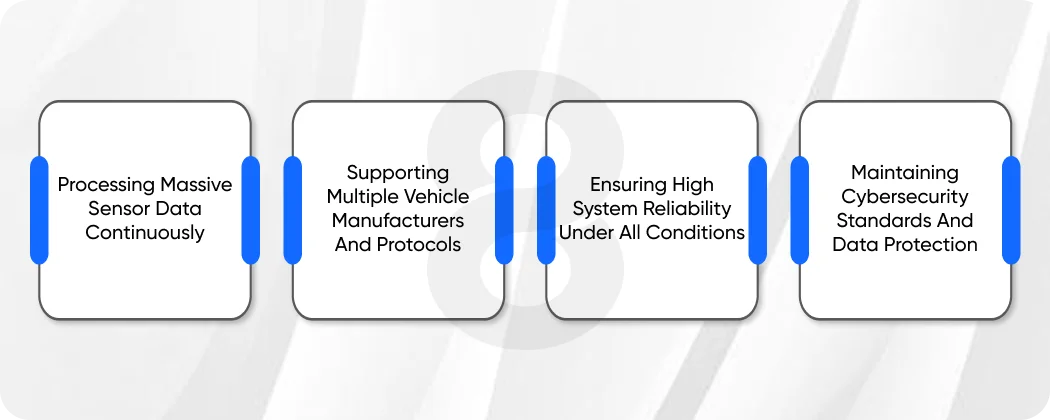
Building reliable systems is technically demanding and complex. Software development handles huge data streams and compatibility across manufacturers.
Common challenges
- Processing massive sensor data continuously
- Supporting multiple vehicle manufacturers and protocols
- Ensuring high system reliability under all conditions
- Maintaining cybersecurity standards and data protection
Development teams need both automotive knowledge and advanced software skills.
Strategic Considerations for Businesses
Adopting diagnostics software is as much strategic as technical. Businesses must understand goals before selecting a platform.
Important strategic questions
- Which vehicle types need monitoring
- Fleet or network size to manage
- Most valuable insights for operation
Choosing the Right Diagnostics Platform
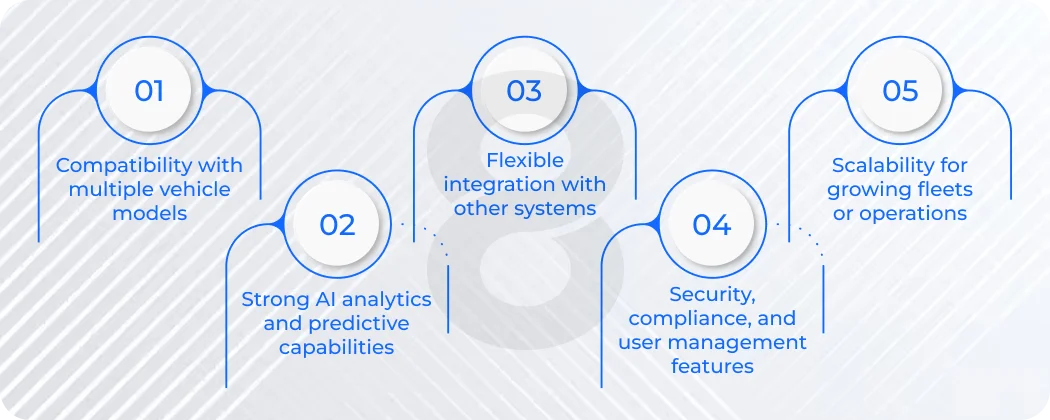
Selecting a platform requires careful evaluation of features and needs.
Evaluation criteria
- Compatibility with multiple vehicle model
- Strong AI analytics and predictive capabilities
- Flexible integration with other systems
- Security, compliance, and user management feature
- Scalability for growing fleets or operations
Pick software that works now and scales for future growth.
Conclusion
Vehicle tech keeps advancing faster every year. Modern cars generate huge amounts of operational data. Traditional repair methods can’t keep up with complexity. AI driven diagnostics transforms raw data into actionable insights. Businesses detect faults faster and prevent unexpected breakdowns. Maintenance becomes proactive, not just reactive, saving money. Companies gain faster repairs, higher reliability, and better planning. Connected vehicles will continue evolving, increasing software importance. Diagnostics software is now a core part of transportation operations.