

The global marketplace apps software market, which includes multi‑vendor and e‑commerce marketplace platforms like Amazon, was valued at around USD 3.54 billion in 2025 and is projected to reach around USD 7.72 billion by 2032, growing at a CAGR of ~11.1%. This reflects strong long‑term demand for marketplace app platforms and software.
The eCommerce ecosystem worldwide has changed radically throughout the past ten years, with applications such as Amazon changing the manner in which consumers shop, assess, and buy products online. Amazon is not merely an online store anymore, but it is a complete digital marketplace that links millions of buyers and sellers on a highly optimized and data-driven platform. This has been a change that has prompted both startups and businesses to consider marketplace app development as a scalable business model.
Since the trend of online shopping app like Amazon is still rising, there is one question that is at the forefront of the initial discourse: how much does it cost to develop an application like Amazon? The question is not that simple, as Amazon is not one application; it is a set of systems, interfaces, and technologies that interact with each other in an excellent way.
This blog will deconstruct the cost of developing the online shopping app, discuss the primary cost drivers, examine the critical marketplace app features, and explain how businesses can feasibly budget the cost of developing app like Amazon in 2026.
How to Calculate the Price of Creating a Marketplace App
The estimation of the price of an app like Amazon should be based on the fact that price is determined by its complexity, scaling, and long-term perspective. An MVP of a basic marketplace has absolutely nothing in common with a fully operational Amazon-sized ecosystem in terms of architecture, depth of features, and infrastructure.
Marketplace App Cost by Complexity
| Marketplace Type | Feature Scope | Estimated Cost | Development Timeline |
| Basic Marketplace App | Limited features, single vendor | $40,000 – $60,000 | 3–5 months |
| Mid-Scale Marketplace | Multi-vendor, payments, admin | $70,000 – $120,000 | 6–9 months |
| Advanced Amazon-Like App | AI, analytics, AR, scalability | $150,000 – $300,000+ | 9–14 months |
Read More: How Much Does It Cost To Build An App Like Uber
The Core Cost Factors That Shape an App Like Amazon
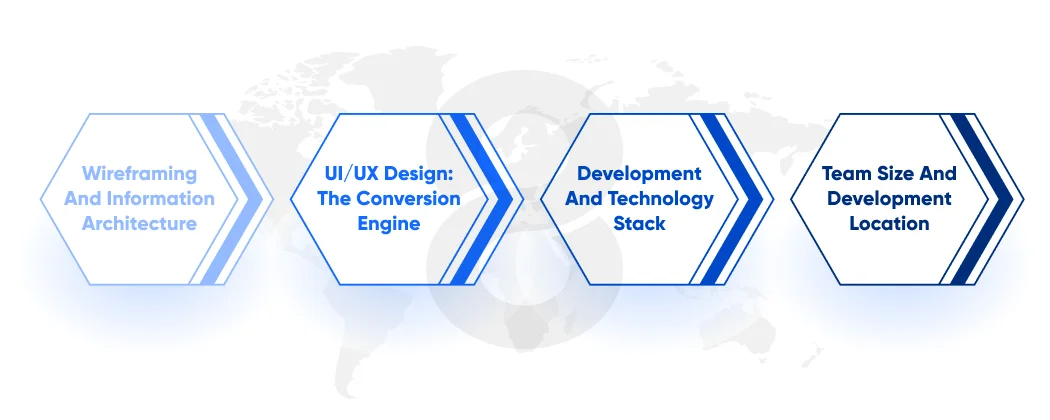
Wireframing refers to the blueprint of any successful marketplace application. It determines the structure of the app, lines up navigation, screen structure, and functionality before even real UI design or development commences. In the case of apps like Amazon, wireframing is essential since users move through various layers at once through product listing pages, seller pages, wish lists, carts, and order tracking dashboards. Well-designed wireframes cause features to be in the wrong order, create disorientation, and increase the development expenses because of redundant redesign.
1. Wireframing and Information Architecture
The wireframing technique also aids development teams in discovering technical dependencies early enough so that back-end systems can be developed to support front-end workflows in an efficient manner. In the case of a multi-vendor marketplace, wireframes have to consider the perspectives of the buyer, seller, and admin, such as dashboard interaction, notification interface, and reporting interface. This clarity minimizes the errors and hastens the development.
Wireframing Cost Table
| Wireframe Type | Scope | Cost Range |
| Basic Wireframes | 15–20 screens, simple navigation | $800 – $1,200 |
| Advanced Marketplace Flow | 40+ screens, multi-panel design (Buyer/Seller/Admin) | $1,500 – $3,000 |
2. UI/UX Design (The Conversion Engine)
The thought of design includes the visual attraction of an app; though, it involves the creation of a user-friendly experience that instigates users to utilize the app and convert. In the case of Amazon-type marketplaces, user experience is a source of competitive advantage. The interface of Amazon is meant to minimize the friction at each stage: easy product navigation, well-labeled pictures, prominent calls-to-action, and the checkout process can be completed in seconds.
UI/UX design is already expensive, but it becomes even more expensive when you add on top of that custom animations, AI personalization, multi-devices, accessibility, and tablet, smartphone, and desktop adaptive layouts. A quality design will make the app look professional and credible, and will drive a repeat purchase.
UI/UX Design Cost Chart
| Design Level | Description | Cost |
| Template-Based UI | Uses standard components and minimal branding | $6,000 – $8,000 |
| Custom Marketplace UI | Tailored to brand identity with unique flows | $10,000 – $20,000 |
| Amazon-Grade UX | Data-driven, highly optimized for conversions | $25,000+ |
3. Development and Technology Stack
Development is the largest contributor to the overall marketplace app development cost. For an Amazon clone app, the backend must handle complex business logic, including:
- Multi-vendor support
- Real-time inventory updates
- Order administration and tracking
- Payment processing
- Advanced analytics
- Artificial intelligence-driven product suggestions
The choice of tech stack is highly significant because it determines the performance of the stack, its scalability, and maintainability. Simple stacks like PHP + MySQL are cheaper, but may not handle high scale operation, but more advanced stacks like the Java/Spring Boot stack or cloud-native AWS stacks can support millions of users at once but are more costly.
Common Tech Stack Cost Comparison
| Tech Stack | Scalability | Cost Impact |
| PHP + MySQL | Medium | Low |
| Node.js + MongoDB | High | Medium |
| Java / Spring Boot | Very High | High |
| Cloud-Native (AWS) | Enterprise | Very High |
4. Team Size and Development Location
The structure and the place of your development team will have a greater impact on cost and quality. The common marketplace development team can consist of project managers, backend developers, frontend developers, mobile developers (iOS/Android), UI/UX designers, and QA engineers.
The difference in labor costs between the regions is a significant contribution to the cost of online shopping applications. As an illustration, North American teams have been quoted at a higher hourly rate compared to South Asian ones, but they are also able to provide them with better communication, quicker turnaround, and understanding of enterprise-grade systems.
Development Cost by Region
| Region | Hourly Rate | Monthly Cost (Team of 6) |
| North America | $100–150 | $45,000–60,000 |
| Western Europe | $70–100 | $30,000–45,000 |
| Eastern Europe | $40–70 | $18,000–30,000 |
| South Asia | $25–45 | $12,000–20,000 |
Choice of Platform (iOS, Android, or Both)
The decision on the platforms to be constructed depends on the choice of platform, which affects the cost of development, timeline, and market penetration. Apps like Amazon have to support a wide audience, which in most cases involves being dual platform (iOS and Android).
- Native Apps (iOS and Android individually): The most expensive, best performance, and availability of platform-specific features.
- Cross-Platform Apps (Flutter, React Native): The cheapest option initially, quicker in development, although somewhat less in performance for very complex applications.
- Single-Platform Apps: Apps that are useful when the MVP is focused on a demographic or region.
Platform Cost Comparison
| Platform Strategy | Initial Cost | Reach | Performance |
| iOS Only | Medium | Premium users | High |
| Android Only | Medium | Global mass market | High |
| Native iOS + Android | High | Maximum reach | Very High |
| Cross-Platform | Lower | Balanced | Medium |
Must-Have Features for an App Like Amazon
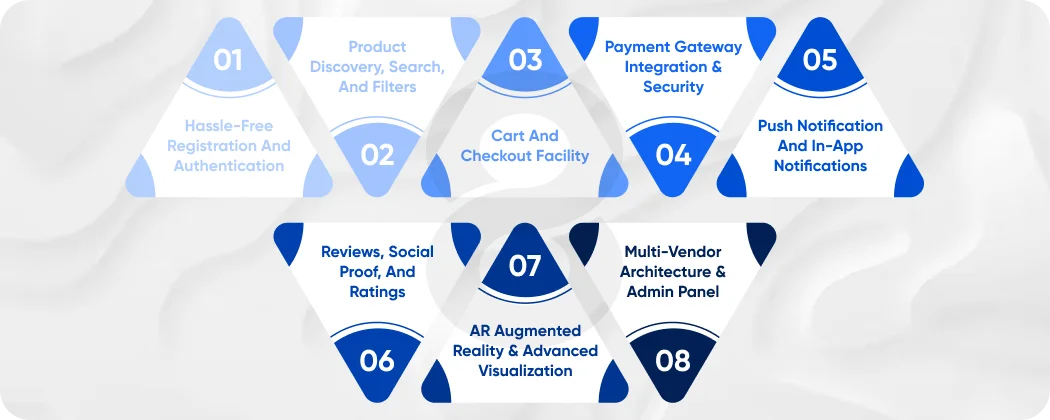
With the creation of applications such as Amazon, the functionality of basic eCommerce is not enough to duplicate. The feature set that is able to serve both buyers, sellers, and admins at the same time is a characteristic of successful online shopping apps such as Amazon. Each of the features influences the cost of the online shopping app development, user experience, and scalability. The breakdown of must-have features is detailed below:
1. Hassle-free Registration and Authentication
The initial point of interaction is user onboarding. Inconvenience in registration will result in drop off, and smooth onboarding will result in retention. Applications like Amazon tend to enable people to:
- Register with email or phone
- Register through social networks (Google, Apple, Facebook).
- OTP or multi-factor authentication.
- Enable guest checkout
Cost Implication Table
| Feature | Complexity | Estimated Cost |
| Email / Phone Registration | Low | $2,000 – $4,000 |
| Social Login Integration | Medium | $3,000 – $6,000 |
| Multi-Factor Authentication | High | $6,000 – $10,000 |
2. Product Discovery, Search, and Filters
The discovery of advanced products is the keystone of Amazon clone app success. The users desire applicable search results, filters, and customized recommendations. Features include:
- Keyword searching and voice search
- Sort by price, category, rating, brand
- Rating by popularity, new arrivals or discounts
- Personalized recommendations based on AI
| Feature | Complexity | Estimated Cost |
| Basic Keyword Search | Low | $2,000 – $4,000 |
| Advanced Filters & Sorting | Medium | $4,000 – $7,000 |
| AI-Powered Recommendations | High | $10,000 – $15,000 |
| Voice Search | High | $5,000 – $8,000 |
3. Cart and Checkout Facility
Most users can be converted during the cart and checkout process. There are apps such as Amazon that streamline this experience and minimize friction:
- Continuous cross-operative devices
- One-click checkout
- Multiple payment methods
- Live estimation of taxes and shipping
Cart & Checkout Cost Table
| Feature | Complexity | Estimated Cost |
| Basic Cart & Checkout | Medium | $6,000 – $10,000 |
| One-Click Checkout | High | $10,000 – $15,000 |
| Multi-Address & Shipping Options | Medium | $4,000 – $7,000 |
4. Payment Gateway Integration & Security
The most sensitive aspect of a marketplace is payment. An Amazon clone application will need to safely take payments worldwide:
- Credit/debit cards
- Digital wallets
- Multi-currency support
Payment Integration Cost Table
| Feature | Complexity | Estimated Cost |
| Single Payment Gateway | Medium | $3,000 – $5,000 |
| Multi-Currency & Payment Options | High | $6,000 – $10,000 |
| PCI Compliance & Security | Very High | $10,000+ |
5. Push Notification and In-App Notifications
In a contemporary market, user engagement is essential in terms of retention as well as engagement. The Amazon (or similar applications) sends personalized notifications to the users regarding updates in their orders, discounts, flash sales, and new products every time. This will make the users active on the app, lower the churn, and raise the conversion rates.
Communication Feature Cost Table:
| Feature | Complexity | Estimated Cost |
| Push Notifications | Medium | $2,000 – $4,000 |
| In-App Messaging | Medium | $3,000 – $6,000 |
| Live Chat Support | High | $5,000 – $8,000 |
6. Reviews, Social Proof, and Ratings
The online shopping app like Amazon, would be based on trust and credibility. Buyers use ratings, reviews, and comments to make their purchases. A system of proper ratings and reviews serves not only to enhance the level of transparency but also to boost sales through the promotion of trust in the products and sellers.
Ratings & Reviews Cost Table
| Feature | Complexity | Estimated Cost |
| Basic Rating & Review System | Medium | $3,000 – $5,000 |
| Verified Reviews & Moderation | High | $6,000 – $9,000 |
| Seller Feedback & Analytics | High | $5,000 – $8,000 |
In the case of a multi-vendor marketplace, it is obligatory that the reviews are checked in order to avoid counterfeit or deceitful feedback. Analytics regarding ratings is beneficial as it enables the sellers to enhance their offerings. Quality reviews and ratings systems also optimize the performance of SEO, where products are more searchable on the search engines and organic traffic to the app is generated.
7. AR Augmented Reality (AR) & Advanced Visualization
Augmented reality is becoming a point of distinction in online shopping app like Amazon. AR enables the user to see products within the context of the real-life setting and then make a purchase, which is especially useful with furniture, home decor, fashion, or wearable technology. An example is that a user can view a product like a sofa in their living room or even virtually try on a watch.
AR use will need the use of 3D modeling, camera access, and real-time rendering, raising the complexity of cost and development of the eCommerce app. Although it may cost more, AR will greatly boost the engagement of the user and minimize the returns after purchase since buyers will make more informed decisions.
8. Multi-Vendor Architecture & Admin Panel
The Amazon clone application, which can be called a real clone, should be a multi-vendor marketplace and should be capable of providing three different user interfaces, namely, buyer, seller, and admin. Each interface possesses a specific functions and they are part of the total development cost.
- Buyer App: There is a buyer app that enables users to browse, search, filter, and purchase goods. Should also have cart, wish list, reviews, notifications, and payment processing.
- Seller Dashboard: Sellers use it to put up products, manage stock, handle orders, returns, and analyze their performance measures. Such advanced features can be dynamic pricing, inventory warnings, and sales analytics dashboards.
- Admin Panel: This is a central control center where all buyers and sellers can be monitored. It contains approval processes, analytics, revenue management, dispute management, and fraud management. Admins also deal with commissions, featured listing and platform-wide promotions.
The introduction of a powerful multi-panel system is one way of making certain that every type of user is able to work efficiently without causing interference to others. The fact that app like Amazon should support millions of simultaneous users matters here due to the necessity to ensure the optimization of performance and scalability.
Multi-Vendor Panel Cost Table
| Panel | Function | Complexity | Estimated Cost |
| Buyer App | Shopping, search, and order management | High | $30,000 – $50,000 |
| Seller Dashboard | Inventory, order processing, analytics | High | $25,000 – $40,000 |
| Admin Panel | Platform management, reporting, and approvals | Very High | $20,000 – $35,000 |
The global marketplace apps market overall was valued at approximately USD 93 billion in 2024 and is expected to grow to about USD 105 billion in 2025, and could reach around USD 283.7 billion by 2033, with a 13.2% CAGR, highlighting expanding adoption of marketplace apps across industries.
How to Build a Marketplace App Like Amazon: Step-by-Step Guide
Though developing an app such as Amazon is not only a matter of writing code to develop an app, it is a matter of developing a scalable, secure, and friendly ecosystem where buyers, sellers, and administrators co-exist in harmony. The multi-vendor marketplace should be planned properly, features given priority, and the development process must be organized. The roadmap is detailed below.
Step 1: Niche and Market Research
The market is a vital thing to know before creating an app such as Amazon. You must identify:
- Target audience: Who will be your potential buyers? What are their habit and pain points?
- Competitive analysis: Investigate the activity of other apps like Amazon and their set of features, price policy, and customer interaction patterns.
- Niche selection: Although Amazon covers everything, startups have a high chance of success by specializing in a niche, including electronics, fashion, or handmade goods.
- Why it is important: Intense market research allows you to know the actual problems of customers, better adoption, and a minimized chance of failure.
Step 2: Features and Monetization Model
The second step is defining the niche, and the third step is prioritizing features and finding your monetization strategy. In the case of apps such as Amazon, they usually have the following features:
- Authentication of users (social login, guest checkout)
- Advanced search and filters
- Checkout and cart with various forms of payments
- Reviews, social evidence, and ratings
- In-app and push notifications
- Buyer, Seller, Admin, Multi-vendor dashboards
- High-tech visualization, such as AR or 3D product view
Monetization Strategies:
- Commission-Based: The charge sellers will charge a percentage per transaction.
- Subscription Plans: The sellers are charged a monthly/annual fee to list the products.
- Sponsored Listings/ Ads: Visibility is paid for goods or vendors.
- Freemium Functionality: Billed additional services such as advanced analytics or advertising.
Cost Insight: The Monetization strategy may affect your cost of developing an online shopping app due to the fact that it will dictate what features require advanced logic in the backend (e.g., commission calculations, managing subscriptions).
Step 3: Prototyping and Wireframing
- Wireframing is a plan for your app in the market. It determines the interaction of the system with buyers, sellers, and admins.
- Develop a map of all screens, such as product listings, seller dashboard, cart flows, and administrative panels.
- Design interactive prototypes to test usability without investing in design or development.
- Develop cross-device compatibility, i.e., the application should be compatible with smartphones, tablets, and web platforms.
Hint: Incorporate the 3-panel Buyer, Seller, Admin strategy at the start. This will prevent the expenses of making amendments in the future.
Step 4: UI/UX Design
UI/UX design transforms wireframes into a beautiful, user-friendly application. Visuals, such as customized dashboards, smooth checkout, and visualization of products, are needed.
- Pay attention to conversion-oriented design, according to which all elements provoke users to make a purchase.
- Make product placement, color psychology, and button placement more efficient with the help of data-driven insights.
- Add a responsive design to accommodate different screen sizes.
Design Trick: In apps like Amazon, a great UX is what separates a successful app from a high drop-off app.
Step 5: Backend Development and Frontend Development
The most resource-intensive stage is the development stage. In the case of an Amazon clone application, the backend has to deal with:
- Multi-vendor (inventory, orders, product approval)
- Real-time availability of products.
- Refund processing and payment processing
- In-app messages and notifications
- Buyer, seller, and Admin analytics dashboards
Frontend development is concerned with:
- Easy navigation and user interactions
- Product listing pages that have pictures, description and reviews
- Shopping, checkout, and payment screens
- Search, filter, recommendation modules
Recommendations on Technology Stacks
| Layer | Recommended Stack |
| Frontend | React Native / Flutter (cross-platform) |
| Backend | Node.js + Express / Java Spring Boot |
| Database | MongoDB / MySQL / PostgreSQL |
| Cloud | AWS / Google Cloud / Azure |
| Payment | Stripe, PayPal, Razorpay |
| Notifications | Firebase Cloud Messaging, OneSignal |
Step 6: Testing and Quality Assurance
Testing also determines reliability, security, and bugs in the development of your marketplace app.
- Conduct functional testing: Test every feature that should be tested
- Performance testing: Test application throughput
- Conduct security audits: Secure user data, payment, and the controls of the administrators
- Add the real-user testing: Gather the beta user feedback to improve usability
Hint: Quality assurance fosters the avoidance of post-launch problems, which are costly and unadopted.
Step 7: Deployment & Launch
Install the application in the app stores (iOS and Android) and web (where necessary). Consider:
- App Store Optimization (ASO)
- Marketing advertisement to your niche
- Onboarding tutorials to train first-time users
First Launch Hint: You may want to launch with a minimal viable product (MVP) with basic features. Progressively add such features as AR visualization, modern analytics, or AI-based recommendations.
Step 8: Maintenance and Scaling After Launch
It is not the end at the launch. Effective marketplaces such as Amazon are constantly upgrading and correcting bugs and performance.
- Track customer purchasing patterns and seller performance
- Infrastructure that is dependent on an increasing user base
- Implement new features, depending on customer feedback
- Regular security updates and maintenance of the server
Cost Insight: Maintenance cost is typically 15-20 percent of development cost, and this cost should be considered in the online shopping application cost estimation.
Read More: eCommerce App Development Cost
Cost to Build an App Like Amazon on An Operating System
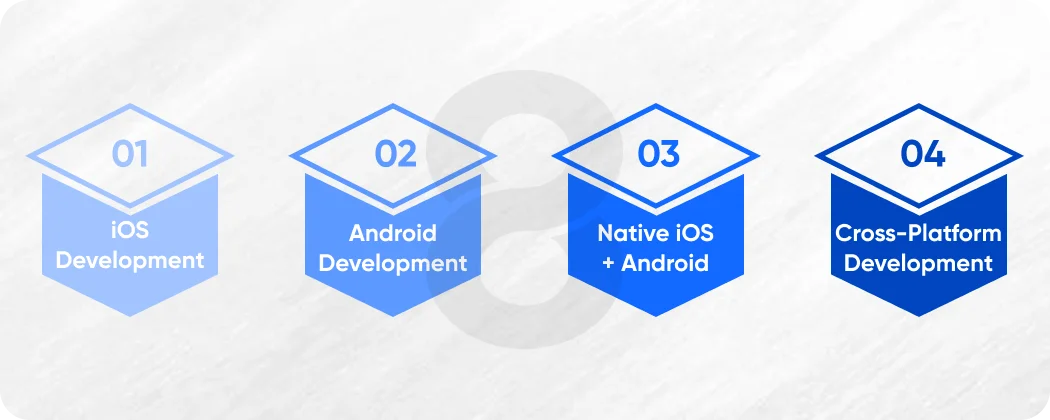
Operating system is one of the most critical decisions that one makes when designing to develop an app such as Amazon. It directly determines the number of users, the cost of development, performance, and scalability of your marketplace application in the long run. When developing a startup or an enterprise, it is crucial to know the advantages and disadvantages of each available OS to make sure you match your application to the business objectives and the market. Key Considerations:
1. iOS Development
iOS apps are developed to be used on Apple devices with Swift or Objective-C, and the users are generally high-end consumers who are more willing to spend on a transaction. iOS development makes it more secure, compatible, and accessible to the ecosystem capabilities of Apple, such as Face ID and Apple Pay. Nevertheless, the development of iOS is expensive and has a lower market share than Android.
2. Android Development
Android applications are developed with either Kotlin or Java, and they have a huge user base across the world, particularly in emerging markets. The flexibility of Android makes it usable on a variety of devices, but also creates a problem of fragmentation: screen sizes, versions of various OS, and hardware capabilities will need massive testing, making the development more complex and more expensive.
3. Native iOS + Android
Writing native applications on the two platforms provides the best performance, UX, and device accessibility, which is necessary when using Amazon clone apps that require advanced functionality such as AR, real-time inventory, or AI-driven suggestions. Although it is costly, this method will make sure that your marketplace is capable of supporting millions of users without any performance problems.
4. Cross-Platform Development
With such frameworks as React Native or Flutter, developers can produce only one codebase that is compatible with iOS and Android platforms. This is the best when the start-up needs to launch a Minimum Viable Product (MVP), and the cost is minimal, and the time to market is minimal. Nevertheless, cross-platform applications may be limited in performance due to the high complexity of some features, such as AR, sophisticated animations, or real-time analytics.
OS-Based Development Comparison Table
| Platform | Development Type | Cost Range ($) | Pros | Cons |
| iOS Only | Native (Swift / Objective-C) | $40,000 – $70,000 | Premium audience, consistent UI/UX | Smaller market, higher dev cost |
| Android Only | Native (Kotlin / Java) | $35,000 – $65,000 | Largest global audience, flexible devices | Device fragmentation, testing complexity |
| Native iOS + Android | Separate Native Apps | $70,000 – $120,000 | Maximum performance, full feature access | Highest cost, longer timeline |
| Cross-Platform | React Native / Flutter | $50,000 – $90,000 | Faster development, lower cost, single codebase | Slight performance limitations for advanced features |
Marketing & Launch Cost for an Amazon-Like App
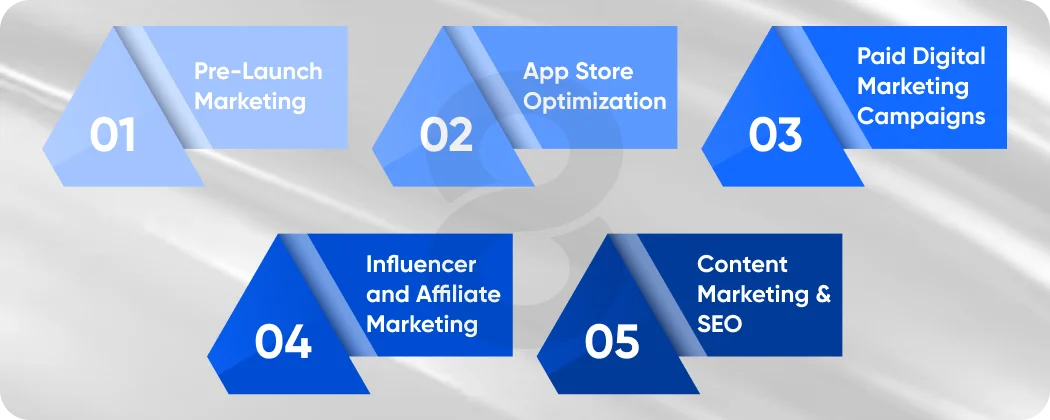
Starting a marketplace application such as Amazon is not simply a development story and marketing and acquiring users are colossal factors that lead to success. An elaborate marketing strategy will guarantee that your target market learns about the existence of the app, downloads it, and turns into an engaged user.
The cost of marketing will depend on your budget, plan, and size, but here is the breakdown of what you should expect:
1. Pre-Launch Marketing
Pre-launch marketing refers to creating awareness and excitement in the minds of people prior to the launch of the app. Strategies include:
Landing Page and Branding
Design a landing page where people can see the details of the application, subscribe to the updates, and have a preview.
- Estimated Cost: $500 – $2,000
Social Media Teasers and Campaigns
Begin posting the news about Instagram, Facebook, and LinkedIn to find the first followers.
- Approx Cost: $1,000 – $5,000
Email Marketing and Subscriber Collection
Gather early emails and mail teaser campaigns to prospective users.
- Estimated Cost: $500 – $2,000
Press/Influencer Outreach
Contact tech blogs, influencers, and communities (that are niche-specific) to publicize the new app.
- Approx Cost: $1,000 – $10,000
- Total Pre-Launch Cost: $3,000 – $19,000
2. App Store Optimization (ASO)
ASO is necessary to achieve the greatest exposure on application stores (Apple App Store and Google Play Store). This includes:
- Keyword optimization and research
- Convincing page name and description and images
- Good quality promotional video
- Promotion of first-time ratings and reviews
| ASO Component | Estimated Cost (USD) | Notes |
| Keyword Research & Optimization | $200 – $500 | Focus on “apps like Amazon,” “online shopping apps like Amazon” |
| App Description & Copywriting | $300 – $700 | SEO-friendly, conversion-focused |
| Screenshots & App Preview Video | $500 – $1,500 | Professional visuals improve install rate |
| Initial Ratings/Reviews Management | $200 – $500 | Helps rank in top charts |
Total ASO Cost: $1,200 – $3,200
3. Paid Digital Marketing Campaigns
The quickest method to reach the potential users is paid marketing. Common channels include:
- Google Ads & Google Shopping Campaigns: Reach users who are searching such apps as Amazon or products.
- Facebook & Instagram Ads: Hyper-target at the interests, demographics, and purchasing behaviors.
- YouTube Ads: Videos that show the functionality of the apps.
- Retargeting Ads: Reach out to users who entered the site or downloaded the app but were not interested in anything.
| Channel | Estimated Cost (USD) | Notes |
| Google Ads | $2,000 – $10,000/month | Keyword targeting for high-intent users |
| Facebook/Instagram Ads | $1,500 – $8,000/month | Targeted campaigns & retargeting |
| YouTube Ads | $1,000 – $5,000/month | Demo videos for engagement |
| Retargeting Ads | $500 – $3,000/month | Reduces churn & abandoned installs |
Paid Marketing Monthly Budget: $5,000- $26,000 and above, based on size.
4. Influencer and Affiliate Marketing
The influencers and affiliates can market your app to very active audiences, particularly in niche categories.
- Influencer Collaborations: Find social media influencers to advertise your application or feature certain products
- Estimated Cost: $500 – $20,000 per campaign
- Affiliate Marketing Programs: Pay affiliates on every new user or purchase they make
- Cost Estimate: Variable (Usually 5-15% sales commission)
- Strategic Effects: Influencer marketing enhances credibility, generates social proof, and accelerates the number of downloads
5. Content Marketing & SEO
Content marketing is organic and gains power in the long term. Strategies include:
- Posts on the topical material (e.g., “Top Online Shopping Apps Like Amazon”)
- How-to articles, product reviews, and product manuals
- Write guest posts on technology blogs or eCommerce blogs
| Content Type | Cost Range (USD) | Notes |
| Blog Posts | $100 – $500/post | SEO optimized for target keywords |
| Guest Posts | $200 – $1,000/post | Improves backlink authority |
| Video Tutorials | $500 – $2,500 | Builds trust & engagement |
Content Marketing Total: $1,000 -5,000 each month.
| Marketing Component | Estimated Cost (USD) |
| Pre-Launch Marketing | $3,000 – $19,000 |
| App Store Optimization (ASO) | $1,200 – $3,200 |
| Paid Digital Campaigns | $5,000 – $26,000+ / month |
| Influencer & Affiliate Marketing | $500 – $20,000+ per campaign |
| Content Marketing & SEO | $1,000 – $5,000 / month |
Overall cost to launch: $16,000 – $70,000 and up (depending on the level of marketing and area).
Key Insights:
- Marketing is essential as development: Still, even when you create a perfect Amazon clone, without eyeballs, it is not going to be a success.
- Go small, grow big: Start with specific campaigns, gauge ROI, and increase the marketing budget.
- Asset ASO and content: Organic traffic minimizes the use of paid campaigns in the long run.
- Influencers & affiliates: This works best when it comes to niche marketplaces or first traction.
Read More: How Much Does Shopify Cost – Pricing, Plans & Features Explained
Build, Launch, and Scale Your Marketplace with 8ration
Developing an app such as Amazon in the year 2026 is not only going to be an issue of coding but rather developing a scalable, secure, and interesting marketplace that effectively services its buyers, sellers, and administrators seamlessly. Based on the market research and prioritization of features, to UI/UX design and development, and marketing, every step has a keen effect on overall success and cost of your platform. You can be targeting a simple marketplace application or a fully-fledged Amazon clone application, complete with artificial intelligence-based recommendations, augmented reality visualization and advanced analytics, but there are certain reasons why you need to know how much the online shopping application will cost so that you can properly budget.
The performance, user experience, and profitability of your app are affected by the correct selection of technology stack, development team, and monetization strategy. By spending on marketing, App Store Optimization (ASO), and influencer campaigns, you will make sure that your app will get to the right audience and it will gain trust in the competitive market of online shopping applications, such as Amazon.
Read More: How to Build Apps Like Temu and Shein
At 8ration, we have a platform to create your own marketplace applications based on your business objectives, be it a one-vendor shop, a multi-vendor service, or a full-scale Amazon copy. Our team makes sure that all the projects are provided at a scalable speed, secure, and user-friendly ways to enable both startups and businesses to find their place in the digital marketplace arena.
By adopting an appropriate approach, design, and implementation, your marketplace application will be able to imitate the success of Amazon, attract an increasing audience, and succeed in the fast-growing eCommerce marketplace. Collaborate with 8ration and transform your vision of the marketplace into reality and be ahead in the competitive world of eCommerce.