


Tinder-like app development costs vary between $20,000 and $150,000+, based on your specific feature set.
Online dating has become a multi-billion-dollar business thanks to mobile innovation, AI algorithms and location-based technologies. As one of the most popular ones in the world, Tinder has transformed online relationships by introducing swipe-based dating and real-time matching. This kind of success made startups develop an app like Tinder and enter the dating ecosystem that grows at an alarming rate. According to Global Growth Insights, The global dating apps market is projected to grow from approximately $9.33 billion in 2025 to $14.92 billion by 2035, exhibiting steady demand for digital matchmaking platforms.
Yet, founders tend to inquire, “What does it cost to build an app such as Tinder?” It will depend on the features, technology stack used, the choice of platform, security architecture, and scalability. This guide is a breakdown of the real cost of development and technologies necessary in order to establish a successful dating platform.
Understanding Tinder’s Market Success
However, before getting into costs, it would be best to consider why Tinder has become such a phenomenon and what can be learned for your dating application venture.
Tinder by the Numbers
| Metric | Value |
| Total Users | 75+ million worldwide |
| Daily Active Users | 10+ million |
| Daily Swipes | 2+ billion |
| Total Matches Created | 60+ billion |
| Annual Revenue (2023) | $1.8 billion |
| Match Rate | Approximately 1.63% |
| Average User Session | 90 minutes daily |
What Makes Tinder Stand Out?
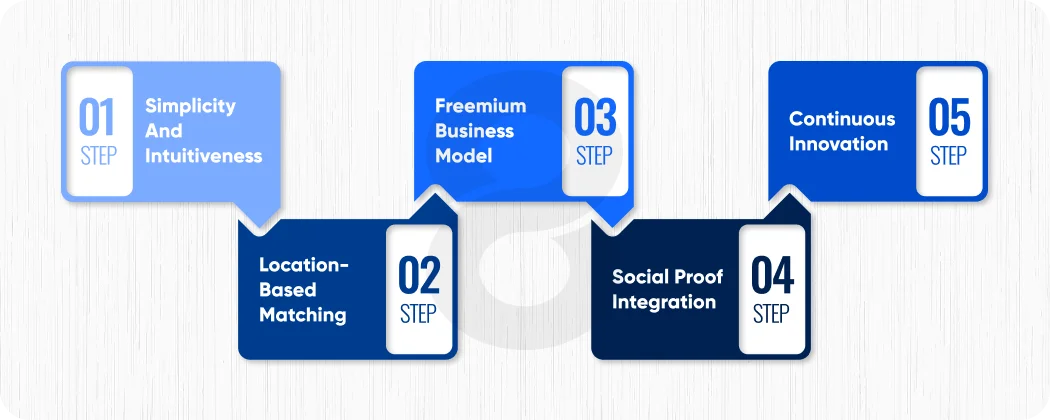
Tinder has succeeded because of a few major innovations that you can take into consideration in creating your dating application:
Simplicity and Intuitiveness
The swipe-right-to-like/swipe-left-to-pass system made dating zero-friction and gamified, which was the UX benchmark of any application of the type, such as Tinder, concerned with instant interaction.
Location-Based Matching
With the instant GPS capabilities, Tinder allows connectivity on a nearby level, which is more relevant in matches and more real, which is a crucial fourth requirement in creating a scalable Tinder-like app.
Freemium Business Model
The freemium business model of Tinder enables users to access the main functionalities of the application free of charge and monetize high-end services, which is a tested monetization technology that any successful application like Tinder should use.
Social Proof Integration
Facebook and Instagram will assist Tinder to enjoy increased user trust and reduce the occurrence of fake accounts, not to mention personalization that is crucial to consider when developing an authentic Tinder-like app.
Continuous Innovation
Tinder also implements new functions frequently, e.g., video calls, profile verification, or matching based on artificial intelligence to keep users interested and this is why innovation is the most important when it comes to scaling an app like Tinder.
Comprehensive Cost Breakdown: Building a Dating App Like Tinder
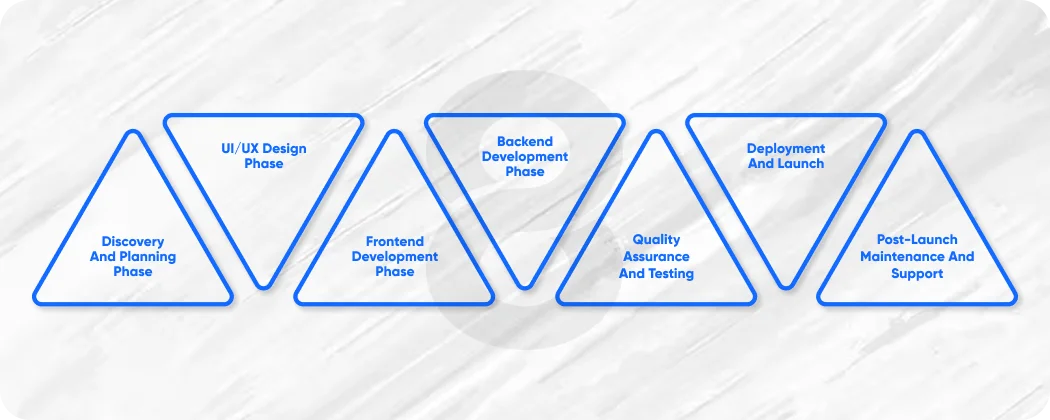
Developing a dating application such as Tinder has multiple cost elements, such as design, development, platform choice, backend platform development and maintenance that directly affect user experience, performance and scalability.
Initial Cost Estimate Overview
| App Complexity | Estimated Cost | Development Timeline |
| Basic MVP (Minimum Viable Product) | $40,000 – $80,000 | 3–4 months |
| Medium Complexity | $80,000 – $150,000 | 4–6 months |
| Advanced Platform (Tinder-level) | $150,000 – $300,000+ | 6–12 months |
Detailed Phase-by-Phase Cost Analysis
1. Discovery and Planning Phase
Cost Range: $5,000 – $15,000
This is the base level that involves a market study, competition, creation of user personas, and a technical feasibility analysis. It is a form of investment that will save on costly errors in the future.
Key Activities:
- Market research and competitive analysis
- User journey mapping
- Feature prioritization workshops
- Technical architecture planning
- Business model validation
2. UI/UX Design Phase
Cost Range: $8,000 – $25,000
The design has a direct influence on user retention and engagement. A good interface can be the reason a viral application becomes viral, and the user never looks at the application again.
Design Deliverables:
- Wireframes and prototypes
- High-fidelity mockups
- Interactive design systems
- Brand identity creation
- User flow diagrams
- Responsive design for multiple devices
Design Considerations:
- Modern, clean aesthetic that appeals to your target demographic
- Smooth animations and transitions
- Accessibility compliance
- Dark mode support
- Intuitive navigation patterns
3. Frontend Development Phase
Cost Range: $15,000 – $50,000
Frontend development is the development of the back-end that the user interacts with in your dating application on a variety of devices.
Platform Options:
| Platform | Development Cost | Market Reach | Notes |
| iOS Only | $15,000 – $35,000 | 27% market share (US) | Higher ARPU, affluent demographics |
| Android Only | $15,000 – $35,000 | 72% market share (global) | Larger user base, emerging markets |
| Both Platforms (Native) | $30,000 – $70,000 | Complete market coverage | Best performance, highest cost |
| Cross-Platform (React Native / Flutter) | $20,000 – $45,000 | Complete market coverage | Cost-effective, good performance |
4. Backend Development Phase
Cost Range: $25,000 – $70,000
The backend is the powerhouse behind your dating app, which will identify users, manage their profiles, handle matchmaking theories, provide real-time chat, and manage storage.
Backend Components:
- RESTful API development
- Database architecture and optimization
- Server configuration and management
- Cloud infrastructure setup (AWS, Google Cloud, or Azure)
- Matching algorithm implementation
- Real-time messaging system
- Push notification service
- Payment gateway integration
- Admin panel development
5. Quality Assurance and Testing
Cost Range: $8,000 – $20,000
Extensive testing makes sure that your application is flawless on any device, operating system, and network setup.
Testing Types:
- Functional testing
- Performance testing
- Security testing
- Usability testing
- Compatibility testing
- Load testing
- Beta testing with real users
6. Deployment and Launch
Cost Range: $3,000 – $8,000
Launch Activities:
- App Store submission and optimization
- Google Play Store submission
- Server deployment
- SSL certificate installation
- DNS configuration
- Analytics integration
- Initial marketing campaigns
7. Post-Launch Maintenance and Support
Ongoing Cost: $10,000 – $30,000 annually
Maintenance is necessary and not optional because it helps to ensure your app is competitive and functional.
Maintenance Includes:
- Bug fixes and patches
- OS compatibility updates
- Security updates
- Performance optimization
- Feature enhancements
- Customer support
- Server monitoring and scaling
Read More: 30 Top Apps Like Lemon8 to Spark Ideas for Your Next Lifestyle App
Core Features Required to Build an App Like Tinder
The feature set is decisive in terms of the cost of development. Critical and innovative features are broken down below.
1. User Registration & Authentication
- Phone number / email signup
- Social login (Google, Facebook, Apple)
- OTP verification
- Profile creation with photos and bio
2. Geolocation-Based Matching
- GPS-based user discovery
- Radius-based search filters
- Real-time location updates
3. Swipe-Based Matching Mechanism
- Right swipe (like)
- Left swipe (pass)
- Match logic when two users like each other
It is the swipe algorithm that is the main UX differentiator of any Tinder-like application.
4. Real-Time Chat & Messaging
- In-app messaging
- Read receipts
- Emojis, GIFs, and media sharing
- Push notifications
5. AI-Powered Matchmaking (Advanced)
- Behavioral analysis
- Preference learning
- Match score ranking
Advanced Features That Increase Dating App Development Cost
High-tech functionality is gaining relevance to remain competitive with modern apps like Tinder.
- AI-based profile recommendations
- Video calling and voice notes
- Profile verification using AI
- Subscription management
- In-app purchases
- Admin dashboard and analytics
- Content moderation and reporting system
They are major improvements to the overall cost of developing dating app solutions at scale.
Read More: Top 40 Apps Like Telegram for Inspiration
Technology Stack for Tinder-Like App Development
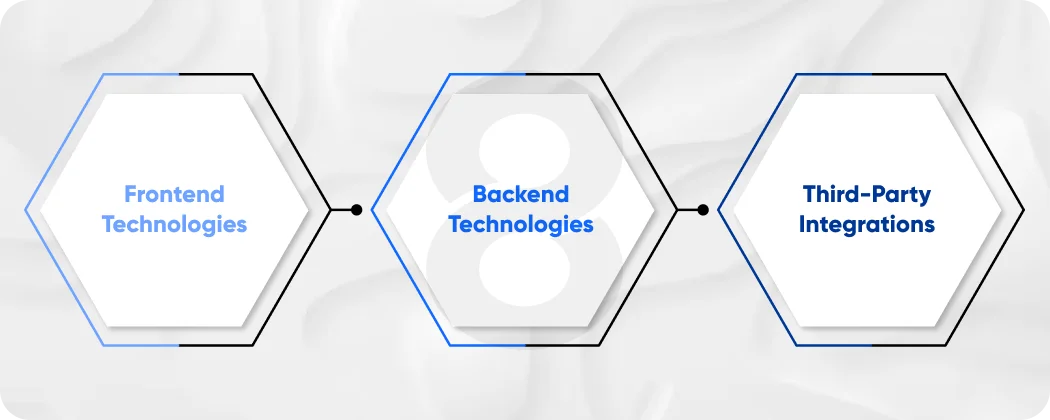
The selection of the technology stack has a direct influence on the cost of development, performance of the application, scalability in the long term, security, complexity of maintenance, integration flexibility, and the overall flexibility needed to accommodate future upgrades in features as well as provide future scale.
Market Coverage
The selection of the appropriate frontend technology will provide the best in terms of performance, scalability, and user experience and also balances speed of development, compatibility with platforms, and long-term maintenance of the modern mobile application.
| Platform | Primary Language | Framework | Advantages |
| iOS Native | Swift | UIKit, SwiftUI | Best performance, native features |
| Android Native | Kotlin | Jetpack Compose | Best performance, native features |
| Cross-Platform | Dart | Flutter | Single codebase, fast development |
| Cross-Platform | JavaScript | React Native | Large community, code reusability |
Backend Technologies
The selection of appropriate backend technologies will guarantee scalability, real-time application, safe payment, and effortless data management of a Tinder-like application.
| Component | Recommended Technologies | Why |
| Server Framework | Node.js, Django, Ruby on Rails | Scalability and performance |
| Database | MongoDB, PostgreSQL, Firebase | Flexible data structures |
| Real-time Messaging | Socket.io, Firebase Realtime Database | Instant message delivery |
| Cloud Infrastructure | AWS, Google Cloud Platform, Azure | Reliability and scalability |
| Storage | Amazon S3, Google Cloud Storage | Media file management |
| Push Notifications | Firebase Cloud Messaging, OneSignal | Cross-platform support |
| Payment Processing | Stripe, PayPal, Braintree | Secure transactions |
| Analytics | Google Analytics, Mixpanel, Amplitude | User behavior tracking |
Third-Party Integrations
The addition of third-party services facilitates the process of creating the app by incorporating geolocation, social login, video chat, SMS checking, email, picture processing, and machine learning capabilities in a streamlined and secure way.
| Service Type | Provider Options | Purpose |
| Geolocation | Google Maps API, Mapbox | Location services |
| Social Media | Facebook SDK, Instagram API | Social login and profile sync |
| Video Chat | Twilio, Agora, WebRTC | Video calling functionality |
| SMS/OTP | Twilio, Nexmo | Phone verification |
| Email Service | SendGrid, Mailgun | Transactional emails |
| Image Processing | Cloudinary, Imgix | Photo optimization |
| Machine Learning | TensorFlow, AWS SageMaker | Recommendation engine |
According to GlobeNewsWire, projections indicate that by 2032, the online dating application market could reach $15.56 billion, reflecting continued expansion driven by AI integration and mobile innovation.
Factors Affecting Development Costs
The cost of developing an app like Tinder is determined by several variables, such as the choice of a specific platform, the complexity of features, the design of the user interface and user experience, the back-end infrastructure, and the dev strategy to provide the user with a smooth experience and ensure high performance and scalability.
Geographic Location of Development Team
The cost of developing an app similar to Tinder greatly depends on the location, and North America has the highest cost, whereas Asia has the least expensive options.
| Region | Hourly Rate Range | Total Project Cost (Medium Complexity) |
| North America | $100 – $200/hour | $150,000 – $300,000 |
| Western Europe | $80 – $150/hour | $120,000 – $225,000 |
| Eastern Europe | $40 – $80/hour | $60,000 – $120,000 |
| Asia (India, Philippines) | $25 – $50/hour | $37,500 – $75,000 |
Development Approach
In-House Team
- Pros: Complete control, better communication, company culture alignment
- Cons: Highest cost, long hiring process, overhead expenses
- Best For: Large companies with ongoing development needs
Freelancers
- Pros: Lower cost, flexibility, specialized skills
- Cons: Coordination challenges, quality inconsistencies, reliability issues
- Best For: Small projects, specific feature development
Development Agency
- Pros: Complete team, proven processes, accountability, faster delivery
- Cons: Higher cost than freelancers, potential communication barriers
- Best For: Startups and businesses seeking reliable, quality development
Hybrid Approach
- Pros: Cost optimization, skill diversity, scalability
- Cons: Management complexity, coordination overhead
- Best For: Medium to large projects with varied requirements
Platform Selection Impact
The choice of platform affects cost, market and user experience. The suggested approach to start-ups is to balance budget and target which consists of selecting iOS, Android, both native, or cross-platform, depending on the goals.
| Strategy | Cost Impact | Market Coverage | Recommendation |
| iOS First | Lower initial cost | 27% US market | Target premium users first |
| Android First | Lower initial cost | 72% global market | Focus on volume and emerging markets |
| Both Native | Highest cost | 100% coverage | Maximum performance and features |
| Cross-Platform | Moderate cost | 100% coverage | Balanced approach for MVPs |
Read More: 50 Apps Like Instagram to Inspire Your Next Social App
Step-by-Step Development Process for an App Like Tinder
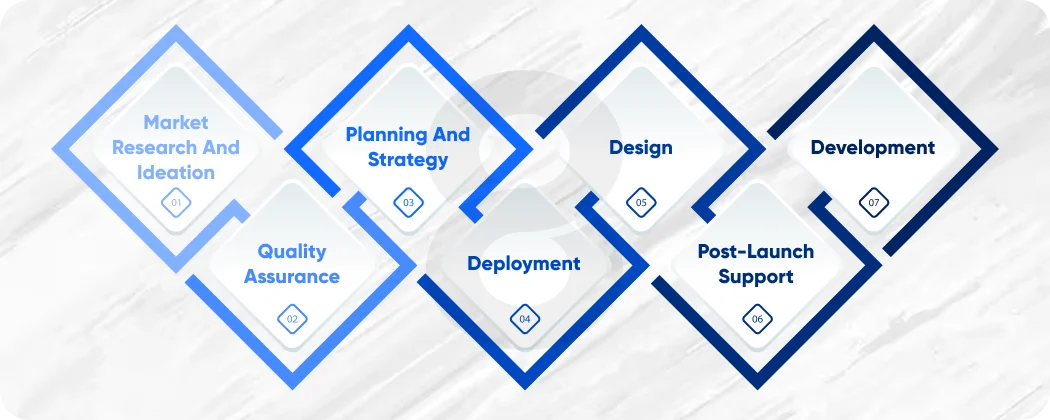
To create an app like Tinder, a thorough planning procedure, technical knowledge, and a user-centric mentality are required. From research to deployment, each step will ensure your app, which is Tinder, will be engaging, scalable, and streamlined in the creation of iOS-Android and cross-platform apps.
Phase 1: Market Research and Ideation (2-4 weeks)
Decipher the market of dating apps, define who your audience is, and research the competition. Authenticate demand to establish feature priorities, value proposition, and development objectives. This will make sure your Tinder-like app will satisfy the users and make it outstanding on day one.
Phase 2: Planning and Strategy (2-3 weeks)
Determine project scope, architecture, schedules, and resources. Strategic planning, risk assessment, and sprint scheduling simplify the development process, maintain the progress of your own Tinder-like application, keep it efficient, scalable, and within the budget, and allow developers to work on the core features.
Phase 3: Design (4-6 weeks)
Design wireframes, prototypes of high fidelity, and interactive prototypes. Consider usability, navigational gestures, and branding. An effective Tinder-like application will enhance the level of user activity, retention, and experience, and have an attractive and intuitive interface.
Phase 4: Development (12-20 weeks)
Make basic and more advanced functionality, such as authentication, chat, matching algorithms, and subscriptions. Native development for iOS and Android, or cross-platform, should be used to bring a pleasant performance and full functionality. A Tinder-like application that is ready to be used in the real world.
Phase 5: Quality Assurance (3-4 weeks, parallel)
Perform functional, performance, security, and compatibility testing. Carry out user acceptance tests to prove features. QA will help you have the confidence that your Tinder app clone will perform well during load, which will result in a comfortable, secure, and enjoyable experience for all of your users.
Phase 6: Deployment (1-2 weeks)
Get ready to launch through App Store Optimization, beta testing and server setup. Monitoring and support tools should be configured to identify performance and problems in order to ensure a refined Tinder-like experience that will maximize initial adoption and user satisfaction.
Phase 7: Post-Launch Support (Ongoing)
Track performance, receive feedback, and make updates. Keep, develop, and improve your Tinder-style application with new features and bugs so that users are satisfied in the long term and keep up with the competitive environment of the ever-evolving dating apps market.
Monetization Models for Tinder-Like Apps
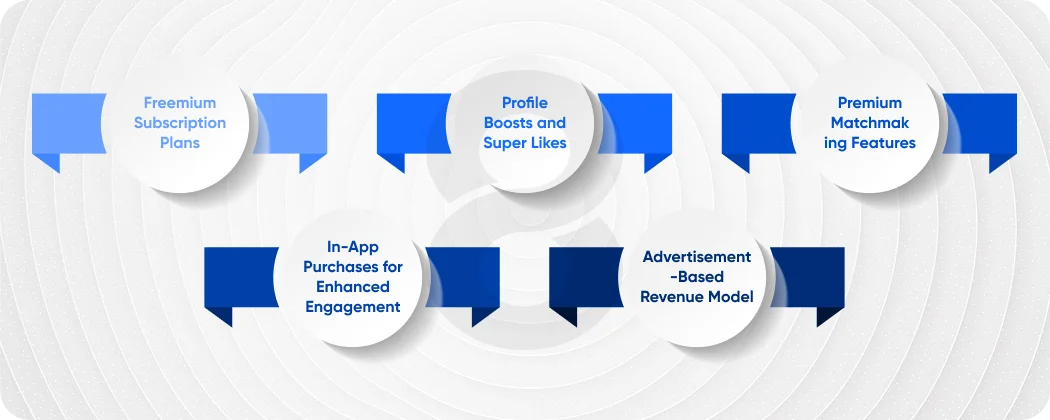
An effectively thought-out approach to monetization can assist an app like Tinder in recovering the expenses of its development in a shorter period of time and providing a range of value-based premium experiences that would motivate users to pay and stay engaged in the platform in the long term and ultimately earn repeat revenue.
| Monetization Model | Description | Revenue Potential |
| Freemium Subscriptions | Free access with paid premium tiers | High |
| In-App Purchases | One-time purchases for extra features | Medium–High |
| Profile Boosts & Super Likes | Increased visibility and priority matching | High |
| Advertisements | Display and native ads for free users | Medium |
| Premium Matchmaking | AI-driven advanced match suggestions | High |
Freemium Subscription Plans
Freemiums are also one of the most efficient monetization techniques in the development of dating apps, as they enable users to use the basic functionality free of charge and upgrade to the premium plans to ensure stable monthly revenue.
In-App Purchases for Enhanced Engagement
The in-app purchase allows the user to purchase particular services such as rewinds or boosts to build dating app platforms that not only monetize user intent but also do not push long-term subscriptions.
Profile Boosts and Super Likes
The profile boosts and super likes improve the visibility and match rates; they are high-performing revenue generators in applications such as Tinder because they exploit the urgency and exclusivity as well as the user psychology.
Advertisement-Based Revenue Model
Advertisements can also be used to make money off the non-paying users; banners or native advertisements provide a scalable alternative to a startup trying to figure out how to make an application akin to Tinder without restricting the free users.
Premium Matchmaking Features
The matchmaking product focuses on providing the richest matches using an AI algorithm and behavioral data and offers advanced features as a paid upgrade within a high-tech Tinder-like application ecosystem.
Read More: Top 35 Apps Like TikTok for Adults – Launch Your Own Short-Video App
Realistic Development Timeline
The knowledge of a realistic Tinder-like app development timeline would be essential to budgeting, resource planning, and setting expectations. A clear plan guarantees effective implementation of research and design for testing, beta launch, and official launch.
| Phase | Duration | Activities |
| Research & Planning | 3-4 weeks | Market research, competitor analysis, feature definition |
| Design | 4-6 weeks | Wireframing, UI design, prototyping, user testing |
| MVP Development | 12-16 weeks | Core feature development, backend setup, basic testing |
| Testing & QA | 3-4 weeks | Comprehensive testing across devices and scenarios |
| Beta Launch | 2-4 weeks | Limited user testing, feedback collection, refinements |
| Official Launch | 1-2 weeks | App store submission, marketing campaign launch |
| Total Timeline | 25-36 weeks | 6-9 months from concept to launch |
Case Studies That Showcase Our Dating App Expertise
Our case studies feature an example of how 8ration transforms radical concepts into scalable, user-friendly mobile applications, which bring a sense of purpose, powerful interaction, and demonstrated proficiency in building dating apps and tailor-made matchmaking websites.
Word of Mouth
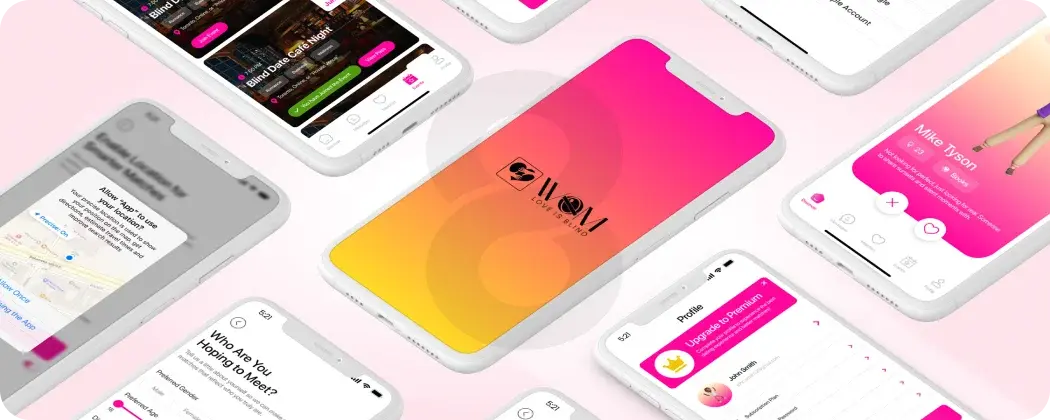
Word of Mouth focuses on transforming the dating experience, putting personality and connection above looks to create more meaningful interactions with users. 8ration has introduced its own innovative mobile dating with compatibility-based matching, progressive profile unveils and rich in-real-time chat capabilities.
Circle Track Connections
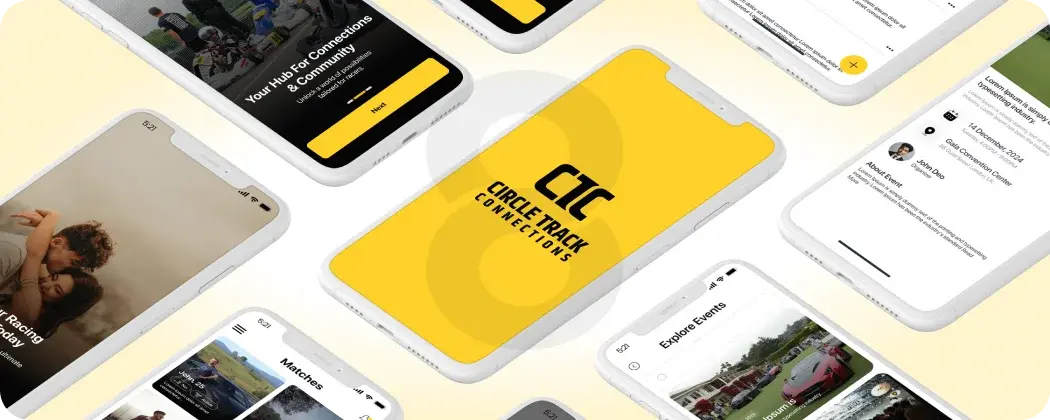
Circle Track Connections is a dating app that combines community connections with dating by providing a dedicated app through which 8ration created an intelligent matching system, messaging with high-quality and a user experience that is easy to use and navigate, specifically for motorsport fanatics.
These case studies are a response to our desire to create bespoke experiences that appeal to target users, create engagement, and deepen our business focus on creating customized platforms, in particular, when you are willing to build dating app solutions with actual user impact.
Why Choose a Professional App Development Company?
A professional app development company is a good alternative, as it would guarantee technical perfection, quicker scaling, and a solid security system, and also strategic advice that is needed to develop and launch a competitive application such as Tinder.
1. Scalable Architecture for Long-Term Growth
An expert app development team develops scalable systems that can handle user acceleration, real-time, and future feature additions without compromising the system and needless re-betas of the system.
2. Enterprise-Grade Security & Data Protection
The highly trained groups also have superior security measures in place, database encryption, and frameworks that are compliant, which are necessary in the creation of dating apps so that sensitive user information is not compromised and accessed by unauthorized individuals.
3. Optimized Performance Across Platforms
Having experience in Android and iOS app development, professional developers optimize performance and minimize latency and provide a smooth swipe-based experience between devices and operating systems.
4. Cross-Platform Development Expertise
Using cross-platform app development technologies such as Flutter or React Native, professional agencies save time and cost and ensure the same UI/UX across various platforms.
5. Strategic Product Guidance & Ongoing Support
In addition to the coding, knowledgeable teams also steer businesses on creating an application such as Tinder, providing insights about the market, prioritizing features, maintenance after launch, and constant optimization of performance.
Why 8ration Is the Right Partner to Build Your App Like Tinder
At 8ration, we also focus on creating scalable, secure, and high-performance digital products, which match the changing user behaviors. As a leading company in terms of dating app development, this fact allows us to create smart matching systems, powerful back-end systems, and cross-platform user experiences.
From workshops on discovery to post-launch optimization, our engineers make sure that your application, such as Tinder, is designed to grow, monetize, and succeed. We create ideas into market-ready apps, using cross-platform, iOS, and Android app development, which are one in a competitive dating market.
Read More: 20 Popular Dating Apps in 2026: Ideas for Your Next Social App
Final Thoughts!
Creating an app like Tinder is a somewhat decent investment, though it has enormous returns in the long run when done right. The total cost will depend on the complexity of features, platform, technology stack, and development skills. Whether it is ideation or UI/UX, backend scalability or monetization, every choice has a budget and success consideration.
To achieve the same level of success as the making of a Tinder-like app, having a team of experts ensures a short time to market, a reduced amount of risk, and a scalable product. It can be very profitable, not just to develop a successful dating platform, but it is also possible when it is done with a proper strategy, technology, and implementation.