Launch day is supposed to feel like a finish line. Months of wireframes, sprint reviews, late-night bug fixes, and stakeholder sign-offs. And then suddenly the app is either going into the world or it isn’t.
That pressure makes it easy to just pick a date and push everything live at once. But the decision between a soft launch vs hard launch for apps shapes more than just the first week of downloads. It determines whether users stick around, whether the team has space to fix what is broken before it becomes a public problem, and whether the marketing budget has any shot at converting installs into actual engagement.
A soft launch releases the app to a limited audience first. A regional market. A beta group. An invite only waitlist. The goal isn’t scale. The goal is learning. A hard launch goes to the full market on day one, backed by paid campaigns, PR, app store optimization, and as much coordinated noise as the team can produce. The goal there is reach, and fast.
Neither approach is wrong. The right choice depends on how proven the product is, how much budget can absorb a rough first impression, and honestly, how honest the team is being about what still needs work.
Read More: How to Promote Your App in 2026: 10 Proven Growth Strategies
The Core Difference Between a Soft Launch and a Hard Launch
Think of it as the difference between a dress rehearsal and opening night. One has a forgiving audience. The other has critics in the front row.
A soft launch is a controlled release with real users but without a full marketing push. The app is live, but visible only to a smaller group, so the team can observe real behavior, catch what internal QA missed, and improve the product before committing full budget.
A hard launch is the official full market release. The app is ready, the campaign is coordinated, and the goal is maximum visibility from day one. Everything launches together: paid ads, influencer campaigns, app store listings, email announcements, and PR.
| Factor | Soft Launch | Hard Launch |
|---|---|---|
| Audience | Limited Group, Beta Users or a Single Region | Full Target Market |
| Primary Goal | Test, Validate & Improve | Maximum Reach & Installs |
| Marketing Spend | Minimal & Controlled | Full Campaign Budget |
| Risk Exposure | Lower (Errors Stay Contained) | Higher (Issues Are Public Immediately) |
| App Store Rating Risk | Manageable Before Scaling | High if Bugs Are Live on Launch Day |
| Speed to Scale | Gradual | Immediate |
| Best Suited For | MVPs, Unproven Markets & Early Retention Testing | Polished Products with Validated Retention |
The core soft launch and hard launch difference comes down to what gets prioritized. Learning or momentum. In the best case, a team gets both. Just not at the same time.
Read More: How to Build a Successful Mobile Application Deployment Strategy
When a Soft Launch Is the Smarter Call
Some app teams treat a soft launch like a sign of low confidence. It isn’t. Facebook launched exclusively to Harvard students. WhatsApp ran on iOS only before opening to the world. Dropbox validated demand with a product demo video before writing most of the code. Those were not cautious moves. They were calculated ones.
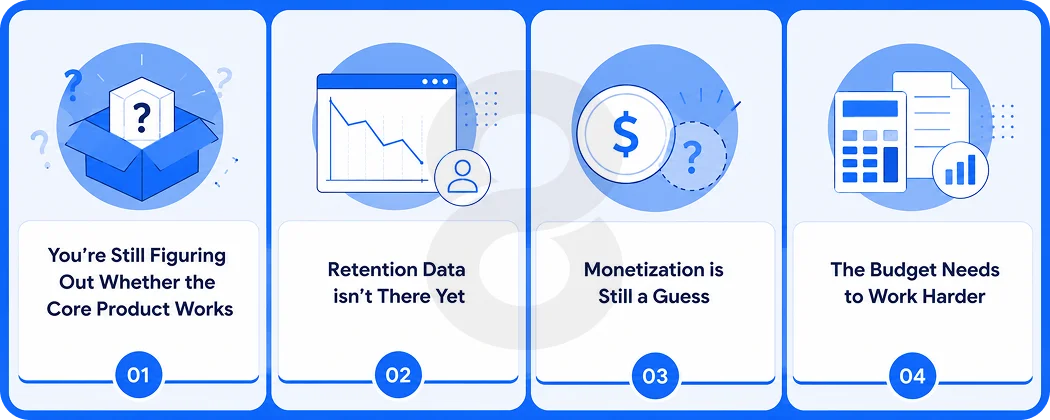
You’re Still Figuring Out Whether the Core Product Works
If the app is an MVP, the soft launch isn’t optional. The entire point of a minimum viable product is to test whether the core idea solves a real problem for real users. Releasing to the full market before that learning exists is just spending money to confirm assumptions.
And the cost of being wrong mid hard launch is severe. Negative reviews stick. App store ratings drop fast. Users who bounce after a confusing first session rarely come back, regardless of how good the update two weeks later turns out to be.
Read More: MVP Vs Full Product On-Demand App Strategy: Which One Saves More Money?
Retention Data isn’t There Yet
According to Adjust’s research on soft launch strategies, the average 90-day retention rate for mobile apps sits at 25%. That’s the floor, not the goal. If early testing shows users aren’t returning past day seven, more downloads don’t solve that problem. They amplify it.
A soft launch gives the team space to work on onboarding, fix the flow that’s losing people on day two, and improve the core experience before acquisition spend kicks in.
Monetization is Still a Guess
In-app purchases, subscriptions, freemium tiers, commission models. If the team hasn’t confirmed which structure users actually convert on, a soft launch provides the data to settle that question without burning the full ad budget on a pricing model that doesn’t stick.
A few weeks of real user behavior in a test market tells more about willingness to pay than any internal estimate.
Read More: Top 15 Mobile App Monetization Strategies for 2026 (Beyond Just Ads)
The Budget Needs to Work Harder
Early in-app engagement can reduce user acquisition costs by up to 90%, because it costs significantly less to retain an existing user than to acquire a new one. A soft launch protects the budget by improving the product before the spend begins. Every dollar saved on fixing avoidable problems during a limited release is a dollar available for the hard launch that follows.
Read More: Top 100 App Ideas for Mobile in 2026: Launch Your Million-Dollar App
When a Soft Launch Makes Sense
| Situation | Why It Helps |
|---|---|
| App Is an MVP or Early Version | Validates the Core Product Before Significant Marketing Spend |
| Retention Data Is Weak | Identifies and Fixes Drop-off Points Before Scaling |
| Monetization Model Is Untested | Tests Pricing Strategies Without Wasting User Acquisition Budget |
| Budget Is Limited | Reduces Wasted Spending on a Product That Isn’t Ready |
| Entering a New Market or Audience Segment | Tests Real User Behavior Before Heavy Investment |
| App Store Ratings Not Yet Established | Builds Early Reviews and Credibility with Lower Public Risk |
When a Hard Launch Actually Makes Sense
A hard launch isn’t for fearless founders. It’s for the prepared ones. Meta’s Threads crossed 100 million sign-ups in five days. Disney+ hit 10 million subscribers on day one. Pokemon GO set App Store records for first-week downloads.
None of those succeeded because the teams went big on launch. They succeeded because the product, the audience, and the timing were all aligned at the same moment.
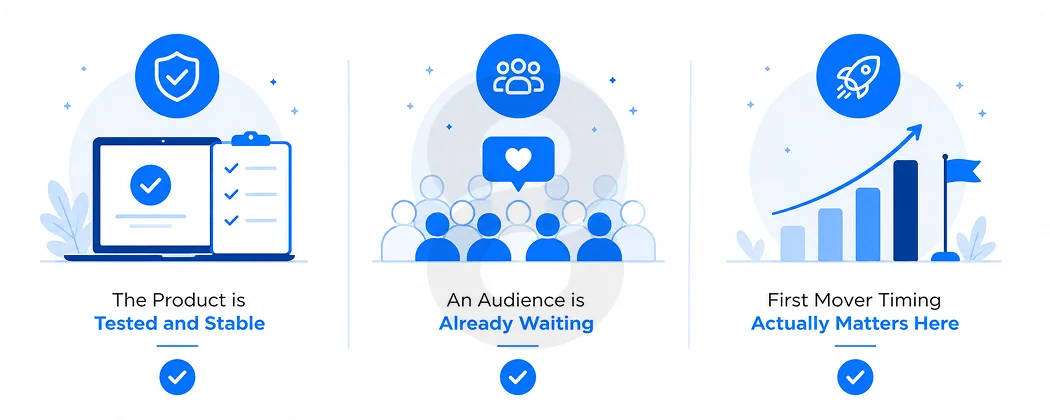
The Product is Tested and Stable
A hard launch with a broken product isn’t bold. It’s expensive. FullStory’s 2025 Mobile App Trends data shows that error-related session exits jumped by 254% from 2024 to 2025, and bounce rates climbed 54% year over year. Users are less tolerant of friction than at any point in mobile history. A broken first experience doesn’t just lose a user. It earns a one-star review that stays visible for months.
The product needs to clear QA, performance testing, crash monitoring, and real device testing before going to the full market. If it hasn’t, the hard launch becomes a public stress test on a product that wasn’t ready for it.
An Audience is Already Waiting
A waitlist. A customer base from a previous product. A social following. A community built around the problem the app solves. If that audience exists before launch day, a hard launch converts existing demand fast.
Tinder hard launched at a college birthday party. The marketing team funded the event on the condition that every guest download the app before entering. That strategy worked because the audience was already in the room. The app didn’t need to go looking for its first users.
First Mover Timing Actually Matters Here
In crowded categories, arriving second and visible is fine. Arriving second and invisible is a problem. A well-planned hard launch creates market positioning before competitors have time to respond, especially in fast-moving sectors like fintech software platforms, health tech, and social apps. That window is real and often short.
When a Hard Launch Makes Sense
| Situation | Why It Works |
|---|---|
| Product Is Stable and Fully Tested | Ready for Public Scrutiny from Day One |
| Audience Is Already Waiting | Converts Existing Demand into Immediate Installs |
| Market Is Time-Sensitive | Gets Ahead of Competitors or Seasonal Opportunities |
| Previous Soft Launch Data Is Strong | Scales Proven Strategies with Greater Confidence |
| Strong Brand Recognition Exists | Leverages Brand Trust to Drive More Installs |
| Campaign Assets, PR & ASO Are Ready | Turns the Launch into a Coordinated Marketing Event |
The Hybrid Strategy Most Successful Apps Actually Use
Here’s something that rarely gets said clearly enough. The soft launch vs hard launch for apps debate is partially a false choice. The apps that scale consistently don’t pick one strategy and commit to it permanently. They sequence them.
Soft launch first, to validate. Hard launch after, to scale. This sounds simple because it is. What makes it hard is discipline, specifically the discipline to not rush the second phase before the first phase has done its job.
What the Phased Approach Looks Like in Practice
The first few weeks involve a closed beta with invited users, usually internal testers, early subscribers, or a hand-picked beta group from the target audience. The team collects structured feedback, fixes breaking bugs, and refines the onboarding flow.
After the closed beta, the app opens in one or two test markets. Canada, Australia, and New Zealand are common choices for apps targeting US audiences. They share language and demographics but carry lower ad costs.
Gaming apps frequently test monetization mechanics in these markets first, because user behavior and spending patterns are close enough to the primary market to be predictive without requiring full campaign investment.
Read More: The Real Cost of App Maintenance: What Budget Percentage Should You Allocate?
This phase runs until the agreed benchmarks are hit. Day 30 retention, cost per install, onboarding completion rate, and monetization conversion all need to clear minimum thresholds before the hard launch proceeds. If they don’t, the team iterates. That’s the entire point of the soft launch window.
Once the numbers hold up, the hard launch follows with the remaining marketing budget intact. The team isn’t guessing anymore. They’re scaling a product that has already proven it can retain users.
Typical Hybrid Launch Timeline
| Phase | Duration | Goal |
|---|---|---|
| Closed Beta | Weeks 1–4 | Bug Fixes, Onboarding Feedback & Feature Validation |
| Geo-Limited Soft Launch | Weeks 5–12 | Real User Retention, Monetization Testing & CPI Data |
| Metric Gate Review | Before Hard Launch | Confirm Benchmarks Are Met Before Scaling |
| Full Hard Launch | From Week 13 Onward | Scale with a Validated Product & Remaining Budget |
The sequence converts the soft launch’s main weakness (slow growth) into the hard launch’s main strength (confidence). By the time the full release happens, the marketing budget isn’t funding a product experiment. It’s amplifying a product that already works.
Key Metrics That Tell You When to Scale
A soft launch without clear exit criteria is just a slow launch. The team needs specific numbers that signal when to move from the limited release to the full market rollout. Not gut feeling, investor pressure, and the sense that “users seem to like it.”
Apple’s phased release feature for App Store updates offers a useful model for thinking about controlled rollouts. The platform itself allows gradual distribution over a seven-day window with the option to pause if problems emerge.
It’s not a soft launch tool exactly, but the underlying logic is the same. Release to part of the audience, monitor for issues, then scale once stability is confirmed. That same mindset should govern the move from soft launch to hard launch.
Metrics to track before scaling
| Metric | What It Reveals | Target Before Hard Launch |
|---|---|---|
| Day 7 Retention | Whether Users Return After Their First Experience | 20%+ for Consumer Apps |
| Day 30 Retention | Early Engagement Sustainability | 15%+ as a Reasonable Baseline |
| Day 90 Retention | True Product-Market Fit Signal | 25%+ Before Full Scale |
| Onboarding Completion Rate | Whether Users Reach the Core Value | 60%+ for Most Categories |
| Crash Rate | Technical Stability Under Real Conditions | Below 1% on Primary Devices |
| App Store Rating | First Impression Credibility | 4.0 or Higher Before Hard Launch |
| Cost Per Install (CPI) | Marketing Efficiency in the Test Market | Below the Target Lifetime Value Threshold |
If these numbers aren’t hitting targets after 10 to 12 weeks of soft launch, the answer isn’t to push the hard launch on the original timeline. The answer is to keep iterating. Going public with weak retention data is the most expensive way to discover that onboarding is broken.
Read More: Mobile App Development Process: From Idea to Launch
How 8ration Helps You Plan and Execute the Right App Launch

Getting the launch sequence right isn’t just about picking a strategy on a spreadsheet. It’s about building the product with launch readiness baked in from week one. The analytics setup, the crash monitoring, the onboarding flow design, the app store assets, the retention loops. All of it needs to be in place before any user downloads the app.
8ration works with founders and product teams across the full build and launch cycle. The team designs mobile apps with retention mechanics built into the architecture from the start. Analytics are integrated early. Onboarding flows are tested during the soft launch window, not after the hard launch is live and generating reviews. App store assets are optimized before the full campaign begins.
Read More: How to Launch a Mobile App in 2026: A Strategy for Maximum Downloads and Growth
For eCommerce businesses where checkout conversion and monetization directly affect revenue from the first day, the launch strategy needs to account for monetization testing during soft launch. Running a hard launch on an untested payment flow is one of the more avoidable ways to waste a launch window.
For products built around personalization or recommendation engines, the retention strategy often runs through the core product feature set. Getting those mechanics right before scaling matters more than launch timing.
The approach is direct. Define what the product needs to prove during soft launch. Build toward those benchmarks. Then scale with data instead of hope.