



Most businesses use web-based applications every single day without really thinking about them that way. That is the interesting part. People usually imagine large enterprise systems or complicated platforms when they hear the term web application, but in reality, businesses rely on them constantly for operations that feel completely normal now.
All of those are web-based applications underneath the surface; modern businesses would struggle to operate efficiently without them now. That is exactly why the demand for scalable digital systems keeps growing aggressively across industries. Because businesses no longer compete only through products or services anymore. They compete through operational efficiency and user experience too.
That is where understanding strong examples of web-based applications becomes incredibly important for companies trying to modernize properly in 2026. Grand View Research forecasts the global enterprise software market will reach $750.03 billion by 2033, driven largely by increasing demand for automation, cloud infrastructure, AI integration, and data-driven operational systems
At 8ration, web-focused systems are usually designed around operational simplicity first because users adopt platforms more consistently when the experience feels natural instead of overly technical.
What Web-Based Applications Actually Mean in Practice
A lot of people overcomplicate this concept unnecessarily. A web-based application is simply software users access through browsers instead of installing traditionally onto devices. But modern web applications became much more advanced than simple websites now.
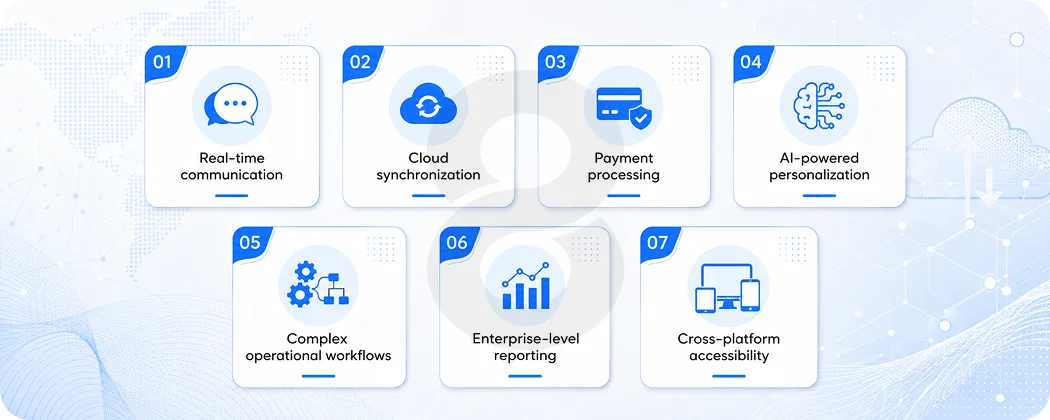
Today they support:
- Real-time communication
- Cloud synchronization
- Payment processing
- AI-powered personalization
- Complex operational workflows
- Enterprise-level reporting
- Cross-platform accessibility
That flexibility is exactly why businesses increasingly invest in scalable digital ecosystems instead of isolated software systems. Strong examples of web-based applications usually succeed because they improve accessibility without increasing operational friction. Moreover, convenience became one of the biggest competitive advantages across digital products now.
Read More: What to Ask Before You Sign a Web App Design Contract (Most Clients Skip These)
Why Businesses Prefer Web Applications More Than Traditional Software
This shift happened gradually. Earlier, businesses depended heavily on locally installed software systems.
That created problems constantly:
- Manual updates
- Device restrictions
- Difficult maintenance
- Limited accessibility
- Weak collaboration between teams
Web-based systems changed all of that significantly.
Now businesses can operate through:
- Browser accessibility
- Real-time updates
- Cloud infrastructure
- Cross-device usability
- Centralized data systems
That is exactly why stronger software development strategy now focuses heavily on scalable web environments instead of isolated offline systems. Because operational flexibility matters much more today than businesses expected even a few years ago.
Traditional Software vs Web-Based Applications
Area |
Traditional Software |
Web-Based Applications |
| Accessibility | Device dependent | Browser accessible |
| Updates | Manual installations | Automatic updates |
| Collaboration | Limited synchronization | Real-time teamwork |
| Scalability | Infrastructure limitations | Easier expansion |
| Maintenance | Higher operational overhead | Centralized management |
Real Examples of Web-Based Applications Businesses Use Daily
This is where things become much easier to understand practically. A lot of massive business platforms are web applications underneath.
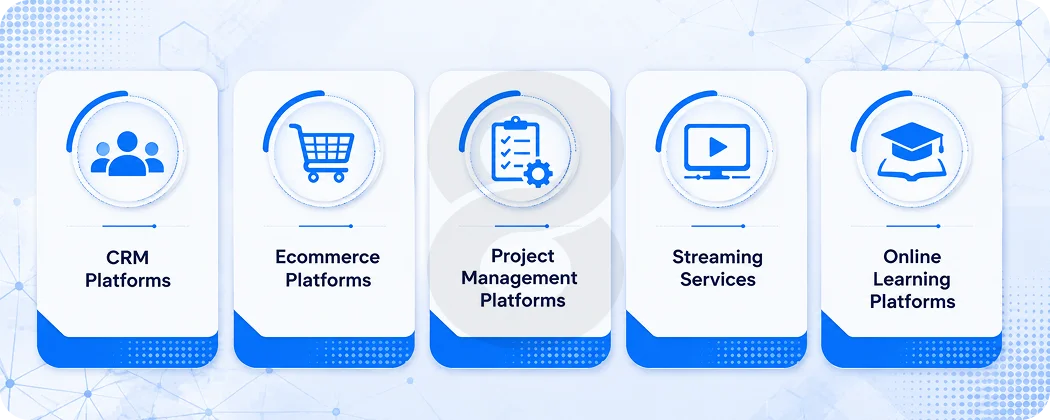
For example:
CRM Platforms
Businesses use CRM systems daily to manage customer relationships, sales operations, and reporting visibility. These systems help teams track interactions, automate workflows, and improve operational clarity significantly.
Ecommerce Platforms
Modern ecommerce environments rely heavily on scalable web architecture for inventory management, payment systems, customer engagement, and analytics visibility. This is also where stronger ecommerce app development increasingly overlaps with web application infrastructure directly.
Project Management Platforms
Businesses depend on collaborative platforms for communication, workflow tracking, task management, and operational coordination.
Streaming Services
Entertainment companies use advanced web systems to manage subscriptions, content delivery, personalization, and audience engagement simultaneously.
Online Learning Platforms
Education businesses now rely heavily on web applications for accessibility, user tracking, course delivery, and content scalability.
Strong examples of web-based applications usually solve operational problems while remaining easy for users to access consistently. And honestly, that balance matters much more than flashy features long term.
Read More: Web App Redesign Checklist: 10 Things to Demand from Your Design Agency
Why User Experience Quietly Determines Success
A lot of businesses still underestimate this badly. They focus heavily on functionality while ignoring how the system actually feels during usage. That creates major problems eventually.
For example:
- Navigation becomes confusing
- Dashboards feel overloaded
- Performance becomes inconsistent
- Workflows require too many steps
- Mobile usability suffers badly
And users rarely tolerate friction for very long anymore.
That is exactly why stronger enterprise app development strategy now focuses heavily on usability alongside technical scalability. Because modern users compare your platform against every smooth digital experience they already use daily.
Mobile Accessibility Changed Everything
This shift affected web applications massively. People no longer interact with platforms only through desktop environments consistently anymore.
Now users expect seamless experiences across:
- Phones
- Tablets
- Laptops
- Hybrid work environments
That is why stronger mobile app development strategy now directly influences web platform success too. Because businesses increasingly need ecosystems where mobile and browser experiences work together naturally instead of competing separately.
According to Statista, mobile internet traffic continues accounting for more than half of global web activity, showing how strongly digital behavior shifted toward mobile-first usage patterns.
That statistic matters because accessibility expectations continue increasing aggressively every year.
According to Statista, the global enterprise software market is projected to reach $403.9 billion by 2030, growing steadily as businesses continue shifting toward cloud-based operational systems and scalable web applications.
AI Is Quietly Becoming Standard Inside Web Applications
Most users probably do not even realize how much AI already shapes their digital experiences daily. Through proper AI development, modern web applications can now:
- Personalize recommendations
- Automate customer support
- Predict user behavior
- Improve operational workflows
- Reduce manual decision-making
And through structured AI integration, these systems improve usability quietly without making the experience feel robotic. That matters because businesses increasingly depend on smarter systems to manage growing operational complexity efficiently.
At 8ration, AI-supported web systems are usually introduced gradually so automation improves operational clarity without overwhelming users unnecessarily.
Why Scalability Matters Earlier Than Businesses Expect
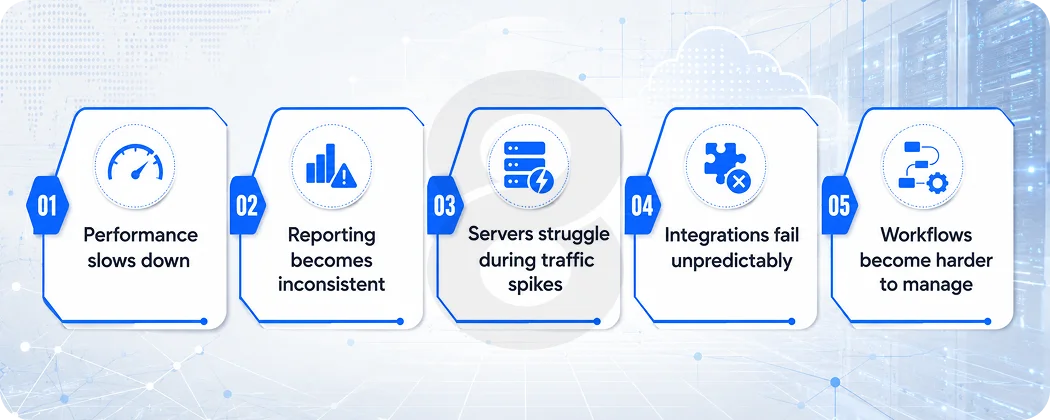
This problem appears constantly. A web application works perfectly during early growth stages.
Then usage increases slightly and suddenly:
- Performance slows down
- Reporting becomes inconsistent
- Servers struggle during traffic spikes
- Integrations fail unpredictably
- Workflows become harder to manage
That usually means the infrastructure underneath the application was never designed properly for long-term scale. This is exactly why stronger examples of web-based applications depend heavily on scalable architecture planning from the beginning.
Because rebuilding operational systems later becomes extremely expensive and disruptive. And growth pressure exposes weak infrastructure very quickly.
Read More: How to Build a Web App From Scratch: A Step-by-Step Guide for 2026
What Strong Web Applications Actually Improve
Business Area |
Improvement |
Why It Matters |
| Accessibility | Easier platform access | Better user engagement |
| Operations | Faster workflows | Higher efficiency |
| Collaboration | Real-time coordination | Improved productivity |
| Analytics | Better visibility | Smarter decision-making |
| Scalability | Easier growth support | Long-term operational stability |
Most Businesses Build the Wrong Thing Initially
This happens more often than companies realize. Businesses rush into development before understanding the operational problem clearly. That usually creates platforms overloaded with unnecessary functionality.
The better approach focuses first on:
- Workflow clarity
- User behavior
- Operational friction points
- Integration requirements
- Long-term scalability
Because strong examples of web-based applications are usually successful for one reason above everything else. They solve specific operational problems consistently. And simplicity usually scales better than feature overload long term.
Read More: 15 Top Web App Examples for Startups in 2026 (With Business Models Explained)
Why Integrations Became Critical for Modern Applications
Modern businesses no longer operate through isolated systems. Everything connects together now.
That includes:
- CRM environments
- Payment systems
- Marketing platforms
- Analytics dashboards
- Customer support systems
- Inventory tools
If those systems stay disconnected, operational inefficiency grows everywhere quietly. That is why integration architecture became one of the most important parts of modern web applications. Businesses often underestimate how much operational visibility improves once systems communicate properly.
How the 8ration Team Approaches Web-Based Applications
One thing the 8ration team focuses on heavily is operational realism. A lot of platforms look impressive visually but become frustrating during actual daily usage. That usually happens because the web application was designed around features instead of workflows.
Instead, the focus generally stays centered around:
- Workflow simplification
- Scalable backend systems
- AI-supported automation
- Mobile-first usability
- Cross-platform operational consistency
The goal is not simply building another digital product. The goal is creating systems people naturally continue using because the experience quietly reduces friction instead of creating more complexity. That difference affects adoption much more than businesses initially expect.
Read More: 10 Web Application Frameworks: Selecting the Best Tech for Your ROI
If Your Business Still Depends on Manual Coordination Everywhere, The System Is Probably Slowing Growth Already
A lot of businesses normalize operational inefficiencies because they develop gradually over time. Manual updates become normal. Spreadsheet coordination becomes normal. Disconnected workflows become normal. But those inefficiencies quietly reduce productivity, visibility, and scalability much more than companies initially realize.
Strong examples of web-based applications improve accessibility, workflow efficiency, automation, and operational clarity across the business consistently. And right now, that matters more than ever because digital expectations continue increasing aggressively across every industry.
Final Thoughts
Web applications are no longer optional operational tools for modern businesses. They became part of the infrastructure underneath how companies operate daily. Strong examples of web-based applications improve workflows, reduce operational friction, support scalability, and create experiences users actually want to keep using consistently.
The businesses succeeding long-term usually do not rely only on better products anymore. They are building stronger systems around those products, too. Because modern business growth increasingly depends on how efficiently the digital experience operates underneath everything else.