


Media companies are not really losing audiences because people have stopped watching content. People are still consuming more content than ever before. The real issue is that attention has become unstable and extremely selective now. Users jump between platforms, compare experiences instantly, and exit without thinking twice. If something feels slow, confusing, or slightly off, they just leave immediately.
This is where most companies underestimate the problem deeply and consistently. Because the issue is not only content, it is also the system behind it. That system is what we call media and entertainment software in practice.
The Real Reason Audiences Are Quietly Leaving Platforms
Most teams assume audiences leave because the content is not strong enough. That is only partially true and honestly not the main reason anymore. Users today care about how fast, smooth, and simple the experience feels overall.
Even great content loses value if the system around it feels broken. If buffering happens or navigation feels confusing, users mentally disconnect quickly. There is no waiting period anymore, people just switch platforms instantly.
What Is Actually Changing Behavior
- Users now compare platforms while actively using them
- Switching between apps takes almost zero effort today
- Attention spans are shorter because alternatives are everywhere
- Experience quality matters more than content volume in many cases
This is exactly where media and entertainment software becomes the real difference maker.
Why Traditional Media Systems Are Falling Behind Fast
A lot of media companies still run on older system thinking. Those systems were not built for today’s fast, interactive consumption behavior. They were built for controlled broadcasting, not constant user interaction.
Now users expect everything to be instant, personalized, and seamless. When systems fail to deliver that, engagement drops silently but steadily.
Common System Problems
- Slow content delivery that breaks viewing flow
- Inconsistent UI across mobile, web, and TV devices
- Weak recommendation engines that feel random
- Disconnected user history across platforms
Even a small delay in loading can reduce engagement significantly over time. That is not about content quality, that is about system performance quality.
Modern users do not tolerate friction, even if the content is good.
That expectation shift is already permanent now.
Read More: 10 Proven App Marketing Strategies for 2026
What Users Actually Expect From Media Platforms Today
Users are not passive anymore, they behave more like active selectors. They expect platforms to understand them without forcing extra effort. And they expect everything to feel smooth without interruptions or confusion.
If they cannot find something quickly, they move on instantly. If recommendations feel irrelevant, trust in the platform drops immediately.
Real Expectations From Users
- Instant playback without loading friction or delays
- Recommendations that actually match their taste closely
- Smooth switching between different content types
- Clean navigation that does not require thinking
This is where streaming media and entertainment software quietly decides everything.
Read More: Top 10 CRM Software Platforms of 2026
Why Media And Entertainment Software Is The Core Problem
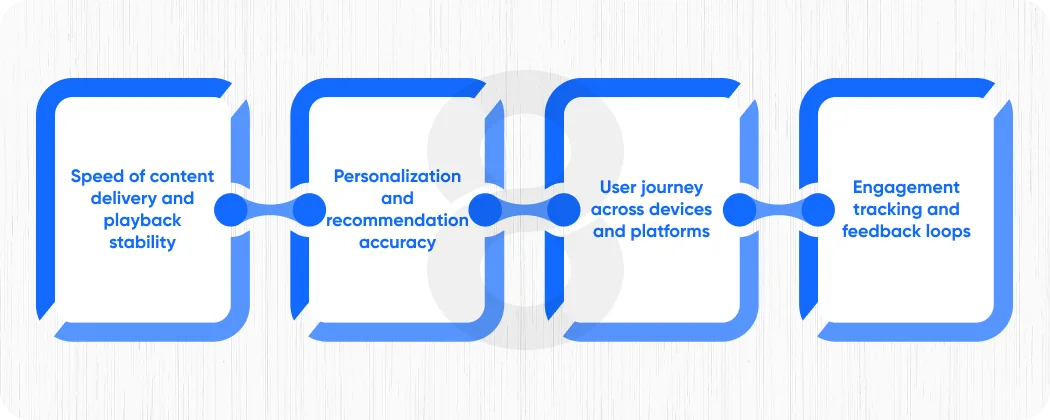
The content is usually not the main issue in most cases. The real gap lies in how content is delivered and experienced. Media and entertainment software systems control that delivery layer.
When the system is strong, content feels naturally more engaging. When the system is weak, even good content feels less interesting.
What It Actually Controls
- Speed of content delivery and playback stability
- Personalization and recommendation accuracy
- User journey across devices and platforms
- Engagement tracking and feedback loops
The same content performs differently depending on the system behind it.
That is something most companies only realize after losing users.
Read More: Pricing Models for Software Services: Fixed vs. Hourly Rates Explained
Engagement Drops Even When Content Quality Is High
A common mistake is assuming more content equals more engagement. But users do not want more content, they want better relevance. If discovery is poor, content never even gets a fair chance.
So the problem becomes visibility, not availability. If users cannot quickly find something they like, they leave.
Where Engagement Breaks
- Poor recommendation engines are showing unrelated content
- Weak search systems that do not help discovery
- No connection between viewing history and suggestions
- Lack of personalization across devices
This is again where media and entertainment software play a central role.
Read More: What is a Proof of Concept in Software Development
Experience Is Now The Real Competitive Advantage
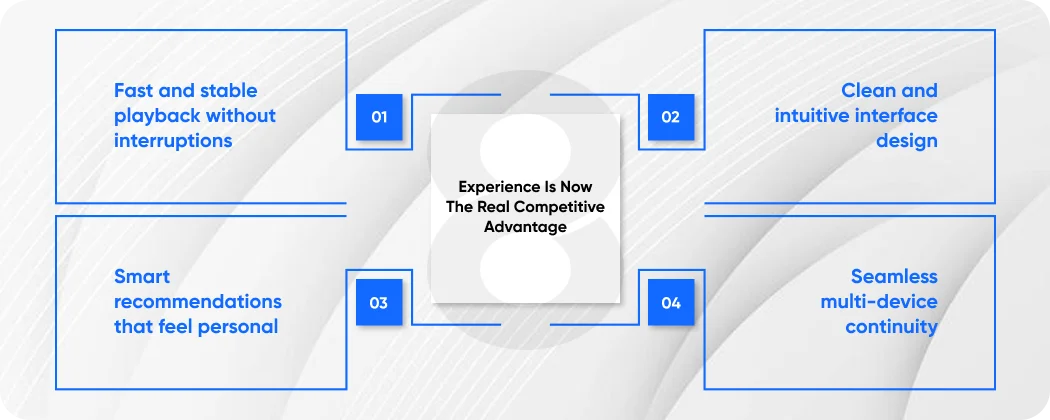
In today’s media environment, content alone is not enough anymore. Experience is what separates growing platforms from declining ones. Users stay where everything feels smooth and predictable. They leave when friction appears, even if the content is strong.
Experience Factors That Actually Matter
- Fast and stable playback without interruptions
- Clean and intuitive interface design
- Smart recommendations that feel personal
- Seamless multi-device continuity
That pattern is becoming more obvious every year.
Read More: How to Hire a Software Development Team: A Step-by-Step Guide
Technology Behind Modern Media Systems
Modern platforms rely heavily on scalable and fast systems. Media and entertainment software must handle high traffic and real-time usage.
Common Stack Used
Layer |
Technology |
| Frontend | React, Vue |
| Backend | Node.js, Go |
| Database | PostgreSQL, Cassandra |
| Cloud | AWS, Google Cloud |
This setup helps platforms scale while maintaining performance consistency. It also supports integration with AI systems and predictive analytics tools easily.
AI Integration And Why It Matters Now
AI is now deeply embedded in almost every media platform. It powers recommendations, personalization, and user engagement systems.
Without AI integration, platforms struggle to keep users engaged long term because users expect systems to adapt to their behavior naturally.
Read More: How to Own the Entire AI Lifecycle Within Your Own Geographical Boundaries
Where AI Is Used
- Personalized content recommendations
- Predictive engagement analysis
- Automated tagging and content grouping
- Real-time user behavior tracking
AI-driven systems can increase engagement significantly when implemented properly. That is why AI development is now a core requirement, not optional anymore.
Read More: Intellectual Property in Software: How to Protect Your App Idea Before You Build
Challenges Media Companies Keep Facing
The problems are not only technical, but they are structural too. Many companies still separate content strategy from system strategy.
Common Challenges
- Fragmented experience across platforms
- High infrastructure costs at scale
- Difficulty maintaining consistent engagement
- Poor system and analytics integration
These challenges directly affect audience retention and growth outcomes.
Read More: How to Hire a Software Engineer: The 2026 Checklist
Why Software Is Now A Strategic Asset
Media and entertainment software is no longer just backend infrastructure. It is now a core part of business strategy and audience growth. Without strong systems, even strong content fails to perform properly. With strong systems, even average content can perform significantly better.
In modern media, system quality defines content success. That is where the industry has already moved.
Future Direction Of Media Platforms
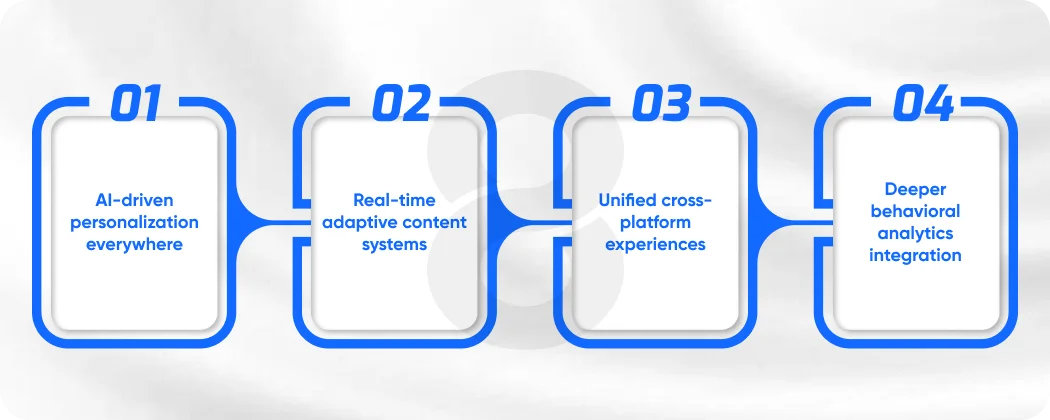
The future is clearly moving toward more intelligent and adaptive systems. User expectations are rising while patience levels are dropping fast.
Emerging Trends
- AI-driven personalization everywhere
- Real-time adaptive content systems
- Unified cross-platform experiences
- Deeper behavioral analytics integration
Media and entertainment software will become even more central going forward.
Strategic Execution Direction
If media companies want to stop losing audiences, their approach must change quickly and become more system-focused than ever before. Content strategy alone is no longer enough in a market where user experience and platform performance directly drive engagement outcomes. System quality now needs to be treated as a core business priority rather than just a technical backend concern.
Media and entertainment software should be viewed as a strategic asset that directly influences retention, engagement, and long-term audience growth. It is not just infrastructure supporting content delivery, but a key driver of how users actually interact with content at scale. Companies that invest in this shift early will build stronger platforms, while others will continue losing audiences over time.
Final Thoughts
Media companies are not losing audiences because content stopped working or became less relevant in today’s digital environment. They are losing audiences mainly because the systems behind content delivery are not evolving fast enough to match modern user expectations. Experience now plays an equal or even bigger role than content itself in determining whether users stay engaged or leave quickly.
Media and entertainment software sits at the center of this shift because it directly controls how content is delivered, accessed, and experienced across platforms. When these systems work smoothly, users stay longer naturally without extra effort or persuasion. But when they fail or feel outdated, even strong content struggles to hold attention consistently over time. This is the core reality shaping media performance today across the industry.