Most businesses do not actually realize how much operational inefficiency they tolerate every day until they finally experience systems that work properly. That is usually where the mindset changes completely. Because when companies first start growing, they normally rely on whatever software seems affordable, fast, and easy to implement. And early on, that works well enough. The problem starts later.
A few teams get added. Operations become more complicated. Departments start using different tools. Reporting becomes inconsistent. Communication slows down. Then suddenly, people spend more time managing workflows than actually improving them.
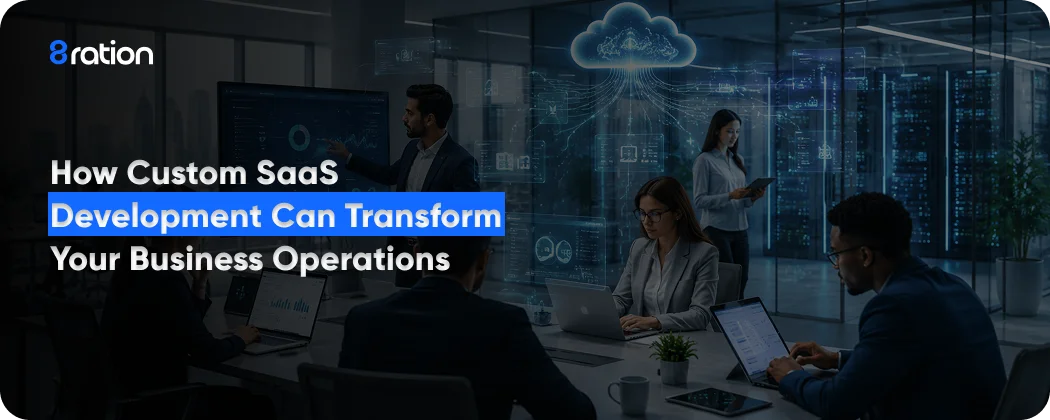
That is exactly why more businesses are investing into Custom SaaS Development instead of relying entirely on rigid off-the-shelf systems that eventually stop fitting operational needs properly. Because modern businesses no longer operate in simple environments anymore.
They manage:
- Remote teams
- Multi-platform operations
- Customer data ecosystems
- Real-time reporting
- Automation workflows
- Cross-department collaboration
And generic systems rarely support all of that efficiently long term.
At 8ration, SaaS platforms are usually designed around operational flow first because scalable systems should simplify work instead of quietly creating more friction behind the scenes.
Why Generic SaaS Platforms Quietly Create Operational Problems
This happens more often than businesses expect. The software looks impressive during onboarding. It has dashboards. Automations. Reports. Notifications. Analytics. Everything feels modern initially. Then, eventually, teams realize the workflows do not actually fit the way the company operates. That is when problems quietly start growing.
For example:
- Employees begin creating manual workarounds
- Teams duplicate information across platforms
- Reporting becomes fragmented
- Communication slows down between departments
- Important operational visibility gets lost
And the worst part is that most businesses normalize those inefficiencies over time. People start assuming operational frustration is just “part of scaling.” Usually it is not. Usually the system itself is creating unnecessary pressure.
That is why Custom SaaS Development matters so much now because businesses increasingly need systems built around their workflows instead of forcing workflows around software limitations.
Operational flexibility became one of the biggest competitive advantages in modern business.
Businesses Are Becoming More Dependent on Software Infrastructure
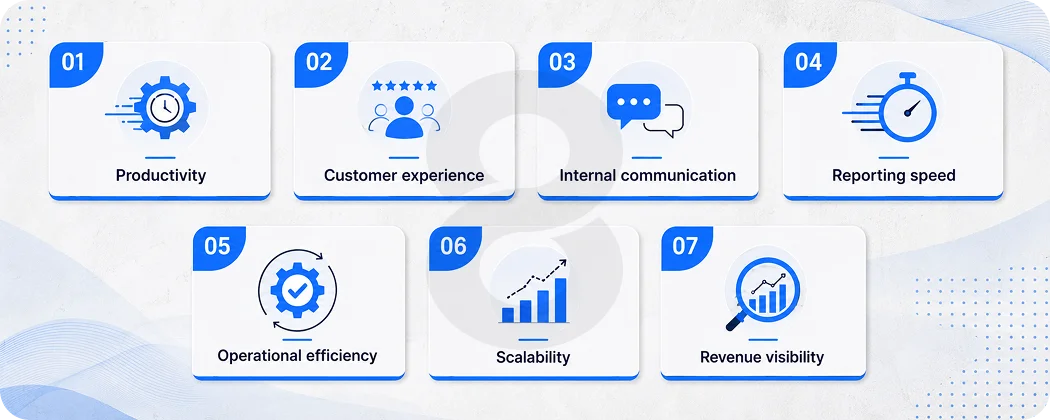
This shift happened quietly. Most companies still think software is simply a support tool.
In reality, software now directly affects:
- Productivity
- Customer experience
- Internal communication
- Reporting speed
- Operational efficiency
- Scalability
- Revenue visibility
That means your operational systems now influence business performance much more than many companies initially realize. This is exactly why stronger software development strategy matters more than ever in 2026. Because disconnected systems eventually create invisible operational bottlenecks everywhere underneath the surface.
Off-the-Shelf Software vs Custom SaaS Platforms
Area |
Off-the-Shelf Software |
Custom SaaS Development |
| Workflow Fit | Generic structure | Tailored operational flow |
| Scalability | Vendor limitations | Built around business growth |
| Integrations | Limited flexibility | Fully connected systems |
| Reporting | Standard dashboards | Custom operational insights |
| User Experience | Broad usability | Team-focused usability |
| Long-Term Flexibility | Restricted customization | Full operational control |
Why Workflow Simplicity Matters More Than Features
A lot of companies make the same mistake. They choose software based mainly on feature lists. That sounds logical initially. The problem is that overloaded systems often create operational complexity instead of reducing it. Because employees do not care how many features exist if the workflows themselves feel frustrating.
For example:
- Too many unnecessary steps
- Confusing dashboards
- Poor navigation
- Slow performance
- Complicated reporting systems
That frustration quietly affects productivity every single day. And employees now compare internal business tools against every smooth consumer app they already use personally. That expectation shift matters heavily. This is why stronger custom SaaS development focuses heavily on operational usability instead of simply adding more functionality.
At 8ration, workflow simplification usually becomes one of the highest priorities during SaaS development because operational clarity directly affects employee adoption long term.
Mobile Accessibility Changed Operational Expectations Completely
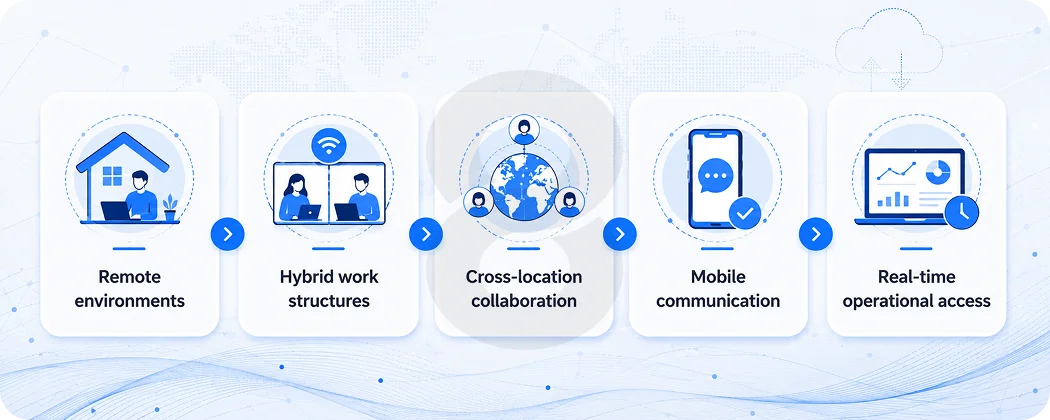
This is another major shift businesses underestimated. Work no longer happens only inside offices consistently.
Teams now operate through:
- Remote environments
- Hybrid work structures
- Cross-location collaboration
- Mobile communication
- Real-time operational access
That means accessibility now affects productivity directly. If employees struggle accessing systems quickly, operational delays appear almost immediately. This is exactly why stronger mobile app development strategy now overlaps heavily with SaaS infrastructure planning.
Because businesses increasingly need systems functioning naturally across every device environment.
According to Statista, mobile devices continue accounting for the majority of global digital usage behavior, reinforcing how strongly operational accessibility expectations changed. That matters because businesses now compete partly through operational responsiveness too.
Smarter SaaS Through Seamless AI Integration
A lot of businesses still think AI is mostly experimental. AI is already influencing operations everywhere quietly.
Through proper AI development, SaaS systems can now:
- Automate repetitive workflows
- Predict operational bottlenecks
- Improve reporting visibility
- Support customer behavior analysis
- Simplify decision-making processes
And through structured AI integration, those improvements happen without making the system feel robotic or overly technical. That matters because operational complexity keeps increasing every year. Businesses now need systems capable of reducing workload instead of simply organizing it.
At 8ration, AI-supported SaaS systems are usually implemented gradually so workflows improve naturally without disrupting how teams already operate daily.
Why Scalability Matters Much Earlier Than Businesses Expect
This is where many companies struggle later. The software works perfectly during early stages.
Then operations expand slightly and suddenly:
- Dashboards slow down
- Reporting becomes inconsistent
- Team coordination feels messy
- Permissions become harder to manage
- Integrations stop functioning properly
That usually means the infrastructure underneath was never designed properly for growth. And rebuilding operational systems later becomes extremely expensive and disruptive.
That is exactly why custom SaaS development focuses heavily on scalability planning from the beginning. Because growth pressure exposes weak infrastructure very quickly.
Read More: Pricing Models for Software Services: Fixed vs. Hourly Rates Explained
What Strong SaaS Platforms Actually Improve
Area |
Off-the-Shelf Software |
Custom SaaS Development |
| Workflow Fit | Generic structure | Tailored operational flow |
| Scalability | Vendor limitations | Built around business growth |
| Integrations | Limited flexibility | Fully connected systems |
| Reporting | Standard dashboards | Custom operational insights |
| User Experience | Broad usability | Team-focused usability |
| Long-Term Flexibility | Restricted customization | Full operational control |
Build Connected Systems, Not Complexity
This is one of the biggest misunderstandings in modern operations. Companies often think operational problems mean they need additional tools. Usually they need fewer disconnected systems instead.
Because every new platform adds:
- More training
- More complexity
- More integrations
- More operational fragmentation
Strong custom SaaS development solves this differently. Instead of forcing businesses into multiple disconnected systems, the goal becomes building one connected operational environment supporting workflows naturally. Connected systems improve efficiency much faster than constantly adding new software layers.
Read More: What is a Proof of Concept in Software Development
Why Integrations Became One of the Most Important Parts of SaaS Infrastructure
Modern businesses rely on dozens of operational tools simultaneously.
That includes:
- CRM systems
- Communication platforms
- Accounting tools
- Reporting dashboards
- Marketing software
- Customer support systems
If those systems stay disconnected, operational visibility disappears quickly.
This is why stronger enterprise app development strategy increasingly focuses on integration architecture instead of isolated functionality.
Because connected systems improve:
- Workflow visibility
- Team coordination
- Reporting accuracy
- Operational consistency
Businesses usually underestimate how much productivity improves once systems finally communicate properly.
How the 8ration Team Approaches Custom SaaS Development
One thing our team focuses on heavily is operational realism. A lot of SaaS platforms look visually impressive but become frustrating during actual everyday usage. That usually happens because the system was designed around features instead of workflows, which is why we prioritize thoughtful SaaS app development centered on real user operations rather than just feature sets.
Instead, the focus generally stays centered around:
- Workflow simplification
- Scalable infrastructure
- Mobile-first usability
- AI-supported automation
- Cross-platform operational consistency
The goal is not simply building software. The goal is creating operational systems people naturally continue using because the experience reduces friction instead of increasing complexity. And that difference affects adoption much more than businesses initially realize.
Read More: How to Hire a Software Development Team: A Step-by-Step Guide
If Teams Rely on Workarounds, Growth Suffers
A lot of operational inefficiencies become normalized over time. Manual reporting becomes normal. Disconnected communication becomes normal. Workflow duplication becomes normal. But those inefficiencies quietly reduce productivity, scalability, and operational clarity every single month.
Strong custom SaaS development improves workflow efficiency, visibility, automation, and scalability across the entire business ecosystem. And right now, that matters more than ever because operational complexity continues increasing aggressively across modern businesses.
Read More: Intellectual Property in Software: How to Protect Your App Idea Before You Build
Final Thoughts
Most businesses do not actually fail because teams lack effort. They struggle because the operational systems underneath growth eventually stop supporting the business properly. That is the real issue many companies face quietly. Strong
Custom SaaS development improves efficiency, visibility, scalability, automation, and operational clarity simultaneously because modern businesses increasingly depend on connected systems to function properly.
And the companies scaling successfully right now usually are not relying on harder manual work anymore. They are building smarter operational infrastructure underneath everything else. Because modern business growth no longer depends only on strategy. It also depends heavily on how intelligently the operational systems behind the business actually work.