



Imagine getting a quote for $150,000 on an app you budgeted $40,000 for. Or the opposite: picking the cheapest team available, only to spend twice as much six months later fixing what they built wrong. Both happen all the time. They happen because most businesses go into a React Native project with a number in mind but no real understanding of where that number comes from.
This guide changes that. Every cost driver, every development stage, every hidden fee that shows up post launch, it is all here, with real numbers you can actually use.
What Is React Native App Development?
Meta has developed an open-source framework called React Native. It enables developers to write the same code using JavaScript and deploy it on iOS and Android. Unlike other hybrid approaches, it works with real native components and has performance and feel more similar to Swift or Kotlin-based applications.
For businesses, the implication is direct. You are not paying for two separate development teams. The same code runs on both platforms, which reduces your overall React Native app development cost considerably.
The framework’s New Architecture, now default in React Native 0.84, resolved the performance bottlenecks that previously held it back on graphics-intensive apps. Native iOS development requires Swift or Objective C. Android requires Kotlin or Java. Both require their own team, codebase and test cycle. React Native eliminates all that and creates an app that feels entirely native on each platform, running in the same process.
Read More: Android vs iOS Development: Which Platform Should You Actually Build For?
Why Businesses Choose React Native in 2026
This is a relatively rare setting in which the business case is as simple as it can be. With React Native, you can develop one app, which will run on both the iOS and Android platforms, saving you 30 to 40 percent on the development cost of creating two native apps.
Statista predicts that the global App market will hit $739.61 billion by 2026. This is the volume of business that is going through mobile devices right now, and it’s why businesses are rushing to get their piece of the pie. React Native is among the quickest paths to reach that goal.
One codebase means one team. One testing cycle. One maintenance effort. The average time to ship a React Native MVP to both platforms is 14-20 weeks. It’s no secret that React is the most used front-end framework as per the latest data from the Stack Overflow Developer Survey 2025 which shows that it leads with 44.7 percent preference compared to other frameworks like Flutter and Swift. In 2026, 42 per cent of all new app builds around the world are to be found on cross-platform tools. Businesses are voting the dollar.
React Native App Development Cost at a Glance
This table gives you a quick reference for budgeting across different app categories.
| App Type | Estimated Cost | Timeline |
|---|---|---|
| Simple MVP | $15,000 to $40,000 | 8 to 14 weeks |
| Startup App | $30,000 to $80,000 | 12 to 20 weeks |
| Marketplace App | $50,000 to $120,000 | 16 to 28 weeks |
| Healthcare App | $60,000 to $150,000 | 20 to 36 weeks |
| FinTech App | $70,000 to $200,000 | 24 to 40 weeks |
| Enterprise App | $100,000 to $300,000+ | 32 to 52+ weeks |
These ranges reflect total project costs including UI/UX design, development, QA testing, and initial deployment. Ongoing maintenance is not included.
Read More: Mobile App Development Cost Breakdown
React Native App Development Cost by App Complexity
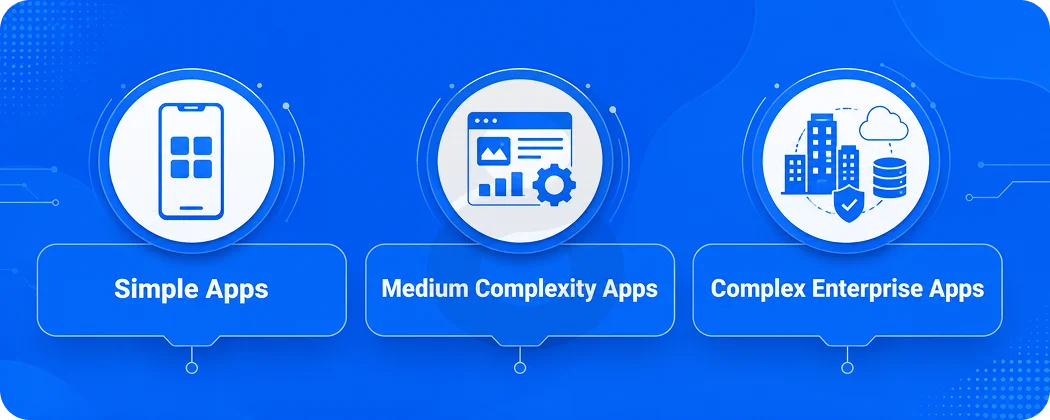
Simple Apps
The time for development of simple React Native apps ranges from 8-14 weeks and the cost is roughly $15,000 to $40,000. Here are apps that have a simple use, few screens, and simple back-end logic.
These include simple informational applications, simple booking systems, single feature utility applications, and brochure style mobile experiences. Common elements are user signups, simple UI screens, push notifications, and a back-end with a database. No real-time functionality, no payment gateways and no complex integrations.
Medium Complexity Apps
Medium complexity apps fall in the range of $40,000 to $100,000 and take between 12-20 weeks to complete. These are actual business logic, production ready products.
These include on demand service platforms, ecommerce apps, marketplace tools, and social networking apps. Payment processing, maps and location services, in app messaging, user profiles, search and filtering, admin panels, and backend APIs with multiple integrations are among the features they offer commonly. Custom and polished UI/UX, scalable for real world data volumes in the backend.
Complex Enterprise Apps
Enterprise grade React Native apps often go over $100,000 and sometimes reach as high as $300,000. The timeframes range from 32 weeks to more than a year.
These include healthcare platforms adhering to HIPAA standards, FinTech apps offering bank grade security, enterprise logistics tools and huge scale social platforms.
It supports role based access control, extensive third party integrations, offline mode, multi language support, custom analytics dashboards, and AI and machine learning integrations, among others features. These projects also include compliance, penetration testing, and enterprise level cloud infrastructure.
Read More: iOS App Development Cost in 2026: A Detailed Guide
React Native App Development Cost Breakdown by Development Stage
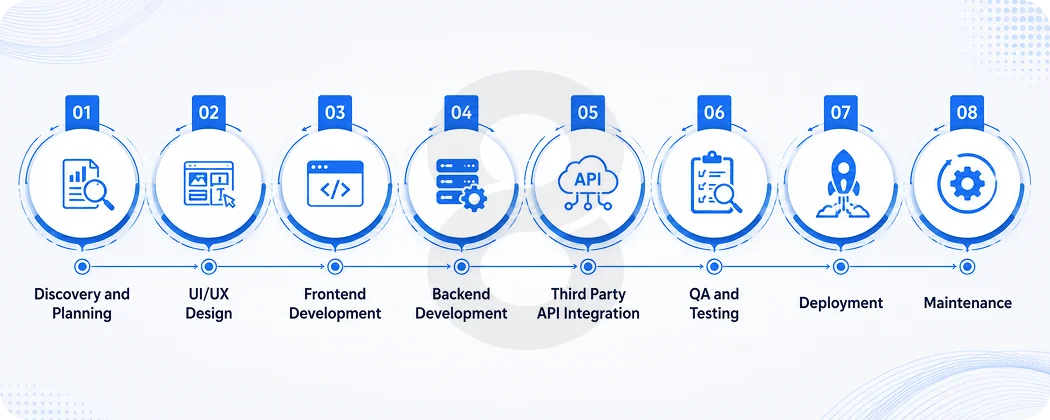
Understanding where your budget actually goes helps you make smarter decisions at every phase. Here is a typical cost distribution across development stages.
| Development Stage | Estimated Cost Share | What It Covers |
|---|---|---|
| Discovery and Planning | 5 to 10% | Requirements, technical roadmap, scope definition |
| UI/UX Design | 15 to 20% | Wireframes, prototypes, visual design system |
| Frontend Development | 25 to 30% | React Native screens, navigation, state management |
| Backend Development | 20 to 25% | APIs, database, server logic, authentication |
| Third Party API Integration | 5 to 10% | Payment gateways, maps, push notifications |
| QA and Testing | 10 to 15% | Manual testing, automated tests, device coverage |
| Deployment | 3 to 5% | App Store and Google Play submission, CI/CD setup |
| Maintenance (Year 1) | 15 to 20% of build cost | Bug fixes, OS updates, performance monitoring |
Discovery and Planning
This is where the majority of projects fail prior to the first line of code. The team records your objectives, identifies features, creates a technical strategy map, and identifies and catches risks as early as possible. This step is crucial, otherwise scope creep will become an expensive issue for all subsequent steps.
UI/UX Design
It makes all the difference whether the users stay or go after their first session, because this is where design plays a crucial role. A set of wireframes, prototypes and a full visual system is created here before development commences. According to Abdul Wahab, Senior UI/UX Designer at 8ration, it’s much more expensive to rebuild a product that users rejected the first time than it is to get it right the first time.
Frontend Development
Here lies the greatest visibility of the cost advantage of React Native. Developers only have to create each screen, each flow, every UI interaction once and it works automatically on both iOS and Android. It is the place where all state management, animations and performance optimizations are performed and time for weeks is saved by maintaining just one single native codebase.
Backend Development
The API it calls is as good as your app. This phase involves designing the database, logic to be processed on the server, authentication mechanisms, and the design of the API. “As per Hammad Waseem, MERN Stack Expert at 8ration, a weak backend results in performance issues, security vulnerabilities, and expensive refactoring at a later stage when it is too late.”
Third Party API Integration
The more the integrations, the more real cost. Each payment gateway, messaging service, and location service (Google Maps) needs to be set up, handled and tested carefully. Ayan Mirza, Full Stack Developer at 8ration, takes care of all the integration tasks for each and every React Native project the team ships.
QA and Testing
When app has bugs, it earns a 1-star review, likewise when end products have the same, they earn a 1-star review in no time. QA includes functional testing, compatibility with screens of various sizes, performance measurements and edge cases. It’s where automated tests are set up, so that any regressions are discovered before they hit your users in future releases.
Deployment
Submitting to Apple’s App Store and Google Play is much more than just uploading a file. This phase deals with store listing, screenshots, metadata, setting up a CI/CD pipeline, and addressing platform review comments. A good deployment process minimizes rejection risks and will enable you to reach real users faster.
Maintenance
You need constant maintenance for operating system updates, new device models, API changes and reported user bugs. An application that is no longer maintained is an application that fails, loses users and is ultimately deleted from the stores because it is not compliant with the current platform API standards.
React Native App Development Cost by Features
Feature scope is the single biggest cost driver in any React Native project. This table breaks down what individual features typically add to your budget.
| Feature | Estimated Cost | Development Time |
|---|---|---|
| User Login and Authentication | $2,000 to $6,000 | 1 to 2 weeks |
| Social Login (Google, Apple, Facebook) | $1,500 to $4,000 | 1 week |
| Push Notifications | $1,500 to $3,500 | 3 to 5 days |
| In App Chat / Messaging | $8,000 to $20,000 | 2 to 4 weeks |
| Maps and Location Services | $4,000 to $12,000 | 1 to 3 weeks |
| GPS Tracking (Real-Time) | $6,000 to $15,000 | 2 to 4 weeks |
| Payment Gateway Integration | $5,000 to $15,000 | 1 to 3 weeks |
| Appointment Booking System | $6,000 to $18,000 | 2 to 4 weeks |
| Video Calls | $10,000 to $25,000 | 3 to 6 weeks |
| AI Chatbot Integration | $8,000 to $30,000 | 2 to 6 weeks |
| Admin Panel | $8,000 to $20,000 | 2 to 4 weeks |
| Analytics Dashboard | $5,000 to $15,000 | 1 to 3 weeks |
| Multi-Language Support | $3,000 to $8,000 | 1 to 2 weeks |
| Offline Mode | $4,000 to $12,000 | 1 to 3 weeks |
| Advanced Search and Filtering | $3,000 to $10,000 | 1 to 2 weeks |
Keep in mind that features do not exist in isolation. A payment gateway needs user authentication. Video calls need backend infrastructure. The interactions between features affect total cost more than any individual line item.
React Native App Development Timeline
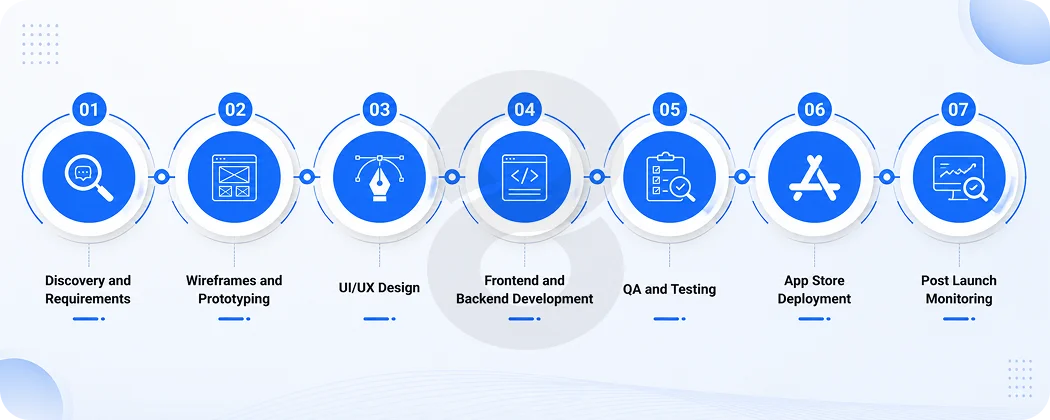
Creating a React Native application is never a solitary and single event. It is a sequence of phases, with each of them directly succeeding the previous one. If any phase is rushed, then it will lead to expensive issues in the next phase.
| Phase | Typical Duration |
|---|---|
| Discovery and Requirements | 1 to 2 weeks |
| Wireframes and Prototyping | 1 to 2 weeks |
| UI/UX Design | 2 to 4 weeks |
| Frontend and Backend Development | 6 to 20 weeks |
| QA and Testing | 2 to 4 weeks |
| App Store Deployment | 1 to 2 weeks |
| Post Launch Monitoring | Ongoing |
- Discovery and Requirements: Set scope, align objectives, identify technical risks, and create a clear timeline. Rushing this step often leads to higher costs and delays later.
- Wireframes and Prototyping: Map user flows and screens before visual design. Changes are cheaper now and can cost up to 10× more during development.
- UI/UX Design: Wireframes are refined into a sleek visual interface here. A robust design system created here improves development time for each screen that comes after, and makes the app feel cohesive from the start.
- Frontend and Backend Development: The main phase of building. The frontend, backend API, database, and integrations with third parties are all done in parallel sprints, with regular review meetings to identify frontend issues as they occur.
- QA and Testing: Test functionality, devices, performance, and edge cases. Strong QA helps prevent critical bugs and the one-star reviews that can sink a new app.
- App Store Deployment: Upload to App Store and Google Play, setup CI/CD, Infrastructure checks for production, and answer any returned App Store and Google Play review requests.
- Post Launch Monitoring: Keeping an app live requires ongoing performance monitoring, OS updates, bug fixes, and feature enhancements.
Read More: Android App Development Cost in 2026: A Detailed Guide
What Factors Affect React Native App Development Cost?
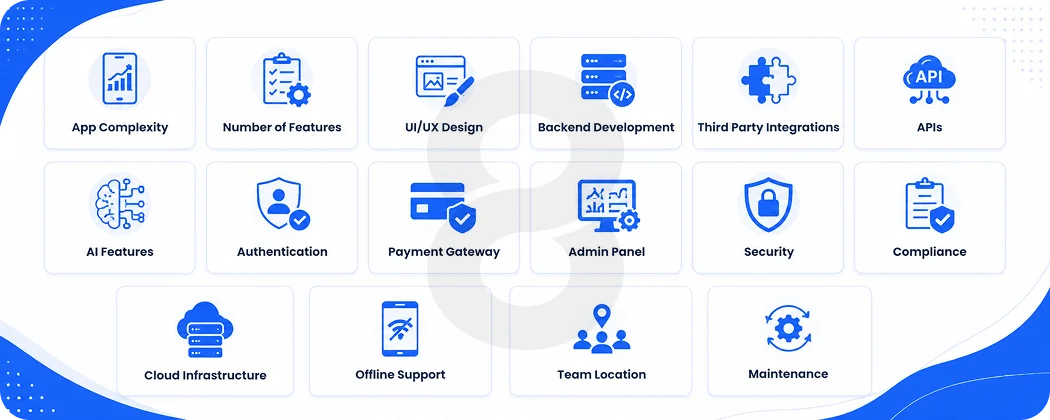
App Complexity
The more screens, flows, and business logic your app contains, the longer it takes to build. A 10 screen app and a 60 screen app are not the same project. Complexity compounds across every phase.
Number of Features
Each feature adds development time, testing time, and backend logic. A basic login takes two days. A multi provider login with biometric fallback takes two weeks. Feature lists grow fast once stakeholders get involved.
UI/UX Design
A basic UI using a component library is much cheaper than a fully custom design system. That said, design is where your users form their first impression and decide whether to come back. Cutting design budget is a false economy.
Backend Development
Your React Native app needs something to talk to. Backend complexity includes your API architecture, database design, authentication system, and server infrastructure. A simple backend for an MVP is very different from a scalable system built for millions of users.
Third Party Integrations
Every third party integration adds cost. Stripe for payments, Twilio for messaging, Google Maps for location, Firebase for notifications. Each one requires configuration, error handling, and testing to work reliably.
APIs
Custom API development costs more than using pre built solutions. If your app connects to legacy systems or internal databases, expect integration work to take longer than anticipated regardless of how clean the documentation looks.
AI Features
AI features like smart recommendations, chatbots, or predictive analytics require either API integration with providers like OpenAI or custom model work. Asad Sheikh, AI Development Manager at 8ration, notes that AI API integrations are relatively affordable, while custom model training is where costs escalate significantly.
Authentication
Basic email and password login is simple. Add social login, two factor verification, biometric support, and single sign on for enterprise users, and authentication becomes a significant workpiece in its own right.
Payment Gateway
Payment integrations need to be secure, tested across edge cases, and compliant with financial regulations. Stripe, PayPal, and Apple Pay each have their own integration requirements. This is not a feature to rush or cut corners on.
Admin Panel
Every app that collects data needs a way to manage it. A custom admin panel can cost anywhere from $8,000 to $20,000 depending on complexity. Some teams use off the shelf tools to reduce this cost without sacrificing functionality.
Security
Security is not a feature you add at the end. End to end encryption, secure token storage, and API security all need to be designed into the architecture from the very start. HIPAA and PCI compliance add significant overhead on top of that.
Compliance
Healthcare apps need HIPAA compliance. FinTech apps need PCI DSS. Apps serving EU users need GDPR compliance. Each regulatory framework adds documentation, architectural constraints, and audit requirements that affect both cost and timeline.
Cloud Infrastructure
AWS, Google Cloud, and Azure all offer scalable infrastructure. The cost depends on your expected user load, data volume, and uptime requirements. Early stage MVPs can run cheaply. High traffic apps need careful architecture from the start.
Offline Support
Building offline functionality means syncing local and remote data states reliably. This is more complex than it sounds. Conflict resolution alone can take weeks of backend work to get right.
Team Location
Developer location is one of the biggest cost levers you have. US teams charge significantly more than teams in South Asia or Eastern Europe. This is covered in detail in the regional pricing section below.
Maintenance
Apps do not operate in a vacuum. Operating system updates, new devices, API changes, and security patches all require ongoing attention. Budget 15 to 20 percent of your build cost annually for maintenance from day one.
Read More: Flutter App Development Cost Breakdown
React Native Development Cost by Industry
Different industries have different compliance requirements, data complexity, and integration needs. These differences drive meaningful cost differences even for apps with similar feature counts.
| Industry | Estimated Cost Range |
|---|---|
| Healthcare | $60,000 to $180,000 |
| FinTech | $70,000 to $200,000 |
| Retail / eCommerce | $40,000 to $120,000 |
| Education and EdTech | $30,000 to $100,000 |
| Travel and Hospitality | $40,000 to $130,000 |
| Logistics and Supply Chain | $50,000 to $150,000 |
| Real Estate | $35,000 to $100,000 |
| Food Delivery | $45,000 to $130,000 |
| Social Media | $50,000 to $200,000 |
| Fitness and Wellness | $30,000 to $90,000 |
Healthcare and FinTech consistently sit at the high end because of regulatory requirements and the security work needed to protect sensitive user data. Food delivery and logistics apps tend to cost more than their feature count suggests because real time location tracking, payment processing, and multi user flows add significant backend complexity.
Read More: Hybrid App Development: Costs, Benefits & Best Practices
React Native App Development Cost by Region
Where your development team is based will often be your biggest single budget decision. Here is what the market looks like in 2026.
| Region | Hourly Rate (Approximate) |
|---|---|
| USA | $100 to $150 per hour |
| Canada | $80 to $130 per hour |
| UK | $70 to $120 per hour |
| Western Europe | $60 to $110 per hour |
| Eastern Europe | $35 to $65 per hour |
| India | $18 to $40 per hour |
| Pakistan | $15 to $35 per hour |
| UAE | $50 to $90 per hour |
| Australia | $80 to $130 per hour |
The differences come down to cost of living, local market rates, and developer supply and demand. US developers command the highest rates because operating costs are high and mobile engineering talent is genuinely scarce in that market.
Eastern Europe offers strong technical talent at 50 to 60 percent of US rates. India and Pakistan offer the lowest rates globally, and when you find an experienced team with a strong portfolio, the quality can match what you would get from a more expensive region.
Location affects price but not inherently quality. Portfolio, process, and communication matter more than geography when evaluating a development partner.
Read More: Location-Based App Development for Startups
In House vs Freelancer vs Development Company
Each hiring model has a very different cost profile and risk profile.
| Option | Estimated Cost | Pros | Cons |
|---|---|---|---|
| In House Team | $300,000 to $600,000+ per year | Full control, deep product knowledge | High overhead, slow to hire, hard to scale |
| Freelancer | $15,000 to $80,000 per project | Flexible, lower cost for simple work | Inconsistency risk, gaps in coverage, reliability concerns |
| Development Agency | $20,000 to $300,000+ per project | Full service, accountability, broader expertise | Higher cost than freelancers, choose carefully |
For most startups and growing businesses, a development agency offers the best balance. You get a full team including designers, developers, QA engineers, and project managers under one roof. The risk of a key person leaving or a freelancer going dark mid project is significantly reduced.
In house makes sense when you have found product market fit, have ongoing development needs, and need the team embedded deeply in your business culture. It is not the right choice for a first build.
You can also hire dedicated React Native developers who work exclusively on your project. This model gives you more flexibility than a full agency engagement while providing more continuity than freelance work.
React Native vs Native App Development Cost
The cost difference between React Native and native development is substantial and worth understanding before you commit to a direction.
| Factor | React Native | Native (iOS + Android) |
|---|---|---|
| Development Cost | $15,000 to $300,000+ | $30,000 to $500,000+ |
| Timeline | 8 to 52 weeks | 16 to 80 weeks |
| Performance | Near native for most apps | Highest possible |
| Code Reuse | 80 to 95% shared | 0% shared |
| Team Size | Smaller, shared team | Two separate teams |
| Maintenance | Single codebase | Two separate codebases |
| Best For | Most business apps | Gaming, AR/VR, 10M+ users |
React Native is 30 to 40 percent cheaper than building two native apps. For 90 to 95 percent of business applications, the performance difference is invisible to end users. Choose native only when you are building something graphics intensive like a game, an AR application, or a platform that genuinely needs to squeeze every last bit of hardware performance out of the device.
Read More: 10 Steps to Hire Developers for Startup: The Ultimate Guide
React Native vs Flutter Development Cost
Flutter and React Native are the two dominant cross platform frameworks in 2026. Understanding where they differ on cost helps you make a more informed choice.
| Factor | React Native | Flutter |
|---|---|---|
| Average MVP Cost | $40,000 to $73,000 | $50,000 to $65,000 |
| Average Hourly Rate | $60 to $120 per hour | $80 to $150 per hour |
| Language | JavaScript / TypeScript | Dart |
| Developer Talent Pool | Very large | More limited |
| Year 1 Maintenance | $15,000 to $20,000 | $10,000 to $12,000 |
| Timeline (MVP) | 14 to 20 weeks | 12 to 16 weeks |
| Web Support | Via React Native Web | Built in |
React Native tends to be cheaper to start because JavaScript developers are more abundant and easier to hire. Flutter can offer slightly lower QA and maintenance costs because its widget system produces more consistent UI output across platforms. For startups, React Native’s lower upfront cost and larger talent pool often make it the practical choice. For teams that already know Dart or need pixel perfect design consistency, Flutter is worth the premium.
Both frameworks save 30 to 60 percent compared to building two separate native apps.
Read More: Flutter vs React Native: Which Is Better for Business Apps in 2026?
Hidden Costs Most Businesses Ignore
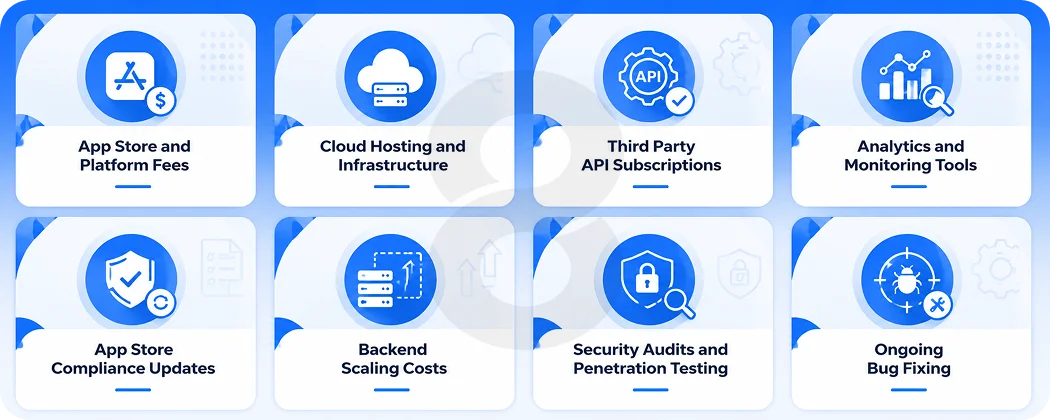
When you get a quote for React Native development, the number you see is almost never the total you will spend. Here are the costs that catch founders off guard.
App Store and Platform Fees
The Apple Developer Program costs $99 per year. Google Play requires a one time $25 registration fee. These are small individually but worth knowing when building your total budget from the start, since both are required before any app reaches a real user on either platform.
Cloud Hosting and Infrastructure
Cloud costs are not fixed. AWS, Google Cloud, and Azure all bill based on usage. A quiet MVP might cost $50 per month. A busy production app can run thousands per month as user traffic grows. Most teams underbudget here and scramble when their app gains any real traction.
Third Party API Subscriptions
Every tool your app connects to has its own pricing. Twilio for SMS, SendGrid for email, Google Maps for location, and Stripe’s transaction fees all appear on your monthly bill. Many of these are usage based, which means costs scale directly alongside your user growth and can arrive as a surprise.
Analytics and Monitoring Tools
Understanding how users interact with your app requires paid tools. Mixpanel, Amplitude, and similar platforms have free tiers that expire quickly. Once you need real retention and conversion data to make product decisions, expect to pay $50 to $500 per month for the analytics stack you actually need.
App Store Compliance Updates
Major iOS and Android OS releases require app updates to maintain store eligibility. Apps that do not update their target API levels face delisting. Each major OS update can break existing functionality, and addressing it is not optional. Budget dedicated developer time annually just for platform compliance work.
Backend Scaling Costs
Growing user numbers mean growing infrastructure costs. Most teams size their backend conservatively early on to save money, then face emergency scaling decisions when traffic arrives. Planning for elastic scaling from day one costs more upfront but avoids the outage risk and reputational damage that comes with unprepared systems.
Security Audits and Penetration Testing
Professional security audits cost between $5,000 and $20,000 depending on scope. In regulated industries like healthcare and FinTech, they are not optional. In most other categories, they are increasingly expected by enterprise clients, investors, and partner organizations who review your technical practices before committing.
Ongoing Bug Fixing
No app ships without bugs. Real users discover edge cases that no QA team anticipated. Budget for a steady stream of bug fixes after launch, especially in the first three months. User reported issues need fast responses to protect your app store ratings and maintain user trust at a critical growth stage.
Read More: Mobile App Development Timeline
How to Reduce React Native App Development Cost Without Sacrificing Quality
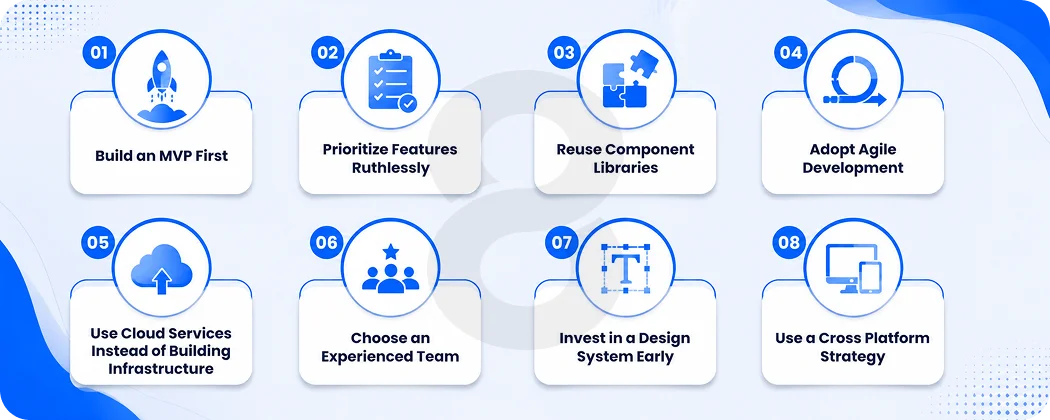
You can bring your budget down without compromising what you ship. Here is how experienced teams do it consistently.
Build an MVP First
Ship the core use case and get real user feedback before investing in advanced features. The fastest way to waste money is to build features users do not actually want. An MVP validates your idea with real data before you commit the full budget.
Prioritize Features Ruthlessly
Every feature you add has a development cost, a maintenance cost, and a complexity cost. Before each item makes it onto the build list, ask what happens if you launch without it. The answer often reveals what is actually essential versus what feels important in a meeting room.
Reuse Component Libraries
React Native has a rich ecosystem of pre built components. Using them instead of building from scratch saves significant development time without reducing the quality your users experience. Components that are already tested and maintained by the community are free development hours.
Adopt Agile Development
Working in two week sprints means problems surface early when they are cheap to fix. Waterfall projects hide problems until the end when changes are expensive. Agile also gives you the option to reprioritize features mid project if your budget or requirements shift.
Use Cloud Services Instead of Building Infrastructure
Firebase, Supabase, and AWS Amplify give you authentication, databases, and push notifications out of the box. You pay a subscription instead of building and maintaining custom infrastructure. This saves weeks of backend work and reduces the expertise required to keep your systems running reliably.
Choose an Experienced Team
Junior developers are cheaper per hour but slower and more likely to create problems that need fixing later. A senior engineer who writes clean, maintainable code the first time is more cost efficient over the full project lifecycle than a junior who creates technical debt you will be paying to fix for years.
Invest in a Design System Early
A consistent component library means designers and developers move faster on every new screen throughout the project. Without a design system, teams constantly rebuild decisions that were already made, adding hours to every sprint.
Use a Cross Platform Strategy
Our cross platform app development approach lets you build once and deploy to both iOS and Android. The single codebase is one of the most powerful cost reduction strategies available, and it is the foundational advantage React Native was built to deliver.
Read More: MVP Development Cost: A Complete Guide
Real Examples of React Native Apps
Some of the world’s most downloaded apps run on React Native. This matters because it proves the framework scales.
| App | Why React Native |
|---|---|
| Meta built and maintains React Native; used across core features | |
| Cross platform consistency with native level performance | |
| Shopify | Fast iteration on merchant tools across iOS and Android |
| Discord | Real time chat at scale with a single development team |
| Tesla | Vehicle control features that need to work reliably on both platforms |
| Bloomberg | Financial data and news delivery with cross platform efficiency |
These are not simple apps. Facebook handles billions of users. Tesla controls physical hardware. The fact that React Native powers production grade applications at this scale is strong evidence that it can handle your project.
Read More: 100 Profitable Mobile App Ideas for 2026
React Native App Development Process
A well run React Native project follows a predictable sequence that keeps surprises minimal and quality high at every stage.
Discovery
This is where the team learns your business, your users, and your goals. The output is a technical roadmap and a prioritized feature list. Skipping this phase is the most common cause of scope creep and budget overruns in React Native projects of every size and complexity level.
Planning
The roadmap becomes a sprint plan here. Developers estimate tasks, architects make decisions about the tech stack and backend structure, and the project manager sets milestones. This phase locks in the development sequence and ensures no critical dependency is missed before the team starts building.
UI Design
The visual interface is fully defined here, including all screens, interactions, and a shared component library. Every pixel is resolved before development starts, so developers are never making design decisions on the fly. This reduces rework and ensures the app feels consistent across every single screen.
Development
This is where the actual React Native code gets written. Frontend developers build the UI components, backend developers build the APIs, and they integrate at the seams. Work happens in parallel sprints with regular reviews to surface blockers before they grow into delays that affect your whole timeline.
Testing
Quality is verified here. QA engineers test functionality, performance, and edge cases systematically. Automated tests catch regressions in future updates. Device testing across different screen sizes and OS versions catches platform specific issues that only appear outside the development environment.
Deployment
App Store and Google Play submission is managed here, along with production infrastructure setup and monitoring tools. A well organized deployment phase handles store review requirements proactively, reducing rejection risk and getting the app in front of real users as quickly as possible after build completion.
Maintenance
Maintenance begins the moment the app is live. OS updates, user reported bugs, performance monitoring, and feature iterations are all ongoing commitments that keep a live app healthy. Our mobile app development service covers the full lifecycle from discovery through years of post launch support.
Read More: Mobile App Development Process: From Idea to Launch
Is React Native Worth the Investment?
For most businesses, yes. The question is really about fit.
For startups, React Native is almost always the right call. It gets you to both platforms simultaneously, costs less than native development, and lets you validate your product before committing to a bigger infrastructure investment.
For enterprises, the framework has proven itself in production at enormous scale. Bloomberg, Shopify, and Microsoft all use it. The New Architecture resolved the performance limitations that once gave enterprises pause about adopting it.
If your app generates revenue, acquires users, or reduces operational costs, the return on a $50,000 to $100,000 investment can be very significant. React Native reaches iOS and Android users simultaneously from day one, with one budget.
For enterprise app development at scale, React Native paired with a solid backend architecture handles millions of users without issue. The investment pays off when the business case is clear, the scope is defined, and the planning is done properly before a line of code is written.
Read More: Enterprise App Development: A Complete Roadmap (2026)
How to Choose the Right React Native App Development Company
Not every agency delivers what they promise. The difference between a project that ships on time and one that drags for months often comes down to how carefully you evaluated the team before signing anything. Here is what to look for.
- Portfolio with published apps: Look for live React Native apps you can download and test. Case studies with real business outcomes matter far more than screenshots on a marketing page.
- Third party reviews: Clutch, G2, and Google reviews reveal patterns in communication, deadline adherence, and post launch support that you will not find in a sales conversation.
- Team structure: Ask who will actually work on your project, what the senior to junior ratio is, and whether QA is a separate function or developers test their own code.
- Discovery process: A reliable agency asks difficult questions before quoting. If they name a price without understanding your requirements in depth, expect that price to change.
- Transparent pricing: Fixed price contracts work for well defined scopes. Time and materials pricing suits projects where requirements will evolve. Know which model applies before you sign.
- Post launch support: The app going live is not the finish line. You need a team available for OS updates, bug fixes, and feature additions after launch, not just during the build.
- Security practices: If your app handles user data, verify how the agency approaches API security, data protection, compliance requirements, and regular security reviews.
Our React Native app development services include transparent pricing, senior led teams, and full lifecycle support from concept through ongoing maintenance.
Why Work with 8ration for Your React Native Project
8ration is a mobile and digital product development company building iOS, Android, and cross platform applications using React Native, Flutter, and other modern frameworks for startups and enterprises across the US.
Every project starts with a structured discovery phase that maps business goals to technical requirements before anyone writes code. Hammad Waseem, MERN Stack Expert at 8ration, leads backend architecture for React Native projects, and Ayan Mirza, Full Stack Developer at 8ration, handles the integration work that most often causes delays on mobile projects.
The team has deep experience in regulated industries including healthcare and FinTech. Post launch, 8ration provides monitoring, bug fixes, OS compatibility updates, and feature additions. You can explore Android app development or hire cross platform developers depending on what your project needs.
Read More: Why 80% of Apps Fail: A Founder’s Guide to Success
Final Thoughts
React Native app development cost in 2026 ranges from $15,000 to over $300,000, and the right number for your project depends entirely on what you are building, for whom, and with what team.
The businesses that get the most from their investment define scope clearly before they start. They build an MVP before they build a full product. They choose their development partner based on demonstrated results rather than the lowest quote. And they budget for maintenance from day one rather than treating it as a surprise that arrives after launch.
React Native gives you a real cost advantage over native development. One codebase, one team, one maintenance cycle. How much of that advantage you capture depends entirely on how well you plan before you build.
If you want a clear, honest estimate for your specific project, the team at 8ration can give you that. No generic numbers. Just a realistic breakdown based on what you are actually trying to build.