


Most restaurant owners think the biggest operational problem is staffing, that is usually only part of the issue. The bigger problem hiding underneath many restaurant operations is that the systems themselves create unnecessary friction every single day. Orders move slowly between departments. Inventory updates feel inconsistent. Reporting arrives too late.
Staff members rely on manual workarounds constantly because the software never fully matches how the restaurant actually operates. And eventually, the entire operation starts feeling harder than it should.
That is exactly why more businesses are now rethinking what the best POS system for restaurant actually means in practice. The POS system now affects almost every part of restaurant operations underneath the surface.
That includes:
- Kitchen coordination
- Inventory visibility
- Customer experience
- Staff productivity
- Reporting accuracy
- Delivery integration
- Operational scalability
At 8ration, restaurant-focused systems are usually designed around operational flow first because service environments depend heavily on speed, clarity, and consistency every single day.
Why Generic POS Systems Quietly Create Problems
This is where many restaurant owners get stuck. A generic POS platform looks fine initially. It handles orders, processes payments, and generates basic reports. Everything feels manageable early on.
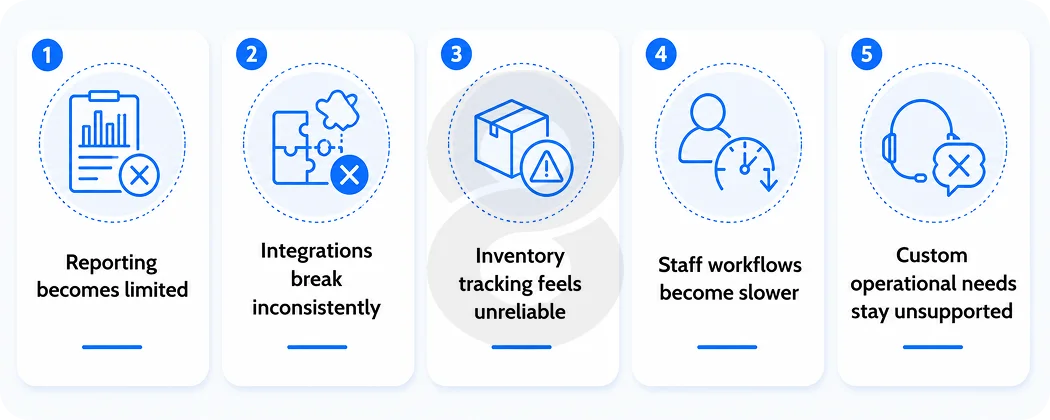
Then the business grows slightly and suddenly:
- Reporting becomes limited
- Integrations break inconsistently
- Inventory tracking feels unreliable
- Staff workflows become slower
- Custom operational needs stay unsupported
That is when restaurants realize the system was never actually designed around their workflows specifically.
This is exactly why businesses increasingly invest in a custom best POS system for restaurant strategy instead of forcing operations around rigid software limitations.
Because restaurants operate differently depending on:
- Service model
- Kitchen structure
- Delivery systems
- Staffing workflows
- Customer behavior
- Multi-location operations
And honestly, generic systems rarely adapt well to operational complexity long term.
The Real Goal Is Operational Simplicity
A lot of restaurants accidentally overcomplicate their operations trying to modernize quickly. That creates another layer of problems entirely. A strong POS system should make operations feel easier, not more technical.
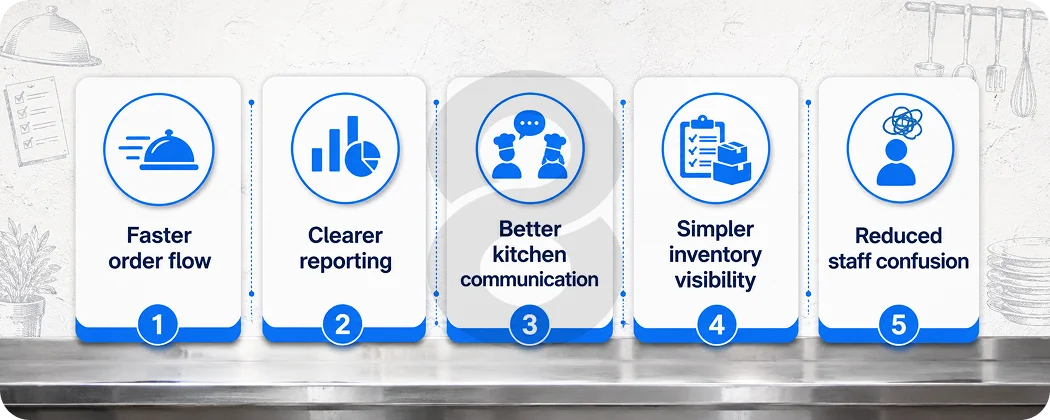
That means:
- Faster order flow
- Clearer reporting
- Better kitchen communication
- Simpler inventory visibility
- Reduced staff confusion
That is where stronger software development planning becomes incredibly important because operational efficiency depends heavily on how intelligently the system is structured underneath.
Generic POS Software vs Custom Restaurant POS Systems
Area |
Generic POS Software |
Custom Restaurant POS |
| Workflow Fit | Limited flexibility | Designed around operations |
| Reporting | Basic analytics | Custom operational visibility |
| Integrations | Restricted compatibility | Full system connectivity |
| Scalability | Growth limitations appear | Easier expansion support |
| Staff Experience | Generic workflows | Faster operational usability |
Restaurants Became Technology Businesses Faster Than Expected
This shift happened quietly. Restaurants no longer depend only on food quality and service anymore.
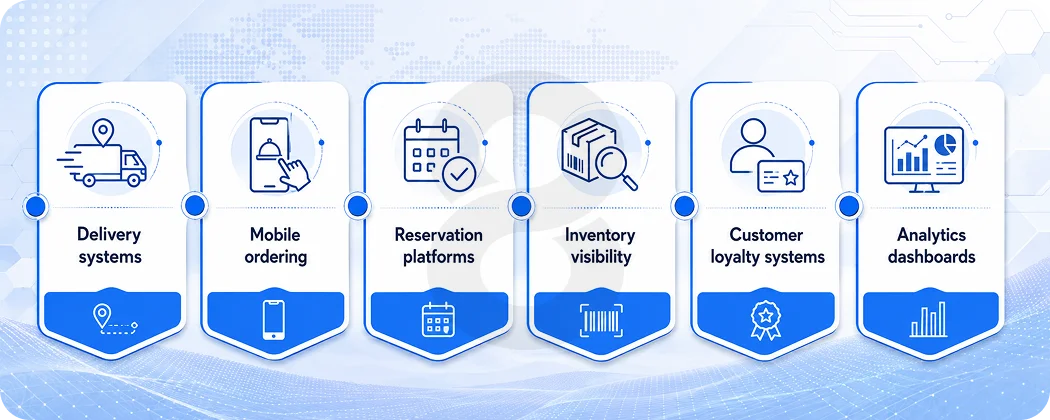
Now they also depend heavily on:
- Delivery systems
- Mobile ordering
- Reservation platforms
- Inventory visibility
- Customer loyalty systems
- Analytics dashboards
That means operational infrastructure now directly affects profitability. This is exactly why stronger enterprise app development strategy became important inside modern restaurant environments.
Because disconnected systems quietly slow down service, increase errors, and create operational pressure across the business constantly, and customers notice inconsistent experiences much faster now than restaurants expect.
Read More: Food Delivery App Development Cost in 2026: A Detailed Guide
Mobile Ordering Completely Changed Restaurant Operations
This shift changed customer behavior permanently.
People now expect:
- Mobile ordering
- Real-time updates
- Faster checkout experiences
- Seamless payment systems
- Personalized offers
That is why stronger mobile app development strategy directly affects restaurant growth now.
Because if the customer experience feels slower or more confusing than competitors, users usually leave quickly without explaining why.
The online food delivery market is projected to reach US$1.51 trillion in 2026, growing at 6.24% CAGR to US$2.05 trillion by 2031, with user penetration hitting 29.2%.
That statistic matters because digital convenience now influences customer retention almost as much as food quality itself.
Read More: Best Apps for Delivery Drivers to Inspire Your Next Delivery App
AI Is Quietly Improving Restaurant Operations Already
Most restaurant owners probably do not describe it this way directly, but AI already shapes operational efficiency heavily behind the scenes.
Through proper AI development, restaurant systems can now:
- Predict inventory demand
- Reduce food waste
- Optimize staffing schedules
- Improve customer recommendations
- Forecast busy operational periods
And through structured AI integration, these improvements happen quietly without disrupting daily workflows.
That matters because restaurants increasingly depend on operational efficiency to protect margins long term.
At 8ration, AI-supported restaurant systems are usually introduced gradually so staff adoption feels natural instead of overwhelming operationally.
Read More: 10 Best Open-Source Large Language Models for Your Next Venture
Why Restaurant Integrations Matter More Than Features
This is another thing businesses misunderstand often. Restaurant owners sometimes focus too heavily on features while ignoring connectivity between systems. That creates operational fragmentation quickly.
A modern restaurant usually depends on:
- POS systems
- Delivery platforms
- Loyalty programs
- Inventory tools
- Reservation systems
- Accounting platforms
If those systems do not communicate properly, operational friction grows everywhere. That is why a strong best POS system for restaurant strategy focuses heavily on integrations instead of isolated functionality alone.
Because connected systems improve operational visibility naturally. And honestly, visibility usually improves decision-making faster than businesses initially expect.
Read More: How to Build a Dealer Management System for Modern Businesses
What a Strong Restaurant POS System Actually Improves
Business Area |
Improvement |
Why It Matters |
| Order Management | Faster processing | Better service speed |
| Inventory | Real-time tracking | Reduced waste |
| Staff Coordination | Clear workflows | Fewer operational mistakes |
| Reporting | Better visibility | Smarter decisions |
| Customer Experience | Faster interactions | Higher retention |
Why Scalability Problems Usually Start Early
This happens constantly inside growing restaurant businesses. The POS system works fine during early stages.
Then operations expand slightly and suddenly:
- Multi-location visibility becomes difficult
- Reporting slows down
- Delivery coordination becomes messy
- Staff permissions create confusion
- Inventory synchronization breaks
That usually means the system underneath was never designed properly for long-term growth.
This is exactly why stronger best POS system for restaurant planning matters early because rebuilding operational systems later becomes extremely disruptive.
And restaurants already operate under enough daily pressure without technology creating more complications.
Read More: Pricing Models for Software Services: Fixed vs. Hourly Rates Explained
Delivery Platforms Quietly Changed Restaurant Infrastructure
Restaurants no longer operate consistently only inside physical spaces.
Now businesses manage:
- In-store operations
- Mobile ordering
- Delivery ecosystems
- Third-party platforms
- Loyalty environments
- Subscription models sometimes
That complexity changes how restaurant systems need to operate entirely.
This is also where stronger ecommerce app development strategy becomes increasingly relevant because digital ordering systems now influence overall restaurant revenue heavily.
And restaurants failing to modernize digitally usually struggle maintaining operational consistency long term.
Read More: What is a Proof of Concept in Software Development
Why User Experience Matters for Staff Too
A lot of restaurant software focuses heavily on management dashboards while ignoring frontline usability. That becomes a huge operational problem quickly.
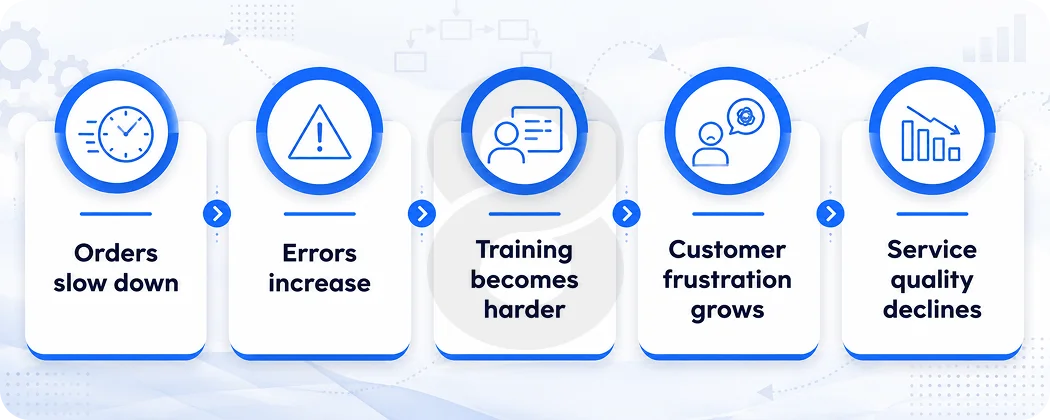
Because if staff members struggle using the system:
- Orders slow down
- Errors increase
- Training becomes harder
- Customer frustration grows
- Service quality declines
That is why stronger best POS system for restaurant systems focus heavily on practical usability instead of overloaded functionality. Because restaurants move fast.
And honestly, every unnecessary step inside the workflow eventually creates operational stress somewhere else.
How the 8ration Team Approaches Restaurant POS Systems
One thing the 8ration team focuses on heavily is operational realism. A lot of restaurant platforms look impressive during demonstrations but become frustrating during actual service hours. That usually happens because the workflows were never tested properly under real operational pressure.
Instead, the focus generally stays centered around:
- Faster service workflows
- Kitchen coordination efficiency
- Scalable backend architecture
- Mobile-first operational access
- AI-supported reporting systems
The goal is not simply building another POS platform. The goal is creating operational systems that quietly reduce friction during the busiest moments inside restaurant environments. That difference usually affects customer experience more than businesses initially realize.
Read More: How to Hire a Software Development Team: A Step-by-Step Guide
If Operations Feel More Complicated Every Month, The System Is Probably Part of the Problem
A lot of restaurants normalize operational inefficiencies because they develop gradually over time. Manual workarounds become normal. Disconnected reporting becomes normal. Inventory inconsistencies become normal. But those issues quietly affect profitability, service speed, and customer retention much more than businesses initially realize.
A properly structured best POS system for restaurant improves operational clarity, reduces friction, and helps teams work faster without creating unnecessary stress underneath service operations. And right now, that matters more than ever because customer expectations continue increasing aggressively across restaurant environments.
Read More: Intellectual Property in Software: How to Protect Your App Idea Before You Build
Final Thoughts
Most restaurants do not actually need more software. They need better operational systems. That is the real issue underneath many service inefficiencies today. A strong POS system for restaurant improves speed, visibility, reporting, scalability, and customer experience simultaneously because everything inside restaurant operations connects together operationally.
And honestly, the restaurants scaling successfully right now usually are not surviving through harder manual work anymore. They are building systems capable of supporting faster and smarter operations underneath the surface, often through technology investments like food delivery app development and automated operational workflows. Because modern restaurant success is no longer only about good food. It is also about how efficiently the business operates behind the scenes every single day.