


Most businesses think testing simply means finding bugs before launch. That is technically true. But modern app testing became much more complicated than that a long time ago. Because apps no longer fail only because of obvious crashes or broken buttons anymore.
They fail because of:
- Poor workflow behavior
- Slow performance
- Confusing interactions
- Scalability problems
- Device inconsistency
- Weak infrastructure underneath the experience
And a lot of those issues are not always visible to traditional QA-only firms focused mainly on technical validation instead of operational behavior. That is exactly why stronger mobile application testing services increasingly come from app development companies instead of standalone QA providers.
At 8ration, testing is usually integrated directly into the development lifecycle because modern app performance depends on much more than surface-level functionality checks.
Why QA-Only Testing Often Misses Bigger Problems
This happens more than businesses realize.
QA firms usually focus heavily on technical validation processes like:
- Functional testing
- Regression testing
- Compatibility testing
- Device testing
- Error identification
Those things absolutely matter. But modern apps now depend on much broader operational behavior too.
For example:
- How quickly workflows feel responsive
- Whether onboarding feels intuitive
- Whether the infrastructure scales properly
- How APIs behave during heavy traffic
- How the app performs under real-world usage conditions
And QA-only firms often do not fully understand the architectural decisions underneath those problems. That is why stronger mobile application testing services usually happen when development teams and testing teams work together continuously instead of separately.
The Biggest Difference Between QA Firms and Development Companies
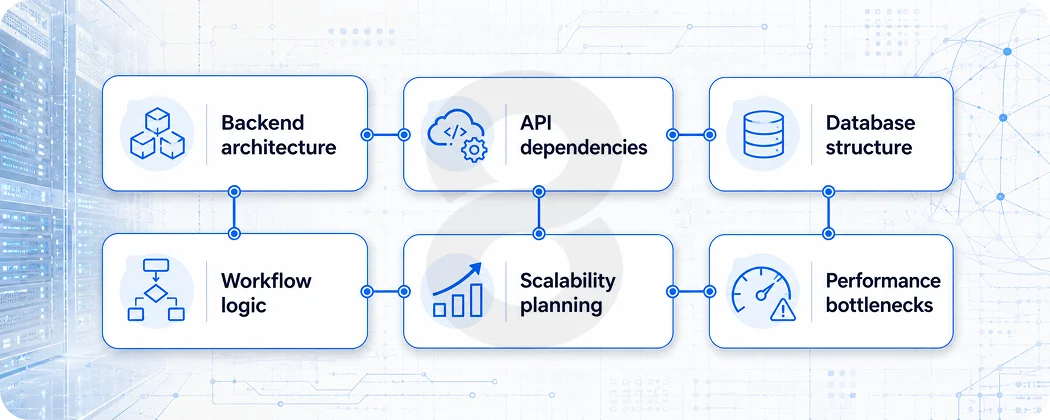
The biggest difference is context. QA-only firms test the app after it already exists. Development companies usually test while building the infrastructure itself. That changes everything.
Because development-focused teams already understand:
- Backend architecture
- API dependencies
- Database structure
- Workflow logic
- Scalability planning
- Performance bottlenecks
That deeper visibility allows stronger mobile application testing services to identify problems much earlier, before they become expensive operational issues later.
And catching infrastructure problems early usually matters much more than fixing visual bugs near launch.
At 8ration, testing usually starts during architecture planning itself because operational stability depends heavily on decisions made long before launch day.
Read More: How to Create an App: 8 Steps to Build an App in 2026
QA-Only Firms vs App Development Testing Teams
| Area | QA-Only Firms | App Development Companies |
| Infrastructure Understanding | Limited visibility | Full architectural understanding |
| Scalability Testing | Surface-level testing | Real operational load evaluation |
| Workflow Validation | Functional focus | User behavior focus |
| API Analysis | Limited debugging ability | Deep integration visibility |
| Performance Optimization | Identifies issues | Identifies and fixes root causes |
| Product Context | External perspective | Full lifecycle involvement |
Why User Experience Testing Became Much More Important
This shift happened quietly. Earlier, users tolerated small issues more easily. Now they usually uninstall apps immediately if the experience feels frustrating.
That includes:
- Slow loading times
- Confusing navigation
- Delayed interactions
- Poor responsiveness
- Broken onboarding flows
And users rarely explain why they leave anymore. They simply stop using the product. This is exactly why stronger mobile application testing services now focus heavily on user behavior instead of only technical stability.
Because operational usability directly affects:
- Retention
- Reviews
- Conversion rates
- Subscription growth
- Customer trust
Read More: Mobile App Development Challenges: Avoiding Costly Pitfalls in Your Next Project
Why Scalability Testing Matters Much Earlier Than Businesses Expect
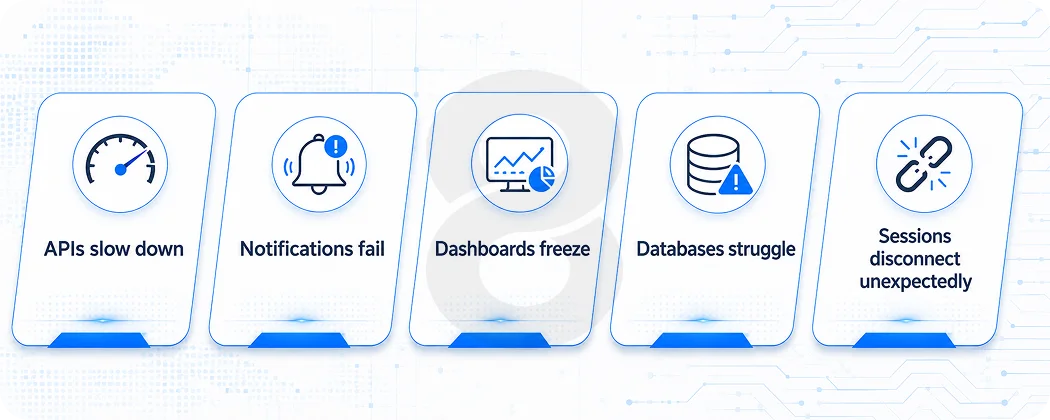
This is one of the biggest operational mistakes companies still make. The app performs perfectly during small-scale testing environments. Then real growth happens.
Suddenly:
- APIs slow down
- Notifications fail
- Dashboards freeze
- Databases struggle
- Sessions disconnect unexpectedly
That usually means scalability planning never happened properly underneath the infrastructure. This is exactly why stronger mobile application testing services involve continuous collaboration between developers and testers during the entire development lifecycle. Because scalability issues become extremely expensive once the app already has active users.
Read More: Mobile App Development Timeline: 2026 Guide
What Strong Mobile Testing Actually Improves
| Business Area | Improvement | Why It Matters |
| User Retention | Better experience quality | Higher long-term engagement |
| App Stability | Fewer crashes | Stronger customer trust |
| Performance | Faster interactions | Better usability |
| Scalability | Operational consistency | Supports growth |
| Customer Satisfaction | Reduced frustration | Improved reviews and retention |
Mobile Accessibility Changed Testing Expectations Completely
This is another major shift that businesses have underestimated heavily.
Apps now operate across:
- Different devices
- Different operating systems
- Different screen sizes
- Different network conditions
- Different geographic environments
That means testing complexity has increased massively over the last few years.
Over half our time online is now spent on mobile phones, and more than 96 percent of the global digital population used mobile devices for internet access in 2024. That shift completely changed how businesses approach app performance expectations.
This is exactly why a stronger mobile app development strategy now overlaps heavily with infrastructure-focused testing planning.
Why Integrations Quietly Break Apps More Than Bugs Do
Modern apps rely heavily on external systems now.
That includes:
- Payment gateways
- CRM systems
- Analytics platforms
- Authentication systems
- Cloud databases
- AI-driven APIs
And honestly, integration instability quietly causes more operational issues than traditional coding bugs in many modern apps.
That is why stronger software development strategy now requires testing teams understanding infrastructure relationships deeply instead of validating isolated features separately. Because connected systems now define app stability heavily.
Read More: Mobile App Launch Strategy: Get More Downloads in 2026
AI Is Changing App Testing Faster Than You Think
A lot of businesses still think AI only affects product features. Actually, AI is changing testing infrastructure too.
Through stronger AI development, teams can now:
- Predict performance bottlenecks
- Detect abnormal behavior earlier
- Improve automated testing workflows
- Simulate user behavior patterns
- Improve operational visibility significantly
And through structured AI integration, testing becomes faster, smarter, and much more proactive. That matters because modern app environments now generate enormous operational complexity continuously.
Read More: AI and Machine Learning: How a Modern App Development Firm Stays Ahead
Most Businesses Underestimate the Cost of Weak Testing
This happens constantly. Businesses focus heavily on launch speed.
Then later they face:
- User churn
- Negative reviews
- Infrastructure instability
- Operational downtime
- Expensive rebuilds
And fixing damaged user trust later usually costs much more than investing in stronger testing from the beginning.
That is exactly why stronger mobile application testing services became a critical operational investment instead of a secondary development step.
Read More: Mobile App Maintenance Services: What Startups and Enterprises Actually Need
How the 8ration Team Approaches Mobile Testing
One thing our team focuses on heavily is operational realism. A lot of testing environments look technically successful but fail once actual users interact with the app consistently in real-world conditions. That usually happens because testing was isolated from development thinking.
Instead, our focus generally stays centered around:
- Infrastructure-aware testing
- Workflow validation
- Cross-device consistency
- Performance optimization
- Scalability planning
The goal is not simply launching apps without bugs. The goal is building products that continue functioning smoothly once real operational pressure starts increasing after launch.
Read More: Why Your On-Demand App Failed & How to Fix It
If Users Keep Leaving Quietly After Downloading Your App, Testing Problems Usually Exist Underneath The Experience
A lot of businesses assume low retention automatically means weak marketing. Sometimes the bigger issue is operational friction inside the app itself.
Slow interactions become normal. Performance delays become normal. Broken workflows become normal. But users notice those problems immediately even when businesses internally normalize them over time.
That is exactly why stronger mobile application testing services matter more now than they did even a few years ago. Because app quality directly affects retention, scalability, customer trust, and operational growth simultaneously.
Final Thoughts
Most modern apps do not fail because the idea itself was weak. Usually they fail because the operational experience underneath the product never became stable enough for real users long term. Stronger mobile application testing services improve infrastructure stability, user experience, scalability, operational visibility, and long-term app performance simultaneously because modern apps now operate inside extremely demanding digital environments.
The businesses delivering stronger mobile experiences today are usually not treating testing like a final launch checklist anymore. They are treating testing like part of the operational infrastructure itself. Because modern app success no longer depends only on features. It depends heavily on how consistently the entire experience performs once real users start depending on it daily.